





Gujarat : Dahej Ferry Project Turns Into Costly Lesson as ₹407 Crore Investment Sinks in Silt
Dahej | Gujarat — A ferry terminal built at a cost of nearly ₹290 crore and backed by another ₹117 crore in dredging expenditure has become a stark example of how ignoring environmental realities can...

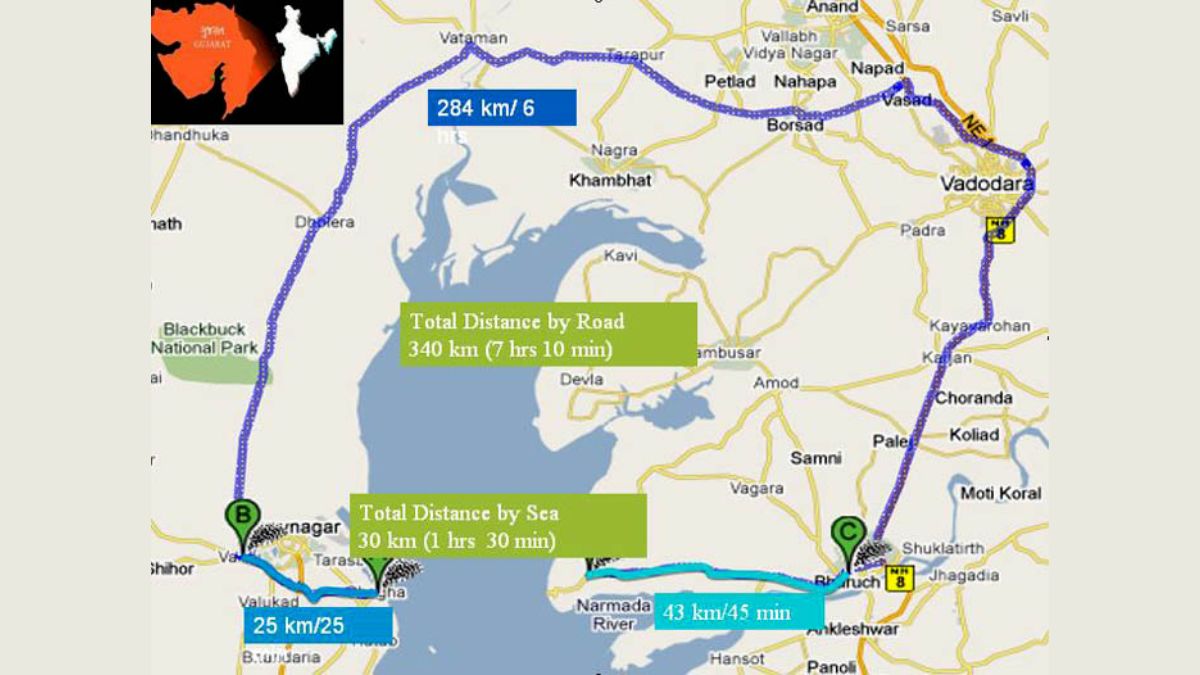
Dahej | Gujarat — A ferry terminal built at a cost of nearly ₹290 crore and backed by another ₹117 crore in dredging expenditure has become a stark example of how ignoring environmental realities can turn ambitious infrastructure projects into costly liabilities. The Dahej-Ghogha Ro-Ro ferry project, once promoted as a transformative maritime link between South Gujarat and Saurashtra, now stands largely non-functional, raising serious questions about planning, accountability and the use of public funds.
The Dahej terminal, constructed by the Gujarat Maritime Board (GMB), was envisioned as a key component of a larger ₹615-crore ferry connectivity project. However, experts and feasibility studies had reportedly flagged concerns as early as 2001 about the location’s suitability. Situated at the mouth of the Narmada River and adjacent to the Gulf of Khambhat, Dahej is naturally prone to heavy siltation, rapid sediment accumulation and strong tidal currents.
According to findings from studies conducted during the project’s planning stage, maintaining the minimum five-metre draft required for Ro-Ro ferry operations at Dahej would be a persistent challenge. Despite these warnings, the terminal was built and repeated dredging operations were undertaken to keep the navigation channel operational.
Over the years, crores of rupees were spent removing accumulated mud and sediment. Yet the problem repeatedly resurfaced. Contractors and operators reportedly communicated their concerns to both state and central authorities, warning that ferry operations could not be sustained without continuous and expensive dredging.
The concerns eventually proved valid. Ferry services on the Ghogha-Dahej route faced multiple interruptions before large vehicle operations were permanently halted in March 2020. An attempt to revive the route in 2021 using a smaller passenger vessel also failed due to poor ridership and high maintenance costs.
Ironically, a consultancy report prepared by London-based Beckett Rankin in association with infrastructure experts had reportedly projected significantly higher revenue potential on the Ghogha-Surat route than on the Ghogha-Dahej corridor. The study estimated weekly earnings of ₹6.67 lakh on the Ghogha-Surat route compared to only ₹1.28 lakh on the Ghogha-Dahej route.
Following the collapse of the Dahej operation, authorities shifted focus to the Ghogha-Hazira Ro-Pax service, which has remained operational due to more favourable marine conditions and year-round navigability. The Hazira route has since emerged as the primary maritime link connecting Saurashtra with South Gujarat.
Meanwhile, the future of the Dahej terminal remains uncertain. After ferry services ceased, the facility was handed over to the port authorities, but reports indicate it was returned within months. The Deendayal Port Authority is now reportedly pursuing legal and administrative procedures to transfer the infrastructure back to the Gujarat Maritime Board for alternative use.