








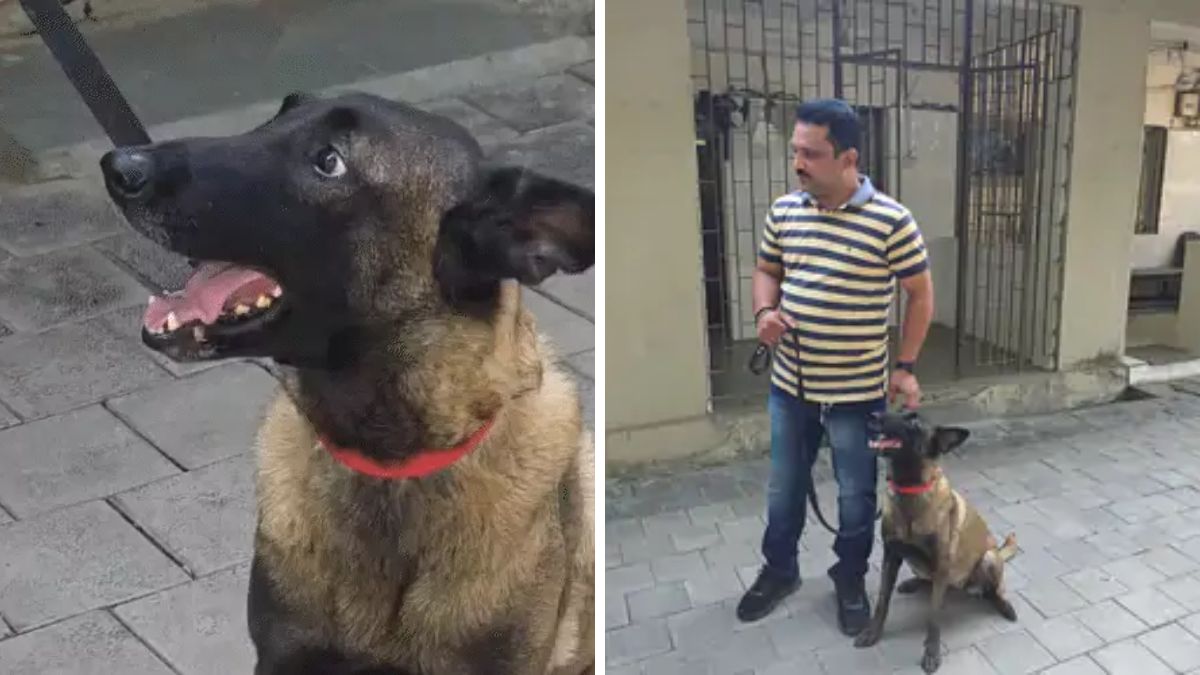
Surat Security Concern: One Sniffer Dog ‘Gallop’ Guards 80 Lakh City
Surat | Gujarat — In a startling revelation that raises serious concerns over urban security, Surat—a bustling metropolis of over 80 lakh people—currently relies on just one active sniffer dog,...

Surat | Gujarat — In a startling revelation that raises serious concerns over urban security, Surat—a bustling metropolis of over 80 lakh people—currently relies on just one active sniffer dog, ‘Gallop’, for bomb detection. The situation has triggered alarm among security experts, especially given the city’s history of terror threats and its status as a major economic hub.
Memories of the 2008 serial bomb scare, when 29 live explosives were planted across Surat, still haunt residents. In recent years too, multiple bomb threats targeting schools and government offices have surfaced, keeping law enforcement agencies on constant alert. Yet, despite these risks, the city’s bomb detection capability appears dangerously stretched.
“At present, only one trained dog is handling explosive detection across the city. This is not just a resource gap, it’s a major security concern,” a senior official said.
The burden has fallen entirely on Gallop, a highly trained sniffer dog tasked with responding to every emergency—from suspicious objects to high-profile VIP movements. With another bomb detection dog currently away for advanced training, Gallop has been working around the clock, covering a vast city with 38 police stations.
“It is practically impossible for one dog to handle such a massive responsibility. If two emergency calls come simultaneously, it becomes a serious operational challenge,” an officer admitted.
Experts point out that a city the size of Surat should ideally have at least 12 trained dogs, including those for explosives, narcotics, and tracking. However, the current strength stands at just four—two for bomb detection (one unavailable), one narcotics dog, and one tracker—highlighting a glaring mismatch between requirement and reality.
The strain is visible across other operations as well. ‘Prince’, a Doberman tracker dog, is the only canine resource used to trace criminals in cases ranging from theft to high-value robberies in the city’s thriving diamond sector. “Whenever a major crime occurs, Prince is rushed to the spot, no matter where it is. This level of dependence is not sustainable,” an officer noted.
Similarly, narcotics detection rests solely on ‘Drake’, a five-year-old beagle trained to sniff out drugs. With two to three NDPS cases being registered daily, the pressure on Drake continues to mount amid growing concerns over drug networks.
Adding to the challenge is the age factor. Several dogs in the squad have already completed four to six years of service, and while they are maintained with proper training and diet, increasing workload could impact their efficiency over time.
While the bomb disposal squad and police teams conduct routine checks at sensitive locations like railway stations, airports, and malls, experts emphasize that trained sniffer dogs remain a critical first line of defence. “Technology helps, but when it comes to real threats, the dog’s sense of smell is irreplaceable,” an expert explained.