







India Must Build AI Infrastructure at Home for Digital Sovereignty : Adani
New Delhi — Calling upon India to develop indigenous capabilities within the Artificial Intelligence (AI) value chain, industrialist Gautam Adani stated on Monday that energy security and digital...

New Delhi — Calling upon India to develop indigenous capabilities within the Artificial Intelligence (AI) value chain, industrialist Gautam Adani stated on Monday that energy security and digital infrastructure will define geopolitical power in the coming decades.
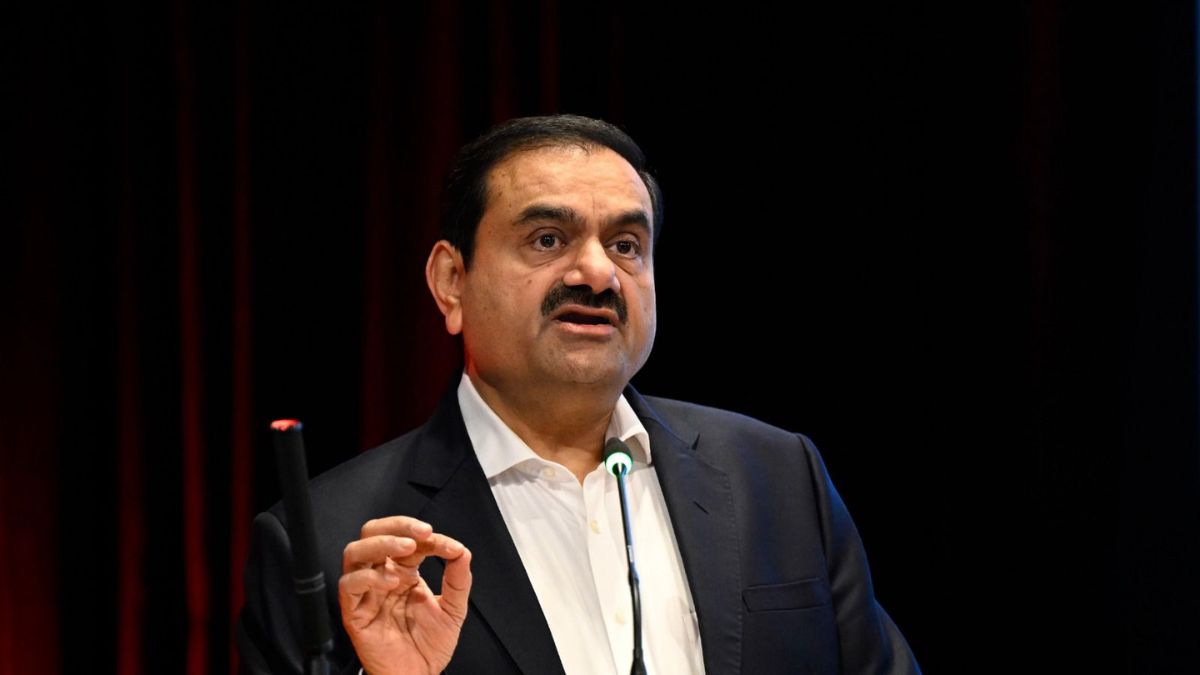
Addressing the Confederation of Indian Industry’s (CII) Annual Business Summit 2026, the Chairman of the Adani Group remarked that amidst rising geopolitical fragmentation, the decades-old foundations of globalization are weakening.
He said, “The emerging world is not stable; rather, it is fragmented and competitive. Semiconductors have now become instruments of governance. Data is being viewed as a national resource. The cloud is being weaponized. The development of Artificial Intelligence is taking place within the secure walls of data centers.”
Citing recent geopolitical conflicts and attacks on infrastructure, he asserted, “Energy security and digital security are now the two key pillars of national power.”
Adani stated that India should view AI not merely as software, but as strategic infrastructure encompassing energy, data centers, chips, networks, compute capacity, and talent.
He added, “India must not rent the infrastructure for its intellectual future. India must build, operate, and own it within its own borders.”
Adani noted that, driven by the sheer scale of domestic demand across manufacturing, transportation, logistics, and digital services, India possesses a unique opportunity to undertake a massive build-out of energy and AI infrastructure.
He pointed out that India has already crossed the milestone of 500 gigawatts of installed power capacity, and the future AI economy will necessitate massive investments in energy and compute infrastructure.
Adani concluded, “AI is not just software. AI is infrastructure. AI is energy. AI is cooling. AI is chips. AI is networks. AI is data.” “AI is talent. AI is governance.”
He dismissed the notion that AI would lead to mass job displacement.
The Adani Group Chairman stated that India should leverage AI to boost productivity, create new jobs, empower small businesses, and enable Indians to compete globally.
Citing the digital payments revolution as an example, he noted that millions of Indians became digitally connected through UPI. This, in turn, led to the emergence of companies such as Flipkart, Paytm, Ola, Swiggy, Meesho, Zepto, and PhonePe.
“AI will operate on an even broader scale than this,” he said.
Outlining a three-tiered framework for AI—comprising power generation, compute infrastructure, and applications—Adani emphasized that indigenous ownership of data and compute infrastructure would be of paramount importance in the future.
“If our data is processed abroad, it implies that our future, too, is being written abroad,” he asserted.
Adani revealed that the Group has already commissioned 35 percent of its 30-gigawatt renewable energy project in Khawda, Gujarat—a facility he described as the world’s largest single-location renewable energy plant.
He stated that the Group’s total commitment toward energy transition and digital infrastructure stands at $100 billion. Additionally, he reiterated plans for a $100 billion investment in the data center business, which includes a partnership with Google to construct a massive data center complex in Visakhapatnam.
Adani noted that companies such as Flipkart and Uber—along with Microsoft—are also collaborating with the Group on data infrastructure projects.
In conclusion, he remarked, “The true measure of AI will not be how many jobs it eliminates, but rather how many Indians it empowers.”