





SVNIT Surat AI Flood Research Aligns with Google’s Global Forecasting Tech
Surat | Gujarat — In a significant breakthrough in India’s growing strength in scientific innovation, research conducted at Sardar Vallabhbhai National Institute of Technology has shown strong...

Surat | Gujarat — In a significant breakthrough in India’s growing strength in scientific innovation, research conducted at Sardar Vallabhbhai National Institute of Technology has shown strong conceptual alignment with cutting-edge global flood forecasting systems developed by Google. The study, carried out in 2020, demonstrates how advanced Artificial Intelligence (AI) models developed locally are keeping pace with global technological advancements.
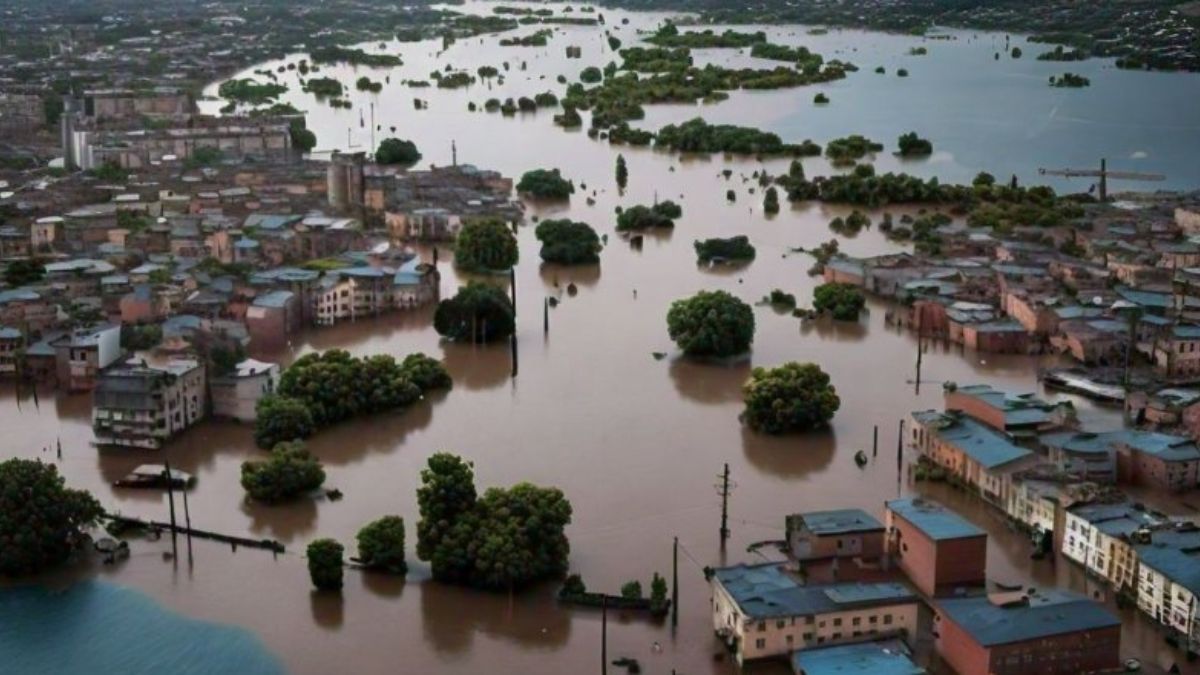
Flood forecasting remains one of the most complex challenges in disaster management due to the interplay of multiple dynamic factors such as rainfall intensity, land characteristics, drainage systems, and rapid urbanisation. Traditional hydrological models often fall short in accurately predicting sudden urban flash floods, making the need for advanced AI-driven solutions more urgent than ever.
Addressing this challenge, researchers Dr. Pankaj J. Gandhi and Professor Dr. Prasit G. Agnihotri from SVNIT’s Civil Engineering Department developed a hybrid AI-based flood forecasting model. The system integrates Artificial Neural Networks (ANN) with metaheuristic optimization techniques, enabling it to better interpret nonlinear environmental patterns and improve prediction accuracy.
“Our objective was to overcome the limitations of conventional models and build a more reliable early warning system using AI,” said a researcher associated with the project. “The results showed that intelligent algorithms can significantly enhance forecasting capabilities.”
A key highlight of the study was the use of the Cuckoo Search algorithm, a nature-inspired optimization method. Mimicking how cuckoo birds identify optimal nests, the algorithm evaluates multiple solutions to determine the most efficient outcome. This approach helped fine-tune the neural network parameters, boosting the model’s performance and reliability.
The research also incorporated geospatial technologies such as GIS, GPS, and remote sensing, enabling a more comprehensive understanding of relationships between rainfall, terrain, and hydrological systems. This integration made the model more robust and suitable for real-world applications in disaster preparedness.
In a remarkable comparison, experts have found that the conceptual framework of the SVNIT research shares nearly 80–85% similarity with Google’s AI-powered flood forecasting system, known as “Groundsource.” Google’s system, however, operates on a much larger scale, analysing over 5 million news reports spanning two decades and identifying around 2.6 million flood events globally. It uses deep learning models like LSTM and is deployed across more than 150 countries through the Google Flood Hub platform.
“The similarity in approach highlights that Indian research institutions are moving in the right direction,” an academic expert noted. “While global tech giants have access to vast datasets and infrastructure, foundational research like this is crucial in shaping future innovations.”