







Gandhinagar to Launch AI Smart Detector Vehicles for Complaint-Free City Model
Gandhinagar | Gujarat — Gujarat’s capital Gandhinagar, long known for its greenery and planned urban design, is now set to make a new mark in governance by embracing artificial intelligence to create...

Gandhinagar | Gujarat — Gujarat’s capital Gandhinagar, long known for its greenery and planned urban design, is now set to make a new mark in governance by embracing artificial intelligence to create what officials are calling a “complaint-free city model.”
The Gandhinagar Municipal Corporation (GMC) is preparing to roll out its ambitious Smart Detector Vehicle project, a high-tech initiative designed to identify civic problems before residents even report them. The goal is simple yet transformative—shift from reactive administration to proactive governance.
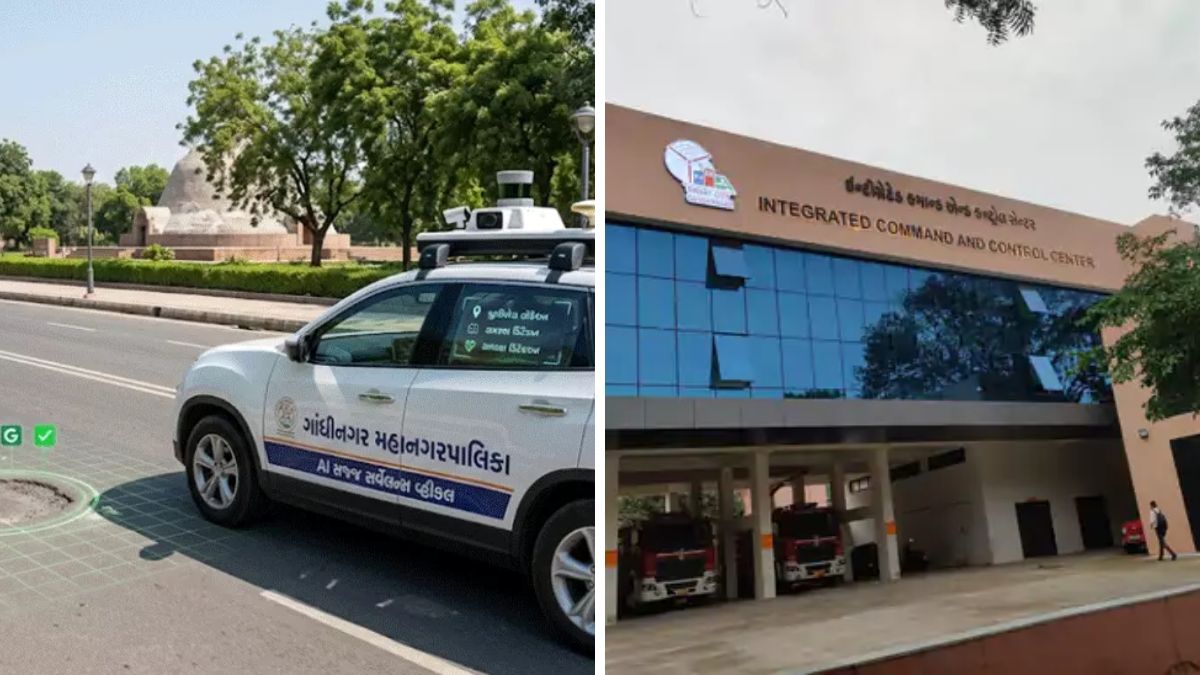
Under this project, AI-equipped surveillance vehicles will soon begin patrolling city roads. These are not ordinary monitoring vans. Each vehicle will be fitted with high-resolution 360-degree cameras, advanced sensors, and deep learning-based computer vision systems capable of real-time analysis of urban infrastructure.
Explaining the system, officials said the AI will automatically detect road damage such as potholes, cracks, and faded markings through pavement defect detection technology. It will also identify sewer leaks and drinking water pipeline issues using hydrological sensors, while object recognition systems will flag garbage accumulation, broken streetlights, and footpath obstructions.
A key feature of the system is automation with minimal human intervention. Once the vehicle identifies an issue, it will immediately capture images, record GPS coordinates, and send the data directly to the Central Command and Control Center. From there, it will be converted into a digital work order and sent to the concerned engineer or ward officer within seconds.
“The officer will have to complete the work within the stipulated time and upload the resolution report,” a senior GMC official said, adding that every task will carry a time stamp to ensure accountability and transparency.
Standing Committee Chairman Gaurang Vyas said the initiative reflects Gandhinagar’s vision of becoming both a dust-free and complaint-free city. “Wherever there is a pothole, garbage, tree trimming requirement, water leakage or sewer issue, the AI system will detect it automatically and send complete details including GPS location and dimensions to the concerned officer,” he said.
Experts believe the system could reduce maintenance costs significantly, as early detection of minor issues can cut repair expenses by nearly 70% compared to delayed interventions. Additionally, the collected data will help generate heat maps of recurring civic issues, aiding future urban planning and infrastructure development.
If successful, Gandhinagar’s model could be replicated in other Gujarat cities such as Ahmedabad, Surat, and Vadodara, positioning the state as a leader in AI-driven urban governance.