







Shrimad Rajchandra hospital’s Cord Clamping Research Gets Global Recognition
Valsad | Gujarat — In a major breakthrough for maternal and child healthcare, doctors at Shrimad Rajchandra Hospital and Research Center have achieved global recognition for pioneering research that...

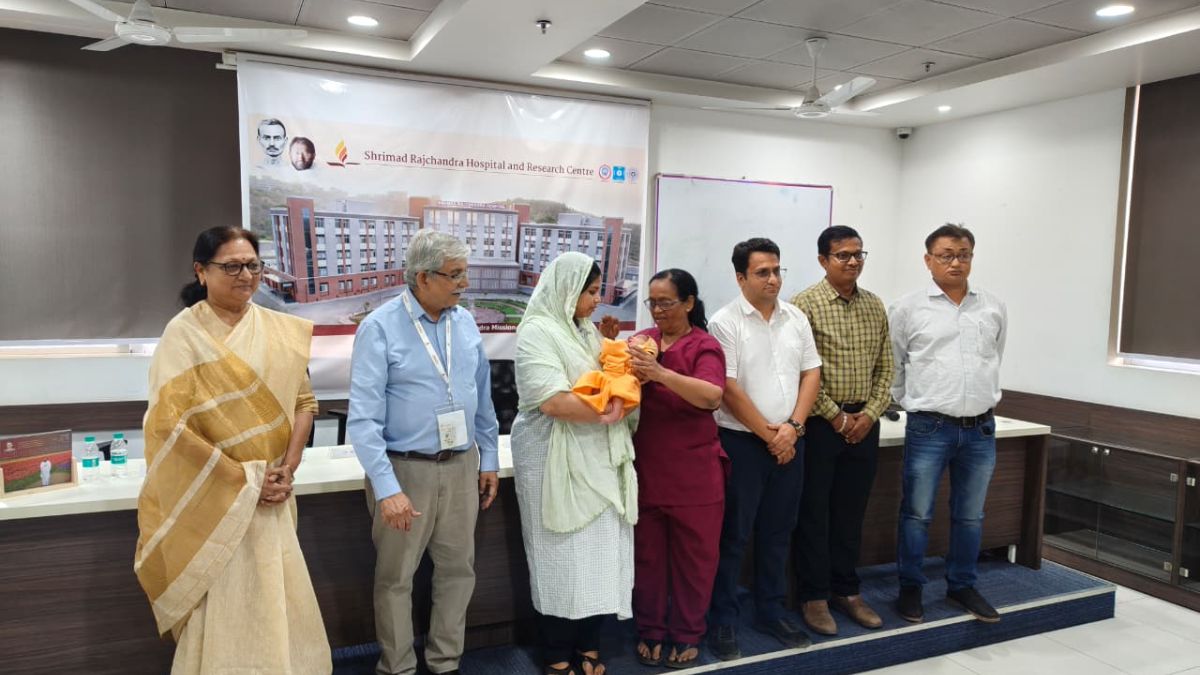
Valsad | Gujarat — In a major breakthrough for maternal and child healthcare, doctors at Shrimad Rajchandra Hospital and Research Center have achieved global recognition for pioneering research that could transform newborn care and significantly reduce infant mortality. Their study on the “physiological cord clamping” method has been published in the prestigious American Journal of Perinatology, marking a milestone for Indian medical research on the world stage.
The research suggests that delaying the cutting of the umbilical cord until after the natural expulsion of the placenta can enhance brain development, improve oxygen supply and potentially raise the IQ levels of newborns.
A New Direction in Newborn Care
The initiative, conducted under the guidance of Shrimad Rajchandra Mission Dharampur, is the result of years of clinical observation and integrated care at the hospital’s obstetrics and neonatal departments.
Traditionally, the umbilical cord is cut within one to three minutes after birth. However, this research advocates waiting until the placenta is naturally delivered, ensuring uninterrupted oxygen and blood supply to the newborn during the crucial transition to independent breathing.
Doctors explained that immediately after birth, babies are placed on their mother’s chest for at least an hour, encouraging skin-to-skin bonding and stabilising breathing and circulation.
“This method supports the baby’s natural transition into the world and protects vital organs, including the brain,” hospital researchers said.
Evidence from Years of Observation
Over the last seven to eight years, doctors observed children born through this method and found significantly higher cognitive development and lower incidence of illness.
The study also gained international recognition through publication in Cureus Journal for its application during cesarean deliveries, highlighting its versatility and safety.
Dr. Arun Singh, former advisor to India’s National Child Health Program, emphasised the importance of early brain development.
“Nearly 90 percent of brain development happens by the age of six. The care provided during pregnancy and immediately after birth has lifelong impact,” he said.
Holistic Care for Mother and Child
The hospital has adopted a comprehensive approach that integrates obstetrics, neonatology and paediatrics under one roof. From pregnancy to postnatal development, mothers and babies receive continuous and coordinated care.
Facilities such as specially designed labour rooms, exercise programs and stress-free environments aim to increase the chances of normal delivery and improve maternal wellbeing.
Researchers explained that cutting the umbilical cord too early interrupts a natural oxygen supply that the baby has relied on for nine months. Physiological cord clamping allows a smoother transition to independent breathing, reducing risks to vital organs.
National and Global Impact
The Government of India has recommended this method to states and union territories, signalling its growing acceptance as a best practice in neonatal care.
Experts believe this innovation could become a game changer in improving infant survival rates and boosting cognitive development across the country.
“This initiative is about giving every child the healthiest start in life, regardless of economic or social background,” hospital officials said.