




Gujarat : IIT Gandhinagar Scientists Develop ‘Super Sponge’ to Tackle Toxic Industrial Wastewater
Gandhinagar | Gujarat — As billions of tonnes of dye-contaminated wastewater continue to flow into rivers, lakes, and agricultural lands worldwide, researchers at the Indian Institute of Technology...

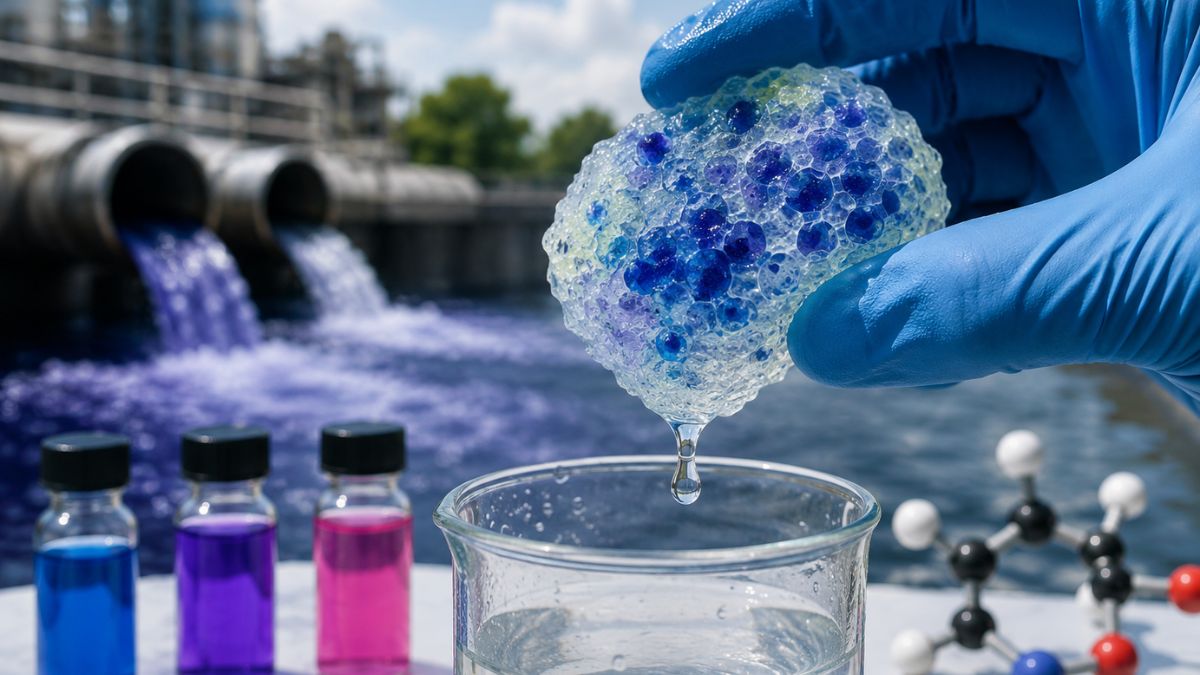
Gandhinagar | Gujarat — As billions of tonnes of dye-contaminated wastewater continue to flow into rivers, lakes, and agricultural lands worldwide, researchers at the Indian Institute of Technology Gandhinagar (IITGN) have unveiled a breakthrough material that could significantly improve the fight against water pollution. The innovative hydrogel, described as a microscopic “super sponge,” can remove nearly all traces of toxic dyes from industrial wastewater and remains effective even after repeated use.
The research, published in ACS Applied Polymer Materials, comes at a time when concerns over water contamination and environmental sustainability are growing globally. Dyes used in industries ranging from textiles and paper manufacturing to cosmetics and leather processing often end up in water bodies, posing severe risks to ecosystems and human health.
Among the most common pollutants is methylene blue (MB), a dye linked to health problems including breathing difficulties, eye burns, diarrhoea, jaundice, and even cancer. Traditional wastewater treatment methods such as membrane filtration and electrochemical treatment are often expensive, energy-intensive, and less effective when multiple pollutants are present simultaneously.
To address these challenges, IITGN researchers engineered a new hydrogel named CAPA using biodegradable carboxymethyl cellulose and acrylic acid. The material contains an intricate network of tiny pores that absorb water and trap dye molecules with remarkable efficiency.
“The key innovation lay in adjusting the amount of acrylic acid. By changing this single ingredient, we were able to fine-tune the structure, surface properties, and adsorption behaviour of the materials,” said Dr. Hitarth Patel, first author of the study and a recent PhD graduate from IIT Gandhinagar.
Among the three variants tested, CAPA-2 emerged as the standout performer, removing an impressive 99.6% of methylene blue from contaminated water. It demonstrated an adsorption capacity of approximately 475 milligrams of dye per gram of hydrogel—one of the highest performances reported for cellulose-based hydrogels.
What makes the innovation particularly significant is its ability to simultaneously capture multiple dyes, including crystal violet and rhodamine B. Since industrial wastewater typically contains a mixture of pollutants rather than a single contaminant, this broad-spectrum performance could make the technology highly practical for real-world applications.
Researchers explained that the hydrogel functions through a combination of electrostatic attraction, hydrogen bonding, and hydrophobic interactions. The negatively charged surface of the hydrogel naturally attracts positively charged dye molecules, while its nanometre-sized pores help trap pollutants efficiently.
Another notable advantage is its resilience. CAPA-2 maintained high performance across acidic, neutral, and alkaline conditions and retained most of its cleaning power even after four reuse cycles, making it a potentially cost-effective option for industries.
“As we continue to grapple with the significant and globally concerning issue of pollution, innovations like the CAPA hydrogels with their high dye-removal capacity, stability across different pH conditions, and repeated usability represent promising solutions to industrial wastewater treatment,” said Dr. Bhaskar Datta, Professor at IIT Gandhinagar and co-author of the study.
Unveiled around World Environment Day, the breakthrough aligns with India’s sustainability goals and the United Nations Sustainable Development Goals on clean water, innovation, and environmental protection. Researchers now plan to test the hydrogel under real-world industrial conditions, paving the way for cleaner waterways and more sustainable manufacturing practices.