







AI Boom Turns Samsung Electronics Into a $1 Trillion Giant as Workers Demand Bigger Share of Profits
Artificial intelligence revolution, with soaring demand for semiconductors helping the company cross a market valuation of nearly $1 trillion in 2026. The growth has also pushed South Korea’s stock...

Artificial intelligence revolution, with soaring demand for semiconductors helping the company cross a market valuation of nearly $1 trillion in 2026. The growth has also pushed South Korea’s stock market to become one of the world’s largest.
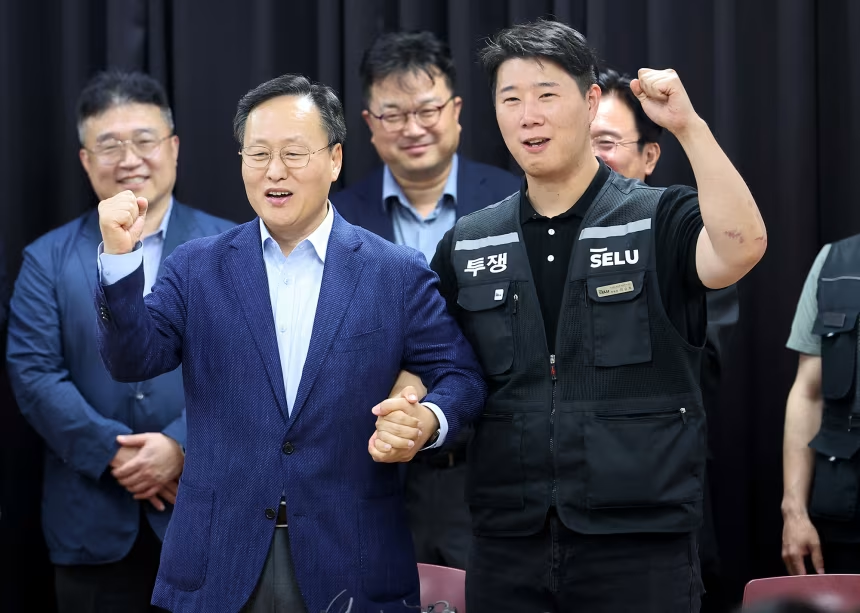
However, the massive profits generated by the AI boom have also triggered growing tensions inside the company. Tens of thousands of Samsung employees recently threatened to launch one of the largest strikes in the company’s history, demanding higher salaries and better bonuses amid record-breaking profits.
The dispute mainly involved workers from Samsung’s semiconductor division, which produces memory chips used in AI hardware by major technology companies including and. The strike had raised concerns globally because Samsung remains one of the world’s most important memory chip suppliers during a time of severe AI chip shortages.
Just hours before the planned strike, Samsung management and labor unions reached a tentative agreement. The deal still requires approval from union members, but it temporarily avoided a major disruption in semiconductor production.
Workers argued that Samsung’s profits had increased dramatically due to the AI industry, yet employee compensation had not kept pace. The unions demanded the removal of bonus limits and requested a larger share of company profits to be distributed among employees.
The issue became even more sensitive because rival chipmaker recently introduced a new bonus structure that significantly increased payouts for workers. Some SK Hynix employees are expected to receive bonuses worth several times their annual salary.
Samsung eventually agreed to remove its existing bonus cap and allocate a larger percentage of profits toward employee bonuses for its semiconductor division.
The situation highlights how artificial intelligence is reshaping not only the global technology industry but also workplace expectations and labor negotiations. While companies continue to earn massive profits from AI-driven demand, workers across the tech sector are increasingly asking for a larger share of the financial success they help create.
Industry analysts say any disruption in Samsung’s semiconductor production could have affected the global AI supply chain, especially at a time when companies worldwide are racing to build new AI infrastructure and data centers.
Although the temporary agreement has eased immediate concerns, the final outcome will depend on whether union members approve the proposed deal in the coming days.