



Gujarat : Ahmedabad Metro Phase 2A Gets Cabinet Nod, Airport Link to Boost Connectivity
Gandhinagar | Gujarat — In a major infrastructure push for Gujarat, the Union Cabinet chaired by Prime Minister Narendra Modi on Wednesday approved Phase 2A of the Ahmedabad Metro Rail Project,...

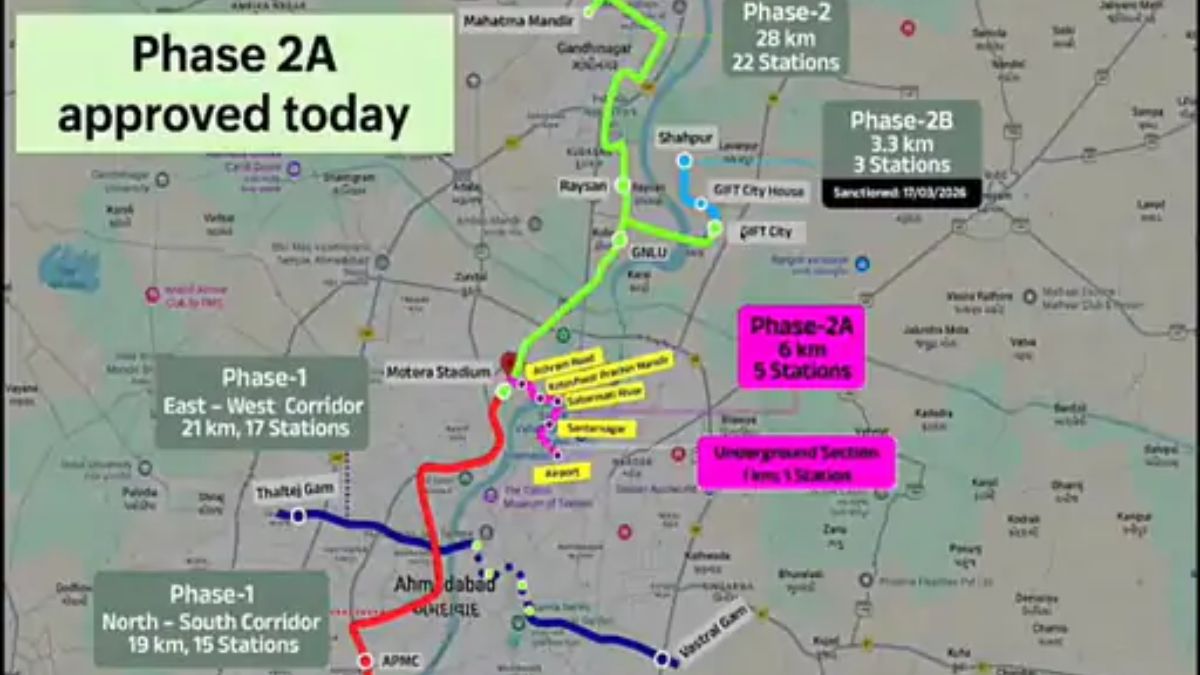
Gandhinagar | Gujarat — In a major infrastructure push for Gujarat, the Union Cabinet chaired by Prime Minister Narendra Modi on Wednesday approved Phase 2A of the Ahmedabad Metro Rail Project, paving the way for a new 6.032-km metro corridor connecting Koteshwar to Ahmedabad Airport. The expansion is expected to significantly improve connectivity between Ahmedabad and Gandhinagar while supporting preparations for the 2030 Commonwealth Games.
The newly approved corridor will include five stations—Ashram Road, Koteshwar Ancient Temple, Sabarmati, Sardar Nagar and Ahmedabad Airport. Of these, four stations will be elevated, while one station will be constructed underground.
With the addition of this corridor, the Ahmedabad-Gandhinagar Metro network will expand to a total length of 77.63 km, making public transportation faster, more accessible and environmentally sustainable for thousands of daily commuters.
Officials said the project will play a crucial role in easing airport-bound traffic and improving last-mile connectivity. The corridor is also expected to provide seamless travel access between the proposed Commonwealth Games infrastructure and key transit hubs across the twin cities.
“The approval of Phase 2A marks another important milestone in strengthening Gujarat’s urban transport network. The new airport link will offer faster and more convenient travel while reducing dependence on private vehicles,” officials associated with the project said.
The corridor is particularly significant in view of Ahmedabad’s preparations to host the 2030 Commonwealth Games. Improved metro connectivity between the Commonwealth Enclave, major residential areas and the airport is expected to enhance mobility for athletes, officials, tourists and residents alike.
Authorities estimate that construction of the new phase will be completed within four years. Once operational, the extension is expected to reduce travel time, decongest roads and contribute to lower carbon emissions through increased use of mass transit.
Urban planners have welcomed the decision, describing it as a strategic investment that aligns with the city’s long-term vision of sustainable growth and integrated public transport.