







Why India Restricted Telegram Ahead of NEET Re-Test but Not WhatsApp
Ahead of the NEET 2026 re-test scheduled on June 21, the Indian government has temporarily restricted access to Telegram following recommendations from the National Testing Agency (NTA). The move...
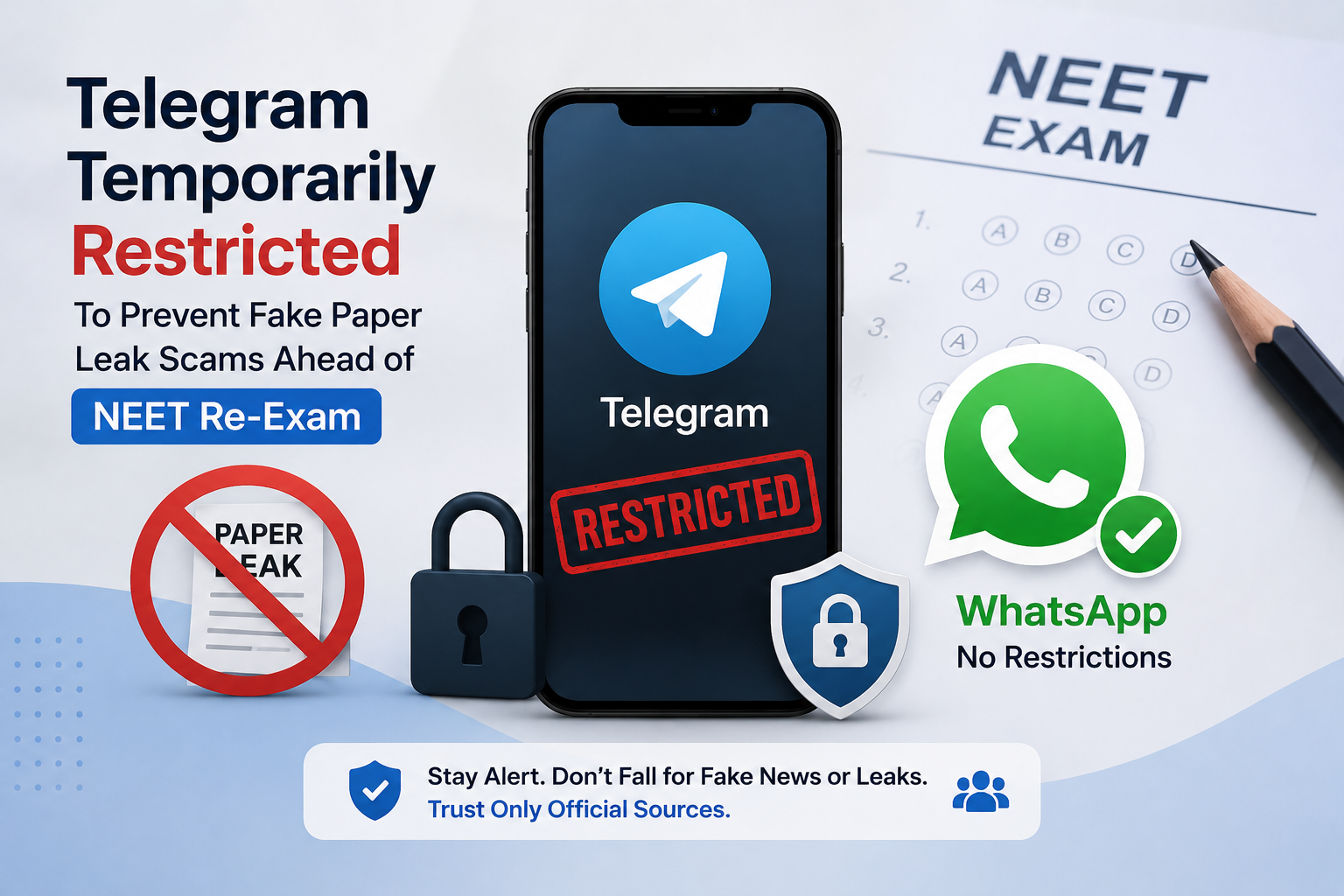
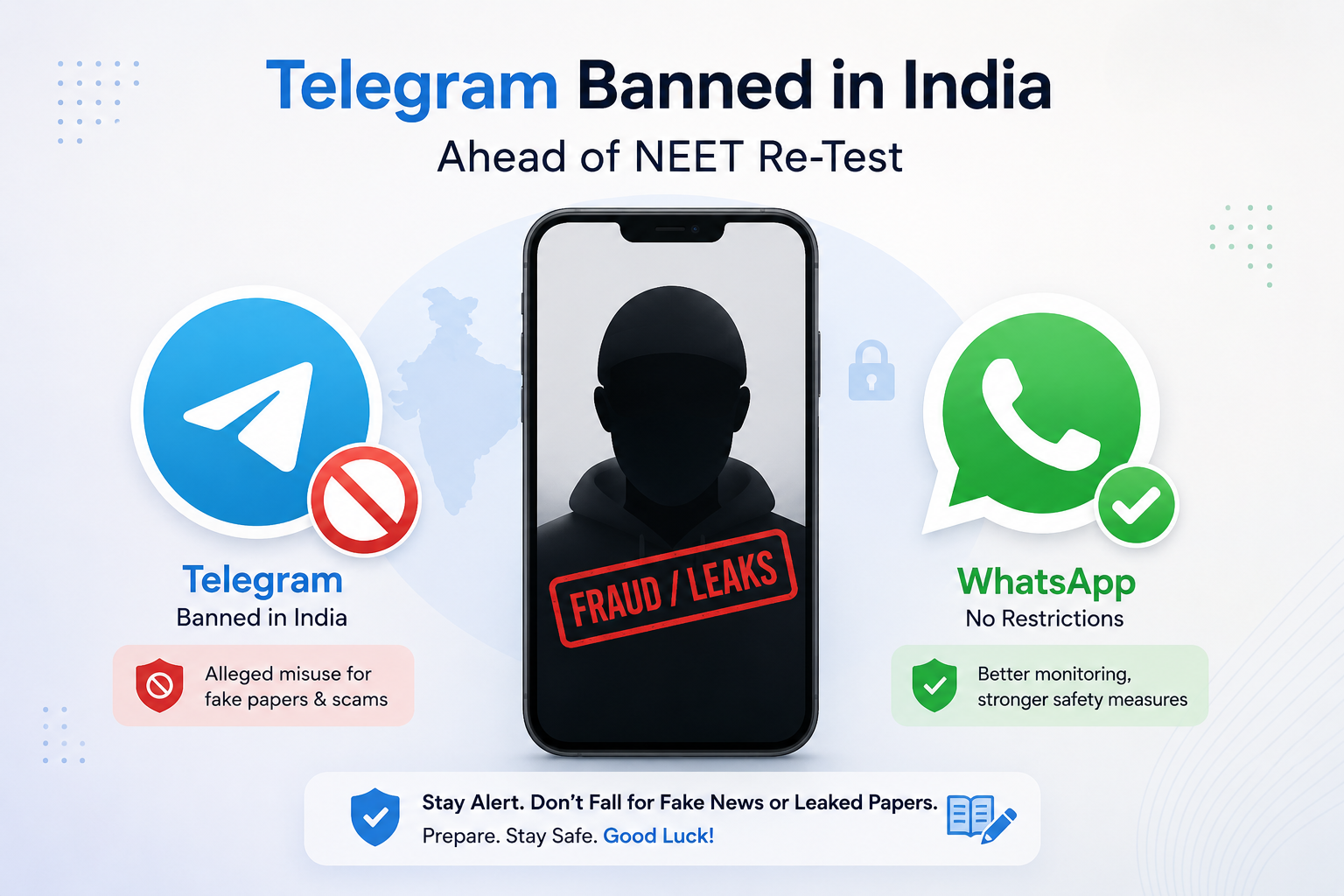
Ahead of the NEET 2026 re-test scheduled on June 21, the Indian government has temporarily restricted access to Telegram following recommendations from the National Testing Agency (NTA). The move comes after officials claimed that several Telegram channels were allegedly being used to circulate fake exam papers, misinformation, and scam-related content targeting students.
Table Of Content
However, the decision has also sparked a major question online: if Telegram was restricted over misuse, why has WhatsApp not faced similar action?
Why Telegram Came Under Scrutiny
According to the NTA, multiple Telegram groups and channels such as “PAPER LEAKED NEET,” “Re-NEET 2026,” and “Private Mafia” were allegedly promising leaked exam papers in exchange for large sums of money.
Authorities reportedly attempted mass takedowns of these groups and channels, but officials claimed the problem continued to spread rapidly. As a result, the agency recommended temporary restrictions on Telegram ahead of the examination.
What Makes Telegram Different From WhatsApp?
Although both platforms offer messaging, groups, media sharing, and encrypted communication, Telegram’s overall design is very different from WhatsApp.
Telegram heavily focuses on anonymity and large-scale broadcasting. Users can hide their phone numbers, operate accounts only through usernames, and run channels with unlimited subscribers without publicly revealing their identities.
This structure allegedly makes it easier for fraud networks and scam operators to create massive anonymous communities that are harder to trace.
In contrast, WhatsApp accounts are closely tied to phone numbers, making anonymity more limited.
Telegram’s Large File Sharing Raises Concerns
Another major reason Telegram is often used for piracy, leaks, and unofficial file distribution is its large file-sharing capability.
Telegram allows users to send files up to 2GB without significant compression, making it easier to distribute PDFs, documents, videos, and archives at scale. Authorities believe this feature may have been used to circulate fake NEET papers and supporting material.
WhatsApp, meanwhile, imposes more limitations on media sharing and file handling.
Message Editing Feature Also Flagged
The NTA also reportedly raised concerns over Telegram’s advanced message editing feature.
Telegram allows administrators to edit older posts while keeping the original timestamp unchanged. Officials claimed some users allegedly edited earlier posts and later replaced them with PDF files to falsely create the appearance that papers had been leaked in advance.
India has reportedly disabled Telegram’s older-message editing functionality temporarily until June 30.
While WhatsApp also supports message editing, it only works for a limited time after sending and does not allow similar large-scale channel-style manipulation.
Why WhatsApp Has Not Been Restricted
One of the biggest differences lies in moderation and cooperation with authorities.
Meta, the parent company of WhatsApp, actively responds to government requests and uses automated AI-based systems to detect suspicious behaviour patterns, spam activity, and coordinated abuse in public or large group environments.
Although WhatsApp messages remain end-to-end encrypted, Meta still monitors metadata, behavioural patterns, spam signals, and abuse reports to detect harmful activity.
Telegram, founded by Pavel Durov, has historically promoted itself as a platform focused on minimal government cooperation and stronger anonymity protections. Unlike Meta, Telegram also lacks a major operational presence in India, which complicates enforcement efforts.
Telegram Increasing Moderation Efforts
Despite criticism, Telegram has recently increased moderation activity globally.
Cybersecurity reports suggest the platform blocked millions of channels and groups during 2025 and significantly increased takedown operations in 2026. Daily moderation actions reportedly rose from around 10,000 removals per day to over 80,000–140,000 in some periods.
Still, authorities believe the platform’s structure continues to make it attractive for cybercriminals, piracy groups, scam networks, and misinformation campaigns.