








US Allegedly Used Iran-Style Ship Transfers to Move 90 Million Barrels of Oil During Hormuz Crisis
The United States reportedly used a covert ship-to-ship oil transfer system inspired by techniques long associated with Iran to move massive quantities of crude oil through the Gulf during the recent...
The United States reportedly used a covert ship-to-ship oil transfer system inspired by techniques long associated with Iran to move massive quantities of crude oil through the Gulf during the recent West Asia crisis.
Table Of Content
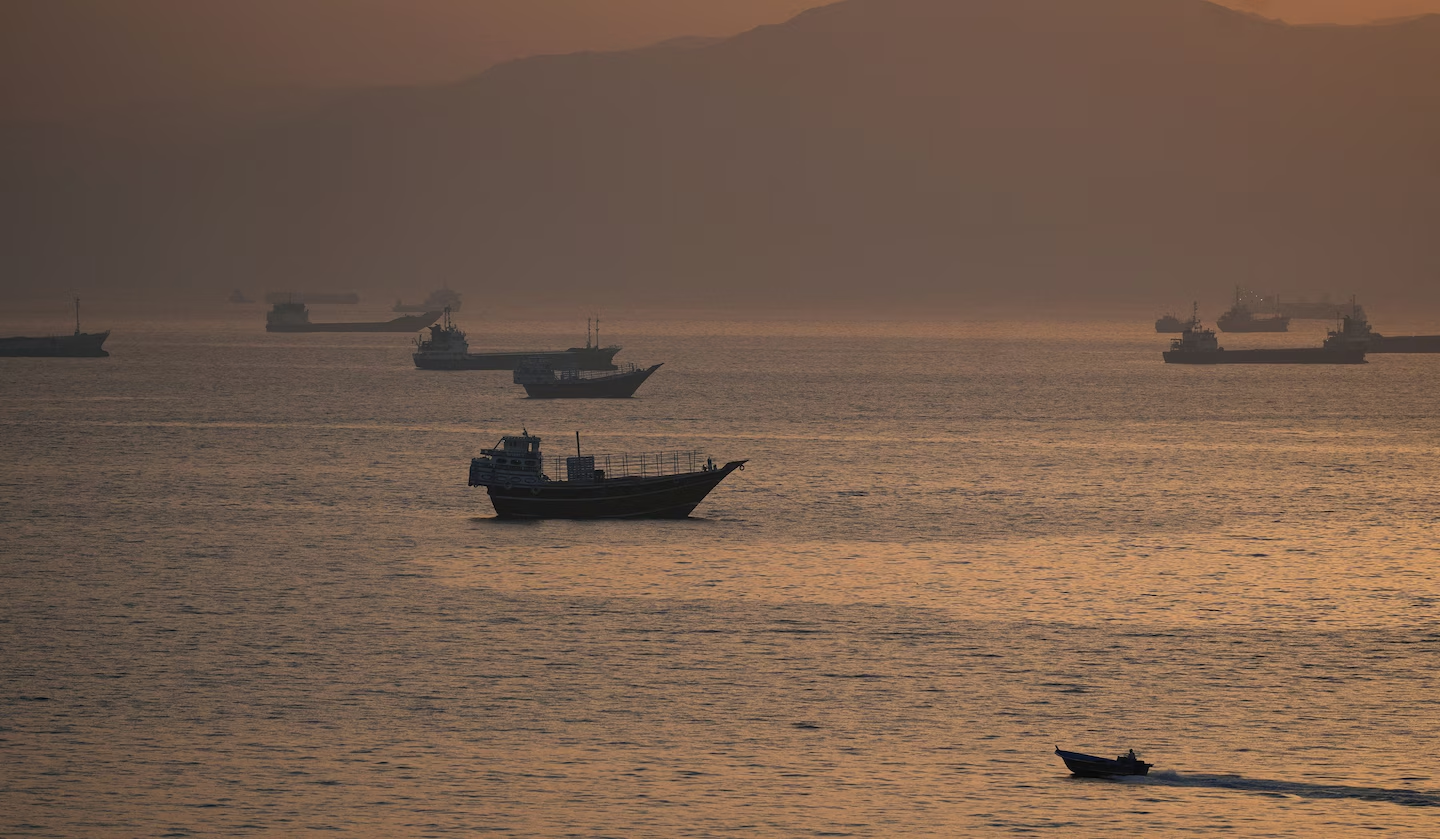
According to a Reuters report based on shipping data and satellite imagery, the operation involved at least 92 vessels and enabled the movement of around 90 million barrels of oil and petroleum products despite heavy tensions around the Strait of Hormuz.
Secretive Ship-to-Ship Transfers Used
The report claimed the operation relied on:
- ship-to-ship oil transfers
- staggered vessel movement
- dimmed ship lighting
- disabled transponders
- aerial and maritime drone surveillance
The strategy closely resembled methods previously used by Iran to bypass international sanctions and conceal oil shipments.
Strait of Hormuz Remained Under Tension
The transfers reportedly began in early May during heightened conflict involving the US, Israel, and Iran.
The Strait of Hormuz — one of the world’s most critical oil trade routes — had effectively become a high-risk zone amid military tensions and fears of Iranian retaliation.
Normally, nearly one-fifth of global oil consumption passes through the strait.
Two Key Transfer Locations Identified
According to the report, the operation centred around two major offshore locations:
- Fujairah coast in the United Arab Emirates
- waters near Sohar port in Oman
Tankers reportedly travelled toward designated meeting points before approaching the Strait of Hormuz.
Ships then staggered their movements while maintaining separation distances to reduce detection risks.
Military-Controlled Operation
Reuters reported that the entire operation was allegedly overseen by the US military.
As vessels approached sensitive areas near the Strait of Hormuz, ship transponders were reportedly turned off and external lights dimmed.
Oil was then transferred from smaller tankers to large Very Large Crude Carriers (VLCCs), which later transported the cargo onward to global markets.
Each transfer reportedly took between 24 and 40 hours.
Drones and Security Measures Used
The report claimed aerial drones and maritime surveillance systems were used to monitor and protect the shipping operation against potential Iranian attacks.
Sources told Reuters that military oversight remained active throughout the operation.
Apache Helicopter Crash Allegedly Linked
The report also linked the recent crash of a US Army Apache helicopter near the Strait of Hormuz to the oil transfer operation.
According to multiple sources cited by Reuters, the helicopter was allegedly participating in the broader security mission connected to the offshore transfers.
The helicopter was reportedly shot down on June 9 amid heightened military tensions in the region.
While Donald Trump accused Iran of being responsible, Tehran denied intentionally targeting the aircraft.
Iran’s Long-Used Technique Adapted at Larger Scale
Ship-to-ship transfers have long been associated with Iran’s sanctions-evasion tactics because they can obscure the origin and destination of oil cargo.
However, Reuters noted that the US-linked operation reportedly occurred on a much larger scale, with multiple simultaneous transfers happening under military protection.
Hormuz Reopening Expected
Following the recently announced US-Iran framework peace agreement, Donald Trump stated that the Strait of Hormuz is expected to fully reopen for global oil trade later this week.
Energy markets are now closely monitoring whether shipping activity through the region returns to normal levels in the coming days.