






Vizhinjam Becomes New Gateway for India’s Global Trade
VIZHINJAM : India’s dependence on foreign ports for container transshipment could face a major challenge as Vizhinjam International Seaport begins full-fledged import-export (EXIM) operations,...

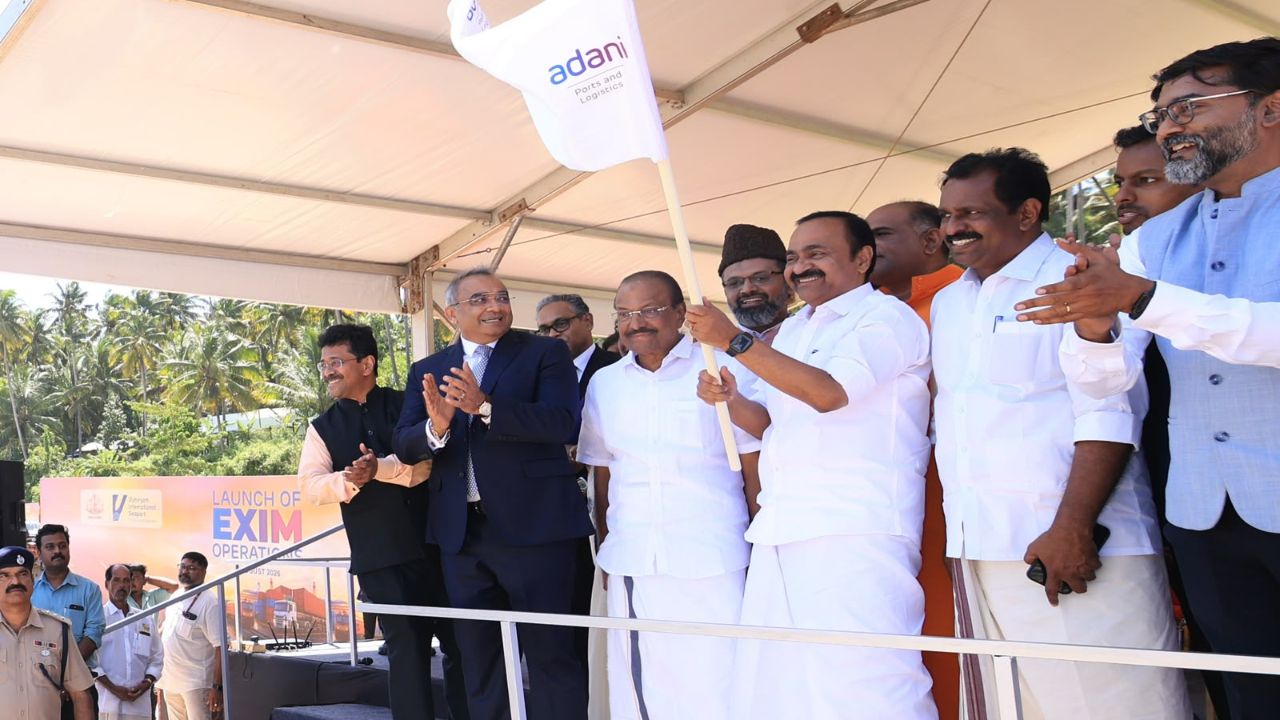
VIZHINJAM : India’s dependence on foreign ports for container transshipment could face a major challenge as Vizhinjam International Seaport begins full-fledged import-export (EXIM) operations, positioning Kerala as a direct gateway between Indian businesses and global markets.
The development marks a major shift for Vizhinjam, which until now has primarily functioned as a transshipment hub. With EXIM operations, cargo originating in or destined for India can now be handled directly at the port, potentially saving exporters and importers both time and logistics costs.
Kerala Chief Minister V.D. Satheesan said the port had entered a new phase of global connectivity.
“Vizhinjam is now a gateway to the world. It is time to make the most of this opportunity through strong road-rail connectivity and large private investments,” Satheesan said. He also announced ₹3,200 crore for ring-road land acquisition.
Ashwini Gupta, CEO and Whole-time Director of Adani Ports and Special Economic Zone, said the development would connect Kerala’s capabilities with international markets.
“Vizhinjam is a new gateway connecting Kerala’s talent and India’s aspirations with global markets,” Gupta said.
More than 75% of India’s container transshipment cargo is currently handled through foreign ports. The new EXIM facility is expected to reduce that dependence while improving supply-chain efficiency.
Vizhinjam began commercial operations on December 3, 2024, and has already handled more than 2.28 million TEUs and over 1,100 vessels, including more than 80 ultra-large container ships.
The initial benefits are expected across Kerala, Tamil Nadu and Karnataka, particularly manufacturing centres such as Bengaluru, Coimbatore and Tiruppur.
The port’s proposed ₹16,000-crore second-phase expansion will raise annual capacity to 5.7 million TEUs, with additional berths, rail-road connectivity, logistics parks and warehousing facilities targeted for completion by December 2028.
The transformation strengthens Kerala’s position on India’s maritime map while offering Indian businesses a faster route to global trade.