



Valsad Set for Record Mango Harvest as 2 Lakh Tons Expected This Season
Valsad | Gujarat — Valsad district, known as Gujarat’s mango capital, is witnessing a bumper mango season this year with an estimated production of more than 2.14 lakh tons, reaffirming its position...

Valsad | Gujarat — Valsad district, known as Gujarat’s mango capital, is witnessing a bumper mango season this year with an estimated production of more than 2.14 lakh tons, reaffirming its position as one of India’s most important mango-producing regions.
Spread across 39,076 hectares of orchards, the lush mango belt of South Gujarat is not only feeding domestic markets but also driving exports to the United States, Europe and Gulf nations. Officials estimate that nearly 10,000 tons of mangoes from the district will be exported during the 2025-26 season.
From the world-famous Hafus (Alphonso) to fragrant Kesar varieties, mango cultivation has become the backbone of Valsad’s rural economy, especially in talukas like Dharampur, Kaprada, Umargam, Pardi and Valsad.
Deputy Horticulture Officer Nikunj Patel said the district’s unique climate and fertile landscape make it ideal for mango farming. “Valsad has the highest mango cultivation area in Gujarat. This season, we are expecting production of nearly 214,918 tons,” he said.
According to officials, saffron Kesar mangoes are cultivated in over 30,000 hectares while Alphonso varieties occupy more than 4,000 hectares. Other varieties including Rajapuri, Langda, Dasheri, Amrapali and Totapuri are also grown extensively.
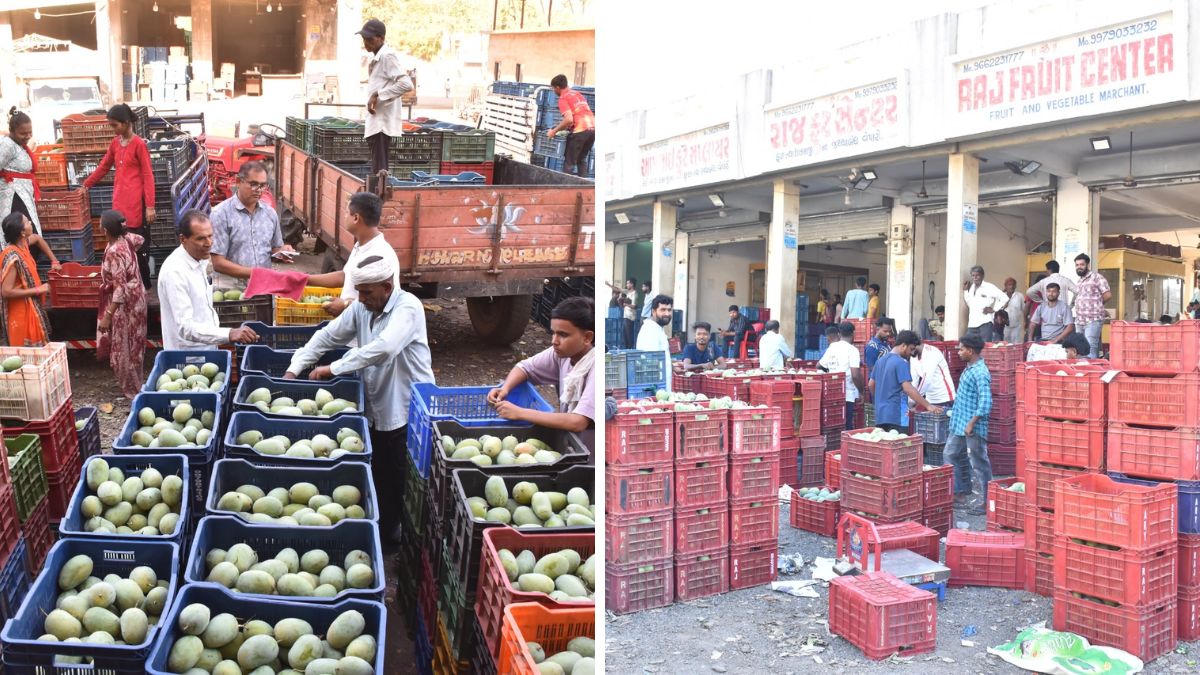
At the heart of this booming trade lies the Dharampur Mango Market, one of South Gujarat’s largest wholesale fruit hubs. During peak season, over 450 mango stalls operate daily, attracting traders from Mumbai, Surat, Ahmedabad, Maharashtra and even northern states.
Hundreds of trucks loaded with mangoes leave the market every day for destinations across India and overseas. The market follows a traditional auction system where prices are negotiated discreetly between traders and farmers under a handkerchief before deals are sealed with a handshake.
Farmer leader Jivabhai Ahir said the mango economy has become a lifeline for tribal communities in the region. “Nearly 8,000 to 10,000 tribal labourers get employment every day during mango season. Work is generated in farming, loading, transport and packaging,” he explained.
For workers like Dineshbhai Kunwar from Gorkhada village, the mango season provides critical income. “I earn between ₹1,200 and ₹1,500 daily during the season, and on busy days even ₹1,800. In one season, I can earn ₹50,000 to ₹60,000,” he said.
With strong exports, rising demand and large-scale employment generation, Valsad’s mango industry continues to stand as a shining example of how agriculture can transform rural livelihoods while carrying Gujarat’s sweetness to the world.