





Surat Workers’ ‘Gaon Chalo’ Protest Sparks Mass Exodus Before Diwali
SURAT: With Diwali and Chhath Puja approaching, Surat’s railway stations are witnessing a painful exodus of workers who say they have been left with little choice but to abandon their jobs and return...

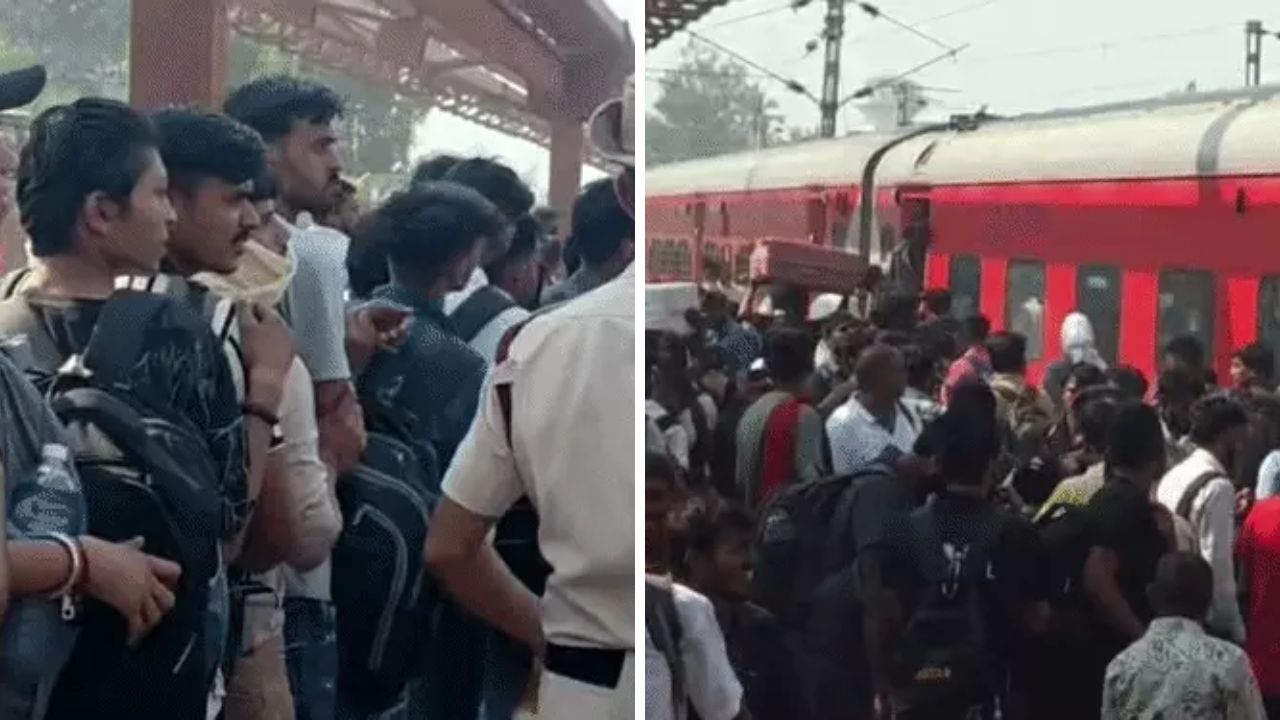
SURAT: With Diwali and Chhath Puja approaching, Surat’s railway stations are witnessing a painful exodus of workers who say they have been left with little choice but to abandon their jobs and return home. Allegations of 12-hour shifts, withheld wages, wage deductions and denial of weekly holidays have fuelled the ‘Gaon Chalo Andolan’, with workers claiming that more than a million labourers across Surat city and district are joining the movement.
Long queues of workers were seen at Surat Railway Station as migrants from Uttar Pradesh and Bihar prepared to return to their villages, carrying bags, children and the frustration of months of alleged workplace exploitation.
“We have to work 12 hours a day, and we don’t even get paid on time. If we take leave after working continuously for 30 days, our wages are deducted,” said a worker preparing to return home.
Another worker alleged that when he sought leave to visit his village after seven or eight months, his employer withheld his wages and removed him from the job. Workers claimed that 250 to 300 employees were dismissed after demanding a weekly day off.
‘Only Empty Assurances’
Premchandra, who was returning to Ayodhya, said workers had repeatedly been promised relief but saw little change.
“They only offer empty assurances; later, no one listens to our grievances,” he said.
Workers alleged that employers sometimes agree to grant leave but later revert to a system in which employees are expected to work without a weekly holiday.
Ajay, another worker heading home, said employers had warned that wages would be deducted for days missed. Rajiv Kumar Pal from Allahabad said the absence of salary hikes and weekly holidays had forced him to leave.
“They told us there would be no Sunday off and that we were free to leave if we wanted,” Rajiv said.
‘Better to Farm Than Endure Servitude’
Brijesh Nishad, travelling to Prayagraj, said he had worked for four to five months but was denied leave. He said he would now return to farming and other work in his village.
“Better to farm in the village than endure servitude in Surat,” was the sentiment expressed by several workers leaving the city.
Manoj Kumar Singh alleged that workers were made to work 12-hour shifts while wages were delayed or withheld when they sought leave.
Shivvandan Kumar said workers were willing to work 26 days a month but opposed being forced to work all 30 days.
“We will return only if the boss calls us. We will not work 30 days a month,” he said.
Textile Industry Faces Labour Crunch
Labour union representative Ajay D Dubey said workers were being provided water and biscuits as they left for their villages. He alleged that employers had harassed and dismissed workers after the movement began, claiming that videos had been collected as evidence.
The exodus has raised concerns for Surat’s embroidery and textile industry, which depends heavily on migrant skilled labour. Workers’ demands for a weekly holiday, timely wages and humane working conditions, if left unresolved, could deepen the labour shortage and disrupt production in one of the city’s key economic sectors.