




Surat Creeks Need Urgent Transformation, Says Urban Planner
Surat | Gujarat — Surat’s creeks—once natural lifelines—have become symbols of recurring floods and foul odour, but a comprehensive new proposal aims to turn this long-standing civic crisis into an...

Surat | Gujarat — Surat’s creeks—once natural lifelines—have become symbols of recurring floods and foul odour, but a comprehensive new proposal aims to turn this long-standing civic crisis into an opportunity for sustainable transformation. Urban planner Pankaj Gandhi has outlined an ambitious Integrated Urban Water Management (IUWM) roadmap that could redefine how the city handles flooding, wastewater and climate resilience in Surat.
“Surat must stop treating its creeks as open sewers and start seeing them as vital water bodies,” Gandhi said. “If we change our approach today, we can convert a major environmental liability into a blue-green asset for the future.”
Tackling Floods with Science and Infrastructure
Monsoon flooding remains one of the city’s biggest challenges, with creeks often unable to carry excess rainwater. Gandhi stressed that scientific flow management and infrastructure upgrades are essential.
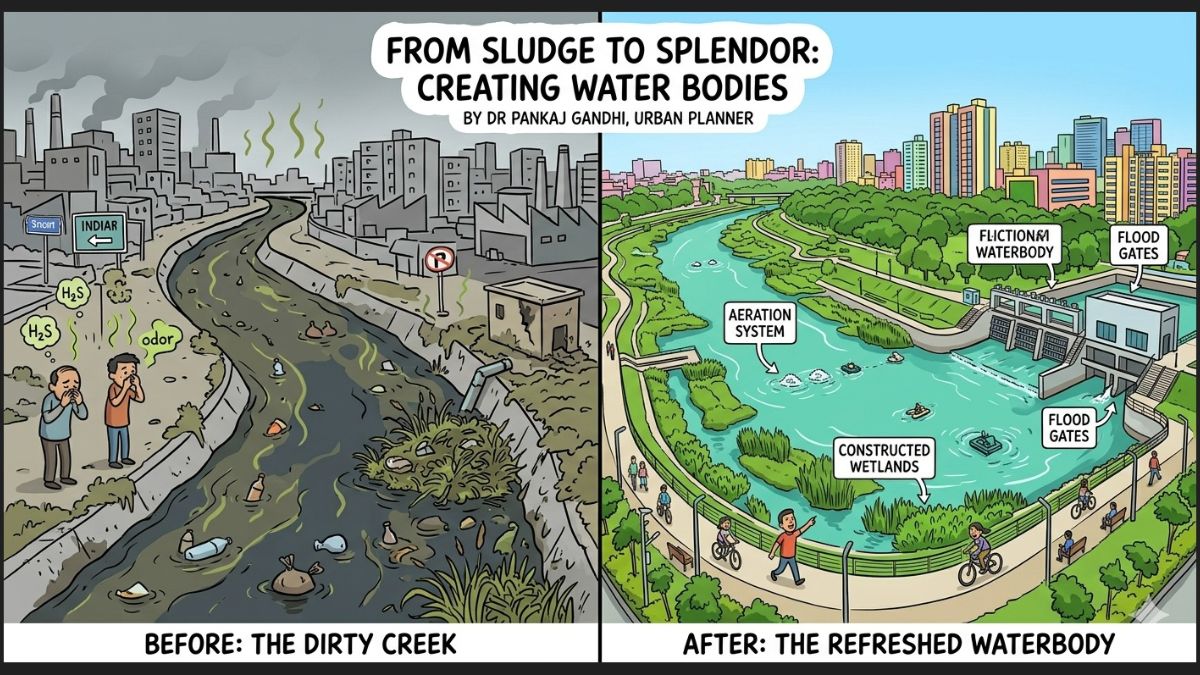
He proposed regular de-silting and widening of creek channels, installation of gated spillways to stop tidal backflow, and high-capacity pumping stations to discharge water during high tide. Artificial detention ponds on the city’s outskirts could act as “holding tanks” for heavy rainfall.
“These steps can dramatically reduce flood pressure on urban areas,” Gandhi said. “Flood prevention must become proactive, not reactive.”
Ending the “Khadi Smell” Through Water Quality Reforms
The foul odour from creeks during dry months—caused by hydrogen sulfide gas—has long troubled residents. Gandhi’s plan calls for interceptor sewer lines to divert domestic sewage to treatment plants instead of allowing it to flow directly into creeks.
He also recommended bio-remediation using plants and microbial cultures to naturally break down pollutants and increase dissolved oxygen levels. Aeration systems such as fountains and mechanical aerators would further revitalise the ecosystem.
“The smell problem is not unsolvable,” Gandhi explained. “With the right mix of engineering and ecology, the creeks can become clean and living water systems again.”
Building a Sponge City and Circular Water Economy
A key pillar of the proposal is transforming Surat into a “Sponge City,” where urban landscapes absorb rainwater instead of shedding it. Permeable pavements, groundwater recharge and constructed wetlands could reduce pressure on drainage systems while improving biodiversity.
Gandhi also highlighted the economic potential of treated water reuse. “Treated creek water can be supplied to dyeing and printing clusters in Pandesara and Sachin. This will save freshwater and generate revenue for maintenance,” he said.
He added that ecological parks along creek banks could boost eco-tourism while discouraging illegal dumping.
Smart Monitoring and Global Inspiration
The plan includes real-time monitoring through IoT sensors, drone surveillance and a dedicated “Khadi Cell” within the municipal administration.
“Smart governance must support smart infrastructure,” Gandhi said. “Real-time data can provide early flood warnings and ensure accountability.”
He pointed to global success stories such as Seoul’s Cheonggyecheon River restoration, Singapore’s water recycling model and the Netherlands’ “Room for the River” project as proof that such transformation is achievable.
A Vision for a Resilient Future
Gandhi believes the initiative could improve biodiversity, public health and urban aesthetics while strengthening climate resilience.
“This is not just an environmental project,” he said. “It is about protecting lives, improving public health and creating a sustainable future for Surat.”