



One Nation, One Election JPC Meets Gujarat Leaders Amid Sharp Political Divide
Gandhinagar | Gujarat — The debate over “One Nation, One Election” intensified in Gujarat as the Joint Parliamentary Committee (JPC) began state-level consultations, triggering a sharp political...

Gandhinagar | Gujarat — The debate over “One Nation, One Election” intensified in Gujarat as the Joint Parliamentary Committee (JPC) began state-level consultations, triggering a sharp political showdown. While the Gujarat government pledged full support, Congress and Aam Aadmi Party leaders strongly opposed the proposal, calling it a threat to federalism and democratic balance.
JPC Begins State Consultations
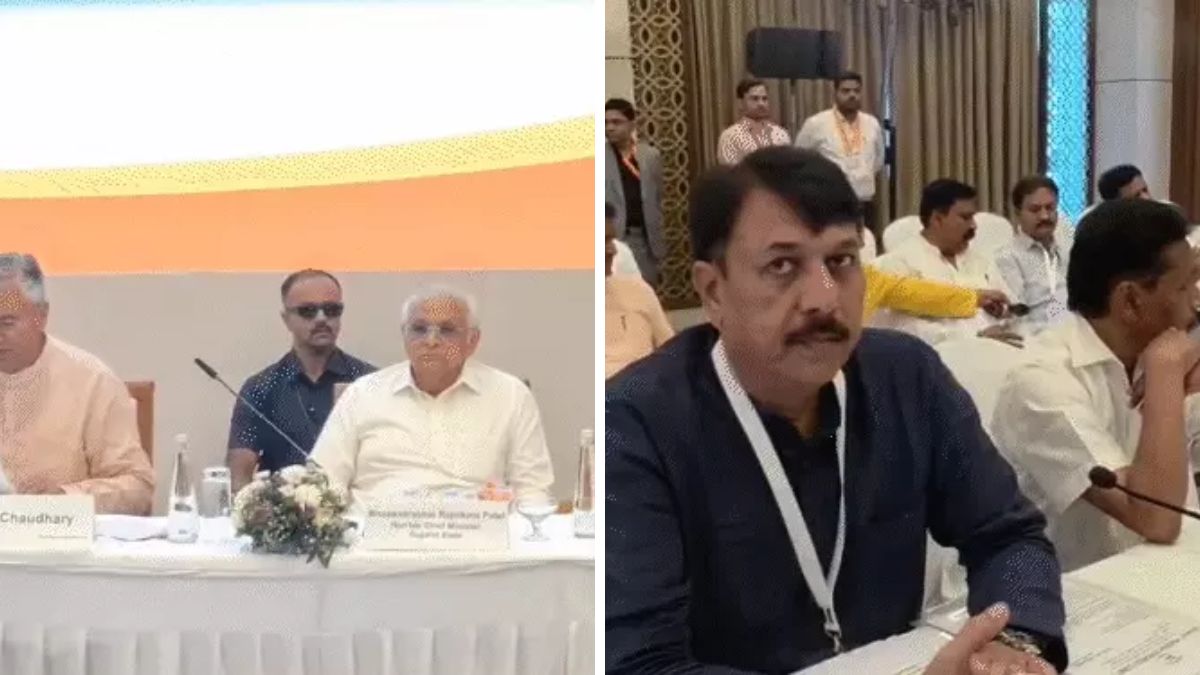
The JPC, chaired by senior lawyer and MP P.P. Chaudhary, is touring multiple states to gather views from governments and political parties. The 39-member committee, comprising MPs from both Lok Sabha and Rajya Sabha, held key meetings in Gujarat on Wednesday with the Chief Minister, Deputy Chief Minister, ministers, MLAs and opposition leaders.
The consultations are part of the Centre’s efforts to build consensus on synchronising Lok Sabha, Assembly and local body elections across the country.
Gujarat Government Extends Full Support
Minister of State for Home Harsh Sanghvi made the state government’s position clear, saying Gujarat fully supports the proposal.
“One Nation, One Election is in the interest of both the country and the state,” Sanghvi said.
He cited the example of Gujarat’s 2026 local self-government elections, where municipal corporations, municipalities and panchayats voted on a single day.
“It allowed efficient planning and reduced administrative burden,” he said.
Sanghvi added that repeated elections consume massive time and resources.
“Citizens have to vote repeatedly, and the system spends months preparing. Around 50 lakh man-hours are spent on Assembly and Lok Sabha elections alone,” he said.
He argued that the Model Code of Conduct disrupts governance and development work whenever elections are announced.
Political Attack on Opposition
Taking a swipe at Congress leader Rahul Gandhi, Sanghvi said, “They carry a book in their hands, but if you ask them about a single page, they don’t know,” claiming the opposition was spreading misinformation.
Congress Calls Proposal Anti-Federal
Gujarat Congress president Amit Chavda strongly opposed the bill, calling it an attempt to centralise power.“This proposal is against the federal structure and constitutional spirit of the country,” Chavda said.
He warned that the plan would weaken state governments and disrupt democratic processes.
“If a government falls mid-term, the provision of not holding fresh elections is against democracy. Voters elect governments for five years, not half terms,” he said, citing B.R. Ambedkar’s Constituent Assembly views.
Chavda also rejected the Centre’s cost-saving claims.“Less than one percent of the state budget is spent on elections. Simultaneous polls will require huge deployment of security forces, EVMs and VVPAT machines, costing thousands of crores,” he argued.He added that national issues could overshadow local concerns.
“Local governance issues will be suppressed, and voters may get confused,” he said.
AAP Raises Practical Concerns
Aam Aadmi Party leaders also voiced strong objections during the meeting and subsequent press conference.
State leader Isudan Gadhvi questioned the feasibility of synchronised elections.
“When Assembly elections are held in phases, how will Lok Sabha, Assembly and local polls be conducted together?” he asked.
Gadhvi suggested the government focus on reforms like “One Nation, One Education” and “One Nation, One Justice” instead.
The party said it had submitted its objections and suggestions in writing and called for a nationwide consensus before any decision.