



South Gujarat Stakes Claim for National Water Academy Centre as Region Eyes Landmark Water Institution
Surat — As India grapples with mounting challenges of water security, climate change, urban flooding and industrial sustainability, a compelling case is emerging for South Gujarat to host a Regional...

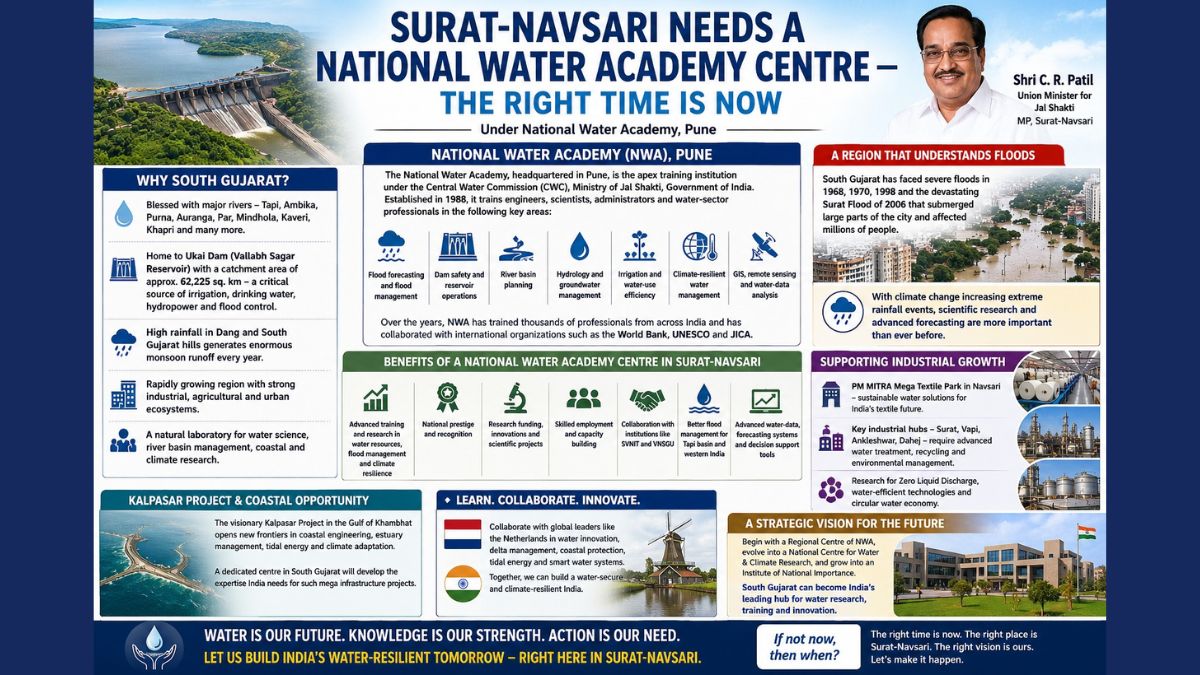
Surat — As India grapples with mounting challenges of water security, climate change, urban flooding and industrial sustainability, a compelling case is emerging for South Gujarat to host a Regional Centre of the National Water Academy (NWA), Pune. Backed by a unique blend of water resources, industrial strength and academic excellence, the region is increasingly being viewed as one of the most suitable locations in western India for a premier national institution dedicated to water management and climate resilience.
The proposal gains added significance at a time when Union Minister for Jal Shakti C.R. Paatil, who represents Navsari in Parliament, is leading the country’s water governance agenda. Development experts and water professionals believe the current alignment presents a rare opportunity to bring a nationally significant institution to South Gujarat.
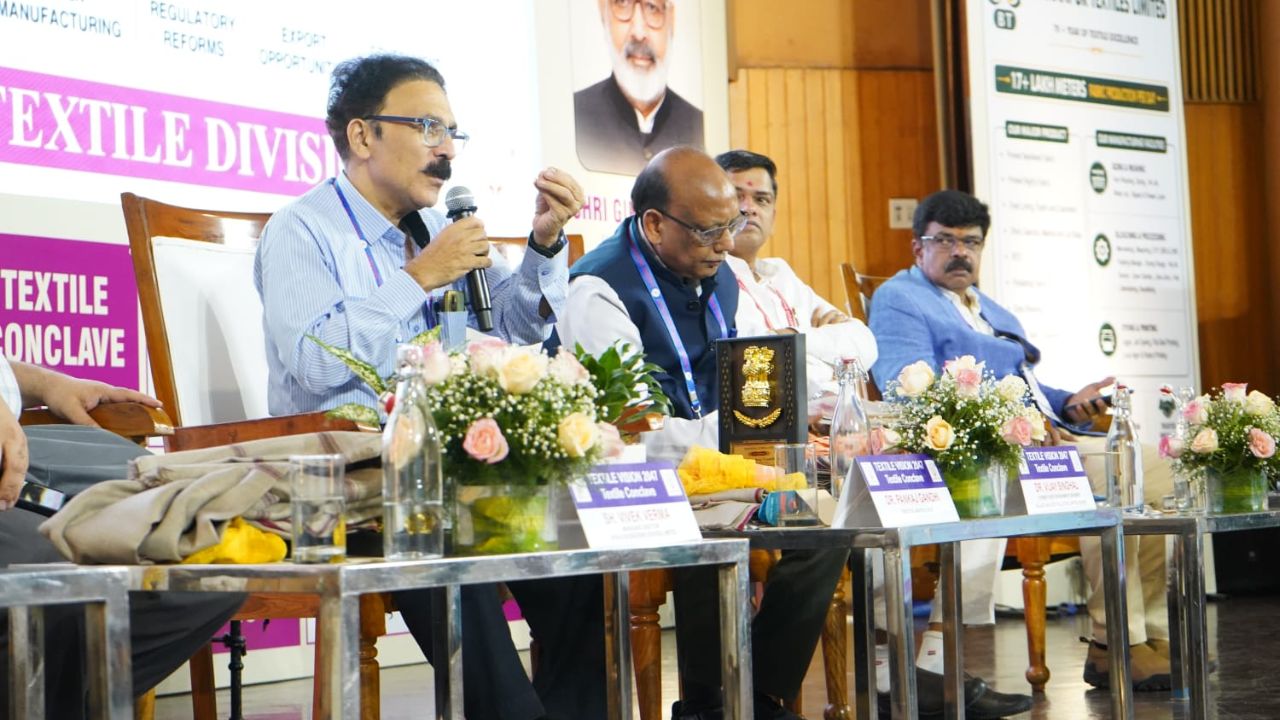
“Few regions in India possess the combination of river systems, industrial ecosystems, coastal resources and flood-management challenges that South Gujarat offers,” said Dr. Pankaj Gandhi, a water resources expert and researcher. “A Regional Centre of the National Water Academy here would not only benefit Gujarat but serve the entire western region of the country.”
South Gujarat is home to major rivers including the Tapi, Ambika, Purna, Auranga and Par, while the Ukai Dam remains one of western India’s most important reservoirs. The region’s diverse hydrological landscape provides a natural laboratory for advanced research in flood forecasting, dam safety, reservoir operations, groundwater management and climate-adaptive water infrastructure.
The devastating Surat floods of 2006, along with major flood events witnessed over the decades, underscore the need for a dedicated centre focused on hydrology, disaster preparedness and watershed management. Experts argue that as climate-related extreme weather events become more frequent, India requires stronger institutional capacity to predict and mitigate flood risks.
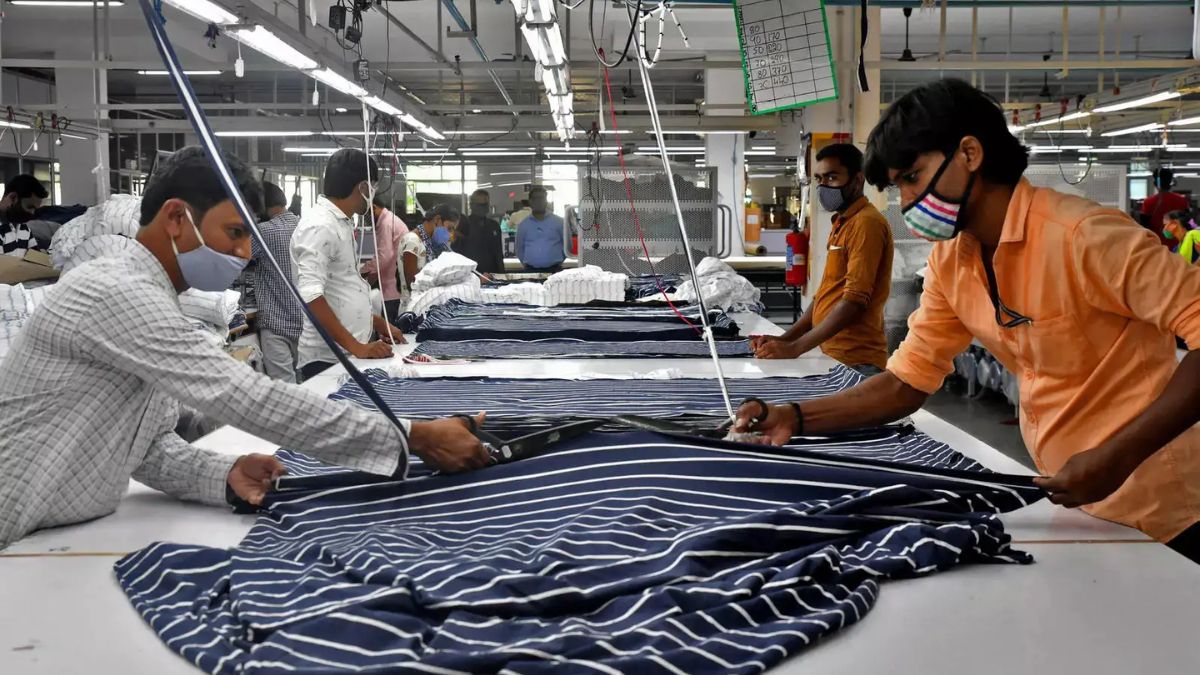
Beyond water security, the proposed centre could support South Gujarat’s rapidly expanding industrial economy. Surat’s globally significant textile sector, the upcoming PM MITRA Mega Textile Park in Navsari, and the industrial belts of Vapi, Ankleshwar and Dahej all rely heavily on sustainable water use, wastewater recycling and environmental compliance.
“A National Water Academy centre could become a bridge between research and industry,” Gandhi said. “It can help develop solutions for water-efficient manufacturing, industrial wastewater management and long-term environmental sustainability.”
The proposed institution could also collaborate with leading academic centres such as SVNIT Surat, Navsari Agricultural University, VNSGU and The Maharaja Sayajirao University of Baroda, creating a multidisciplinary ecosystem for innovation in hydrology, artificial intelligence, remote sensing and environmental policy.
Supporters of the proposal argue that establishing a Regional Centre of the National Water Academy in Surat-Navsari would be far more than a regional achievement. It would strengthen India’s water-security architecture, generate skilled employment, attract research funding and position South Gujarat as a national centre of excellence in water science.
With the Ministry of Jal Shakti led by a representative from South Gujarat and the region’s strategic strengths aligning with national priorities, proponents say the moment is ripe for policymakers to transform the Surat-Navsari corridor into India’s next major hub for water knowledge, innovation and climate resilience.
Author’s Note: The views and proposal are based on inputs and analysis by Dr. Pankaj Gandhi, PhD in Civil Engineering (Water Resources) from SVNIT Surat and MBA from IIM Kozhikode.