





Surat Textile Industry Raises Alarm Over Nylon Yarn Duties, Seeks Global Competitiveness
Surat — A growing controversy over proposed increases in Anti-Dumping Duty (ADD), Minimum Import Price (MIP) and Basic Customs Duty (BCD) on imported nylon Fully Drawn Yarn (FDY) has sparked concern...

Surat — A growing controversy over proposed increases in Anti-Dumping Duty (ADD), Minimum Import Price (MIP) and Basic Customs Duty (BCD) on imported nylon Fully Drawn Yarn (FDY) has sparked concern across South Gujarat’s textile industry, with stakeholders warning that the move could have far-reaching consequences for thousands of manufacturing units and workers dependent on the sector.
At the heart of the debate lies a crucial question: Should India protect domestic nylon yarn producers through higher import barriers, or should it prioritize affordable access to raw materials to enhance the competitiveness of its downstream textile industry?
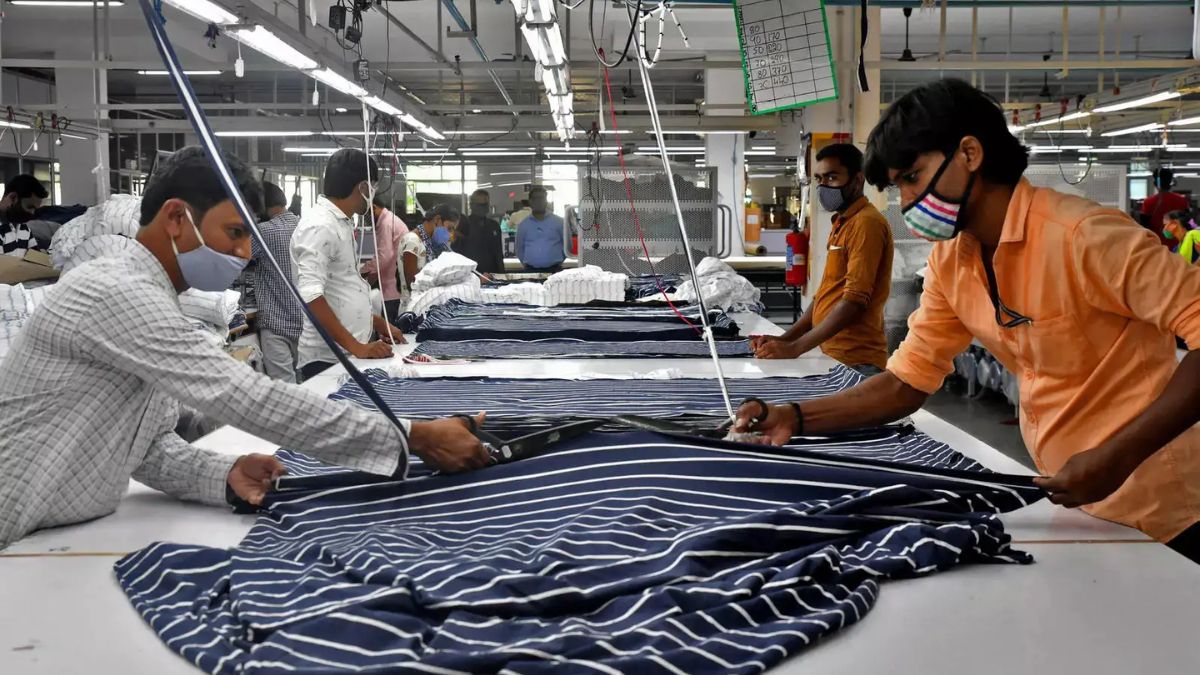
The issue gained momentum after the Sachin Industrial Co-operative Society submitted representations to the Prime Minister’s Office opposing any increase in duties on imported nylon yarn. Industry representatives argue that restrictions on imports could adversely impact more than 3,000 downstream textile users, thousands of MSMEs and an estimated 1.5 lakh workers linked to Surat’s thriving weaving, knitting and processing ecosystem.
Dr. Pankaj Gandhi, Director of the Man-Made Textiles Research Association (MANTRA), said the industry’s future depends on balancing self-reliance with global competitiveness.
“Surat’s textile sector requires access to affordable, high-quality nylon yarn if it is to compete internationally. Restricting imports without simultaneously developing world-class domestic alternatives may weaken the very industries that generate employment and exports,” Gandhi observed.
Industry experts point out that while India has emerged as a global leader in polyester yarn manufacturing, it continues to face challenges in producing premium-quality nylon yarn matching international standards in softness, tensile strength and uniformity. This has compelled many manufacturers to rely on imported material for specialized applications.
According to Gandhi, the long-term solution lies not in protectionist measures alone but in accelerating innovation and research. “Research institutions such as MANTRA, BTRA, IITs and leading universities should be given dedicated projects to develop next-generation nylon yarns that meet global benchmarks. India must invest in technology rather than depend solely on tariff protection,” he said.
The debate has also highlighted opportunities for South Gujarat’s petrochemical ecosystem. Companies operating in Dahej and other industrial hubs could play a pivotal role in boosting domestic production of key nylon raw materials such as Caprolactam and Adipic Acid.
Experts further advocate exploring sustainable alternatives. Gandhi recalled that MANTRA had previously worked on castor oil-based nylon polymers, a technology that could position India as a global leader in environmentally friendly nylon textiles.
“The objective should be to create an ecosystem where research institutions, industry and government work together to build a globally competitive nylon value chain,” Gandhi said.