






From Informal to Online: How IND Classifieds is Democratizing Digital Access for Local Service Providers
New Delhi [India], January 27: The backbone of India’s economy consists of small enterprises and local service providers, which generate a substantial amount of grassroots economic activity and...

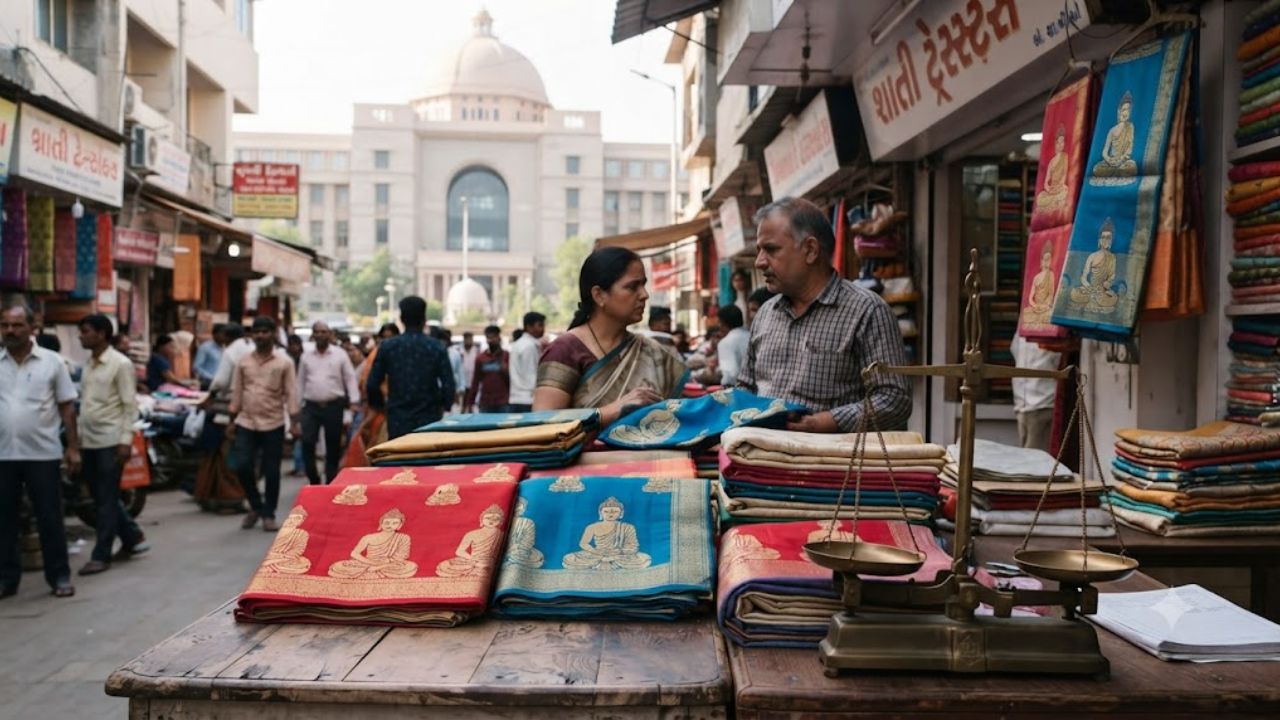
New Delhi [India], January 27: The backbone of India’s economy consists of small enterprises and local service providers, which generate a substantial amount of grassroots economic activity and jobs. Local businesses, including neighborhood retailers and service professionals, as well as micro-enterprises and home-based businesses, underpin the livelihoods of billions of people. However, even today, a considerable proportion of small businesses in urban India are not adequately represented in the online ecosystem, despite the rapid pace of digital adoption across the region. Kakumanu Ravi Chandra, the founder of Ind Classifieds, believes that hyper-local digital solutions could bridge this gap, as long as these platforms are designed with a clear understanding of Indian markets.
According to Ravi Chandra, small enterprises are not interested in technology, but relevance, affordability, and ease of use in digital adoption. The majority of local sellers do not need to use advanced e-commerce solutions and complicated dashboards. They do not require a complex digital presence that will tie them to the customers around them at excessive expenses and technical complexities.
Hyper-local online services exist at the point of space and purpose and provide users with the ability to find products and services in their local area. According to Ravi Chandra, this local-first strategy makes hyper-local platforms much more useful to smaller businesses compared to their more national counterparts that tend to focus more on size than relevancy.
Proximity is important in local trade. A customer who is looking for a plumber, a used car, a tutor, or a local store is likely to be making a search within a restricted area. Discovery through hyper-local platforms will be quicker, more contextual and based on trust, as he describes.
Cost is one of the biggest problems that small businesses are facing when it comes to the adoption of digital solutions. Most micro-enterprises are run with minimal margins and are not keen on spending on costly online advertisements or subscription strategies. When built with an affordable pricing structure, hyper-local classifieds sites reduce the barrier to entry and enable a significantly more diverse group of people to take part digitally.
Affordability is not a simple pricing problem but a trust problem, as Ravi Chandra points out. Once the small businesses feel that a platform is aware of their financial limits and is not trying to coerce them into anything, they are willing to adopt it naturally.
The other major determinant that contributes to the success of hyper-local platforms is their ability to uphold regional languages and patterns of local behaviour. India is not a homogeneous digital market; it is a group of heterogeneous linguistic, cultural and economic ecosystems. Those platforms which fail to acknowledge this diversity cannot easily take off outside of big cities.
Language support and design that is culturally relevant and regional are no longer optional. According to Ravi Chandra, they are critical to significant digital inclusion. Small business people have much greater confidence in getting involved with those platforms that can communicate in their language, both literally and figuratively.
Another fact that he notes is that hyper-local platforms have the potential to formalise parts of the informal economy, giving small sellers an online presence. Reviews, location-based visibility, and listings create accountability and trust, which are beneficial to both consumers and businesses.
In the future, Ravi Chandra holds the opinion that the next wave of digital expansion in India is going to be the Tier 2 and Tier 3 cities, especially local commerce. The favourable environment of hyper-local digital solutions is being created by increased smartphone penetration, cheap data, and higher ambitions of small business owners.
The digital economy in India will not be developed only in metros in the future. It will be moulded by millions of small businesses in new cities and towns who are willing to go digital, should platforms be created on their conditions, he says.
He, however, warns that technology is not enough. The platform that balances between growth and responsibility, as well as the long-term creation of value, will be the source of sustainable impact. Hyper-local platforms cannot afford to do anything but empower livelihoods, rather than create traffic. Technology is able to change people when it adapts to fit individuals rather than making them change and adjust to technology.
As India moves towards a digitally inclusive economy, hyper-local digital platforms have the potential to have a democratising effect, empower small enterprises, and build stronger local markets. When implemented intelligently, it can be a formidable economic battalion of economic stability and grassroots development – a way to draw small businesses in India into the digital mainstream.
https://indclassifieds.in/