






Gujarat HC Quashes Surat Trader FIR Over Buddha-Print Sarees
SURAT: A seven-year-old legal battle over sarees bearing images of Lord Gautam Buddha has ended in the Gujarat High Court, which has quashed the criminal proceedings against a Surat textile trader,...

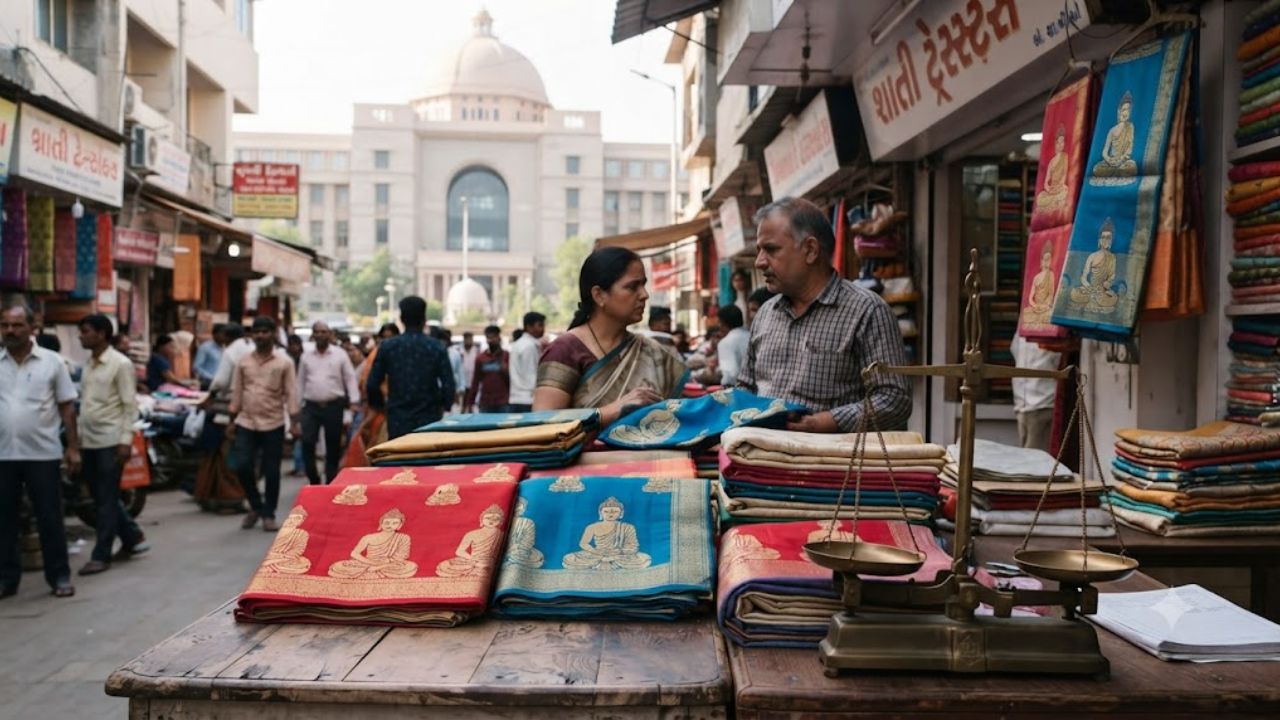
SURAT: A seven-year-old legal battle over sarees bearing images of Lord Gautam Buddha has ended in the Gujarat High Court, which has quashed the criminal proceedings against a Surat textile trader, holding that merely selling fabric carrying religious symbols does not establish deliberate or malicious intent to hurt religious sentiments.
The case dates back to December 2017, when Kunal Sonawane, president of the Samast Yuva Ambedkari Samaj, approached Salabatpura police alleging that sarees and fabrics carrying images of Lord Buddha had offended members of the Buddhist community. The complaint alleged that the images were printed on portions of the fabric, including the saree border and pallu, that could come into contact with the feet.
Police subsequently registered a case against four textile traders. Bharat Harjibhai Shankar, who operated from Vankar Textile Market, later approached the Gujarat High Court seeking to quash the complaint.
Trader Claims Commercial Rivalry
Representing Shankar, his lawyer argued that he was a trader dealing in fabrics according to market demand and had no intention of insulting any religion.
The petitioner’s lawyer told the court that the FIR was allegedly lodged to exert pressure on the trader amid business rivalry and commercial competition.
The High Court examined the police report and photographs placed before it and found no material demonstrating that the trader had deliberately or maliciously intended to insult a religious belief.
Court Stresses Intent Under Section 295A
The court relied on established Supreme Court principles concerning Section 295A of the Indian Penal Code, observing that the provision requires deliberate and malicious intention to outrage religious feelings.
The court held that the ordinary sale of fabric carrying images of religious figures or deities, by itself, does not establish the required criminal intent.
“There is no evidence on record to show that the petitioner committed the act with an intention to insult any religion,” the court observed.
It further found that the essential ingredients required to constitute an offence under Section 295A were absent in the case.
Allowing Shankar’s petition, the Gujarat High Court quashed the complaint and all proceedings arising from it against him.