







South Gujarat Solar Sector in Deep Crisis as Industry Flags Policy Shock, Grid Constraints
SURAT : The solar energy sector in South Gujarat is facing what industry leaders are calling a “policy-induced crisis,” with developers warning that restrictive domestic manufacturing rules, rising...

SURAT : The solar energy sector in South Gujarat is facing what industry leaders are calling a “policy-induced crisis,” with developers warning that restrictive domestic manufacturing rules, rising costs, and severe grid constraints are pushing India’s renewable energy ambitions into dangerous territory.
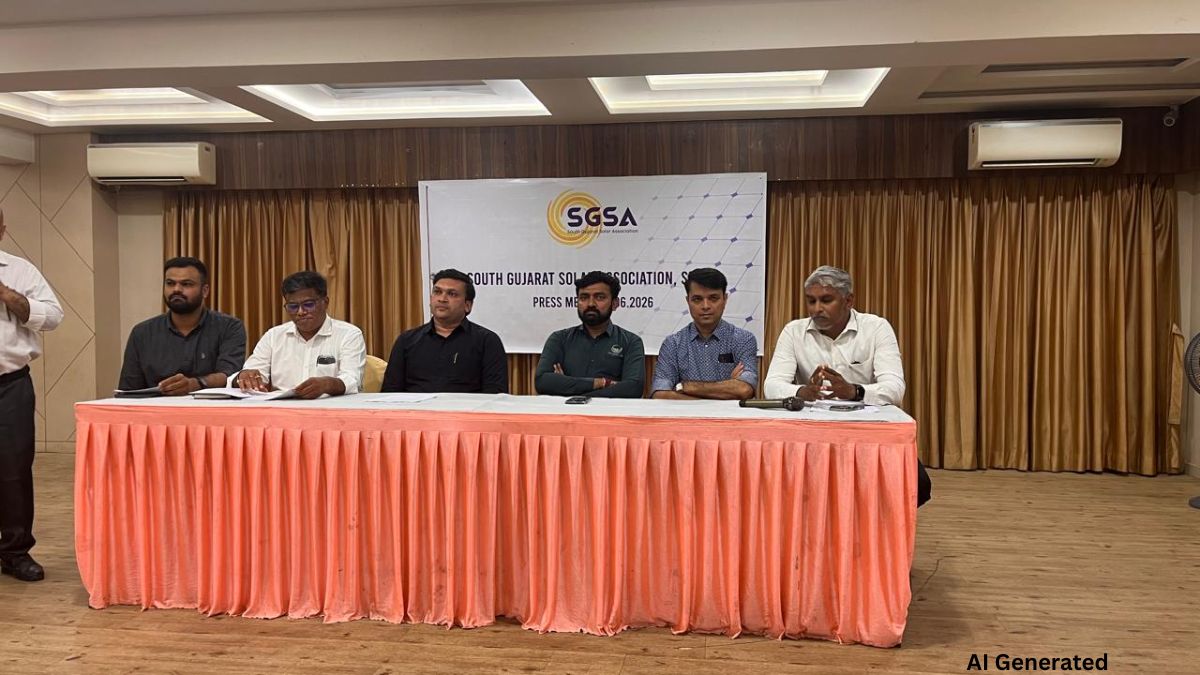
The South Gujarat Solar Association has urgently called for government intervention, alleging that current policy frameworks—particularly Domestic Content Requirement (DCR) rules and Approved List of Module Manufacturers (ALMM) norms—are distorting the market, increasing costs, and creating a near-monopoly in the solar cell supply chain.
According to industry estimates, only a limited number of domestic cell manufacturers including Waaree Energies, Premier Energies, Emmvee, Jupiter, Fujiyama Power Systems, Mundra Solar (Adani), ReNew Power, RenewSys, TP Solar, and Websol Energy System currently control supply under DCR mandates. Industry representatives claim that domestic cell prices have surged to 14–16.5 cents per unit, compared to nearly 4 cents for imported Chinese cells, significantly inflating project costs by about 25% and more.
A spokesperson from the association, Mehul Patel said, “These policies, while intended to strengthen domestic manufacturing, have unintentionally created a concentrated supply ecosystem. This is leading to unjust pricing power and threatening the survival of over 140 module manufacturers across the country.”
Beyond manufacturing challenges, developers have also raised alarm over grid instability. Reports suggest that solar plants are facing curtailment of up to 60–70% during peak generation hours due to transmission constraints and DISCOM scheduling practices.
Another industry representative, Tejas Patel noted, “In several cases, shutdowns are imposed without prior notice, even during weekends. This unpredictability is causing severe financial losses and undermining investor confidence.”
Additional concerns include opaque billing systems, high charges for digital meter readings despite real-time monitoring, and delays in settlement cycles under PM-KUSUM and PM Surya Ghar schemes.
The association has demanded a five-year policy stability framework, transparent stakeholder consultation, compensation for forced curtailment, and urgent grid modernisation. It has warned that continued regulatory uncertainty could derail India’s net-zero commitments and stall billions in renewable energy investments.