





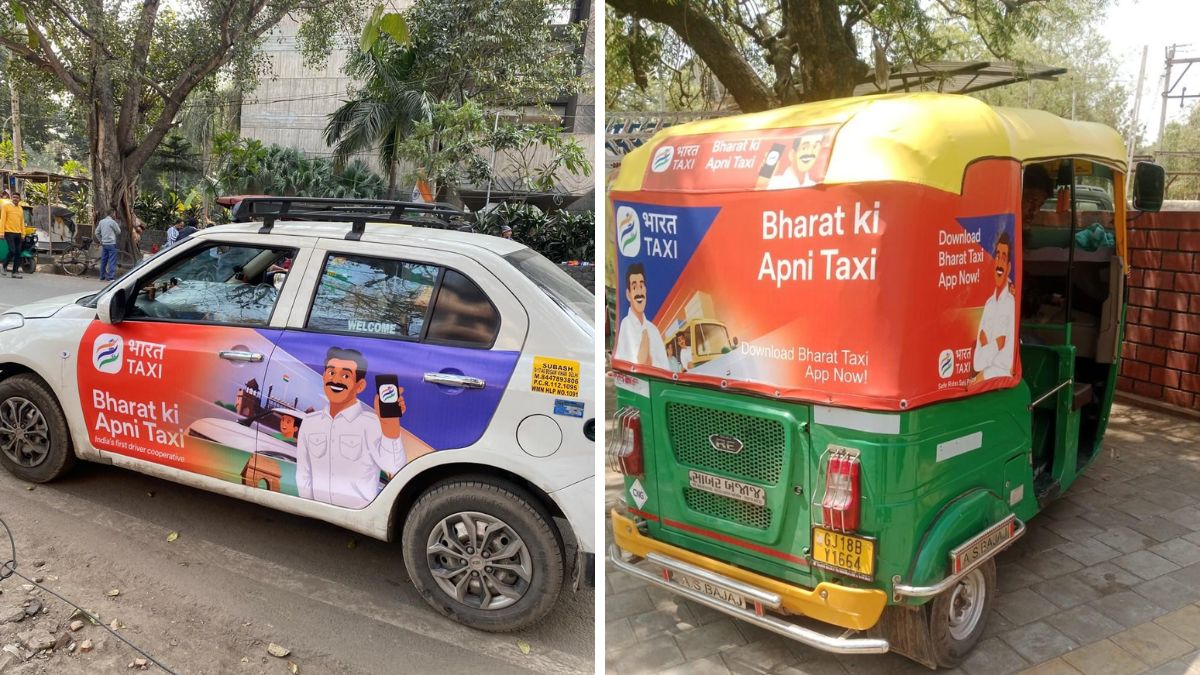
Bharat Taxi’s Cooperative Model Redefines India’s Mobility Sector
Gandhinagar | Gujarat — For decades, Gujarat’s cooperative identity was defined by the white revolution led by Amul. Today, another grassroots movement is quietly reshaping India’s transport economy...

Gandhinagar | Gujarat — For decades, Gujarat’s cooperative identity was defined by the white revolution led by Amul. Today, another grassroots movement is quietly reshaping India’s transport economy — not through milk collection centers, but through smartphones, auto-rickshaws, and taxis operating on city roads. Bharat Taxi, launched earlier this year as a driver-owned mobility platform, is emerging as one of the country’s most ambitious cooperative experiments in the digital era.
Unveiled on February 5 by Union Home and Cooperation Minister Amit Shah, Bharat Taxi has positioned itself as more than just a ride-hailing application. The platform is built on the principle of cooperative ownership, ensuring that drivers are not treated as gig workers alone, but as stakeholders and beneficiaries of the ecosystem they help run.
Backed by the vision of “Sahkar se Samriddhi” championed by Prime Minister Narendra Modi, the initiative is rapidly gaining momentum across Gujarat and other states. Industry observers say the model marks a significant shift in the mobility sector, long dominated by private aggregators charging steep commissions from drivers.
Jayen Mehta, Chairman of Bharat Taxi and Managing Director of Amul, described the platform as a structural transformation in urban transportation. “This model ensures that the earnings remain with the drivers. It restores economic dignity while creating a sustainable and people-centric mobility ecosystem,” he said.
Unlike conventional ride-hailing companies, Bharat Taxi operates on a zero-commission framework. Drivers retain the full value of their earnings, a move that has reportedly increased monthly incomes by nearly 25 to 30 percent for many members. The cooperative structure has also reduced financial uncertainty, especially for auto-rickshaw and taxi operators struggling with rising fuel prices and shrinking margins.
Praveen Thakor, one of the drivers associated with the platform, said the transition has been life-changing. “Earlier, most of our earnings went into commissions and operational deductions. Here, we finally feel respected and financially secure. Drivers can genuinely build a future for their families,” he said.
The impact is equally visible on passengers. Bharat Taxi has done away with dynamic surge pricing, replacing it with a stable and transparent fare structure. According to drivers and users, commuters are saving nearly 15 percent compared to fares charged by other aggregators.
Driver representative Janak Barot called the model a “win-win system” for both operators and passengers. “Customers appreciate affordable pricing, and drivers appreciate ownership. In the future, cooperative benefits like pension and insurance will further strengthen this ecosystem,” he noted.
The platform has already built a nationwide network of over six lakh drivers, including nearly one lakh from Gujarat, while crossing 35 lakh app downloads. After witnessing strong adoption in Ahmedabad and Surat, Bharat Taxi is now preparing for aggressive expansion in Vadodara.
To strengthen safety and trust, the platform has integrated an SOS feature directly linked with Gujarat Police. Dedicated transport connectivity to pilgrimage destinations such as Somnath and Dwarka has also widened its appeal beyond urban commuters.
With over 10,000 drivers trained in digital literacy and customer service, Bharat Taxi is positioning itself not merely as a transport app, but as a cooperative movement powered by technology, ownership, and social inclusion.