






Enjen AI Wants to Replace 18-Month ERP Rollouts With AI Systems That Go Live in Weeks
As global manufacturers battle rising operational costs, supply-chain disruptions, and increasing pressure to modernize legacy systems, a Bengaluru-based company is challenging the traditional ERP...

As global manufacturers battle rising operational costs, supply-chain disruptions, and increasing pressure to modernize legacy systems, a Bengaluru-based company is challenging the traditional ERP model with a fundamentally different approach.
Founded in 2021, Enjen AI is positioning itself at the forefront of AI-native industrial transformation by combining ERP, AI agents, Digital Twin technology, and automation into a single platform purpose-built for manufacturers. Unlike conventional enterprise systems that often take 12 to 18 months to implement, Enjen AI enables companies to go live in as little as four to eight weeks.
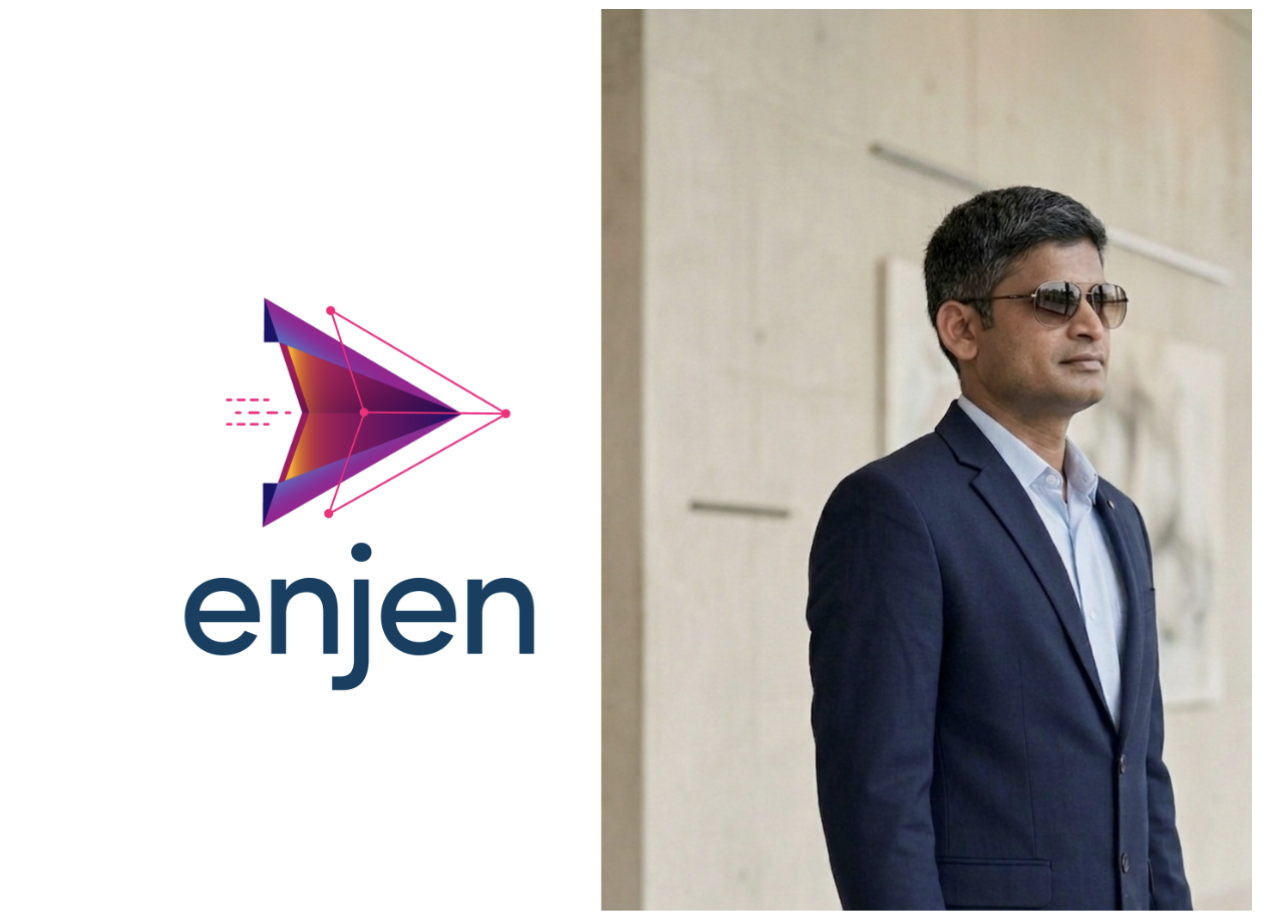
Founded and led by Subrat Parida, an alumnus of Indian Institute of Management Bangalore, the company was built on a bold premise: the future of manufacturing will belong not to companies retrofitting AI into outdated enterprise software, but to those placing AI directly on the shop floor from day one.
“Manufacturing is the backbone of every modern economy, but most of it still runs on software that was designed before the smartphone existed,” said Parida. “The next decade of manufacturing won’t be won by companies that simply digitize – it will be won by companies that put AI on the shop floor, in the hands of the people making real decisions every minute. Our mission is to make that shift simple, fast, and affordable for manufacturers everywhere.”
The company’s platform has been developed and tested in one of the world’s most demanding manufacturing environments – India where factories often operate under intense cost pressure and operational complexity. Today, Enjen AI serves customers across multiple geographies and industries, including steel, textiles, pharmaceuticals, garments, and consumer goods.
Its client portfolio includes companies such as JGI Steel, Meenakshi Steel Corporation, Botaneu Lifesciences, Superstar, and Akoo Group.
According to the company, manufacturers deploying Enjen AI have reported up to 40% reduction in downtime, 35% improvement in Overall Equipment Effectiveness (OEE), 50% faster decision-making, and 60% better forecast accuracy.
At the core of Enjen AI’s differentiation is its AI-native architecture. Rather than adding AI features onto legacy ERP frameworks, the platform is designed around real-time industrial intelligence. Plant operators and managers can monitor live Digital Twin visualizations of production lines, receive predictive alerts from AI agents before bottlenecks escalate into downtime, and make faster operational decisions with real-time data visibility.
“Walk into any mid-sized factory anywhere in the world and you’ll find brilliant operators making high-stakes decisions on gut feel because their ERP can’t tell them what’s happening in real time,” Parida added. “That’s the gap we’re closing. With Enjen AI, a plant manager sees the digital twin of their line, an AI agent flags the bottleneck before it becomes downtime, and the system goes live in weeks – not years.”
In addition to faster implementation timelines, the company highlights its industry-specific deployment modules, transparent pricing model, and 99.99% uptime SLA as key advantages over traditional ERP providers that often rely heavily on long consulting cycles and complex integrations.
As global manufacturing enters an era increasingly shaped by AI, automation, and operational resilience, Enjen AI is emerging as part of a new generation of industrial software companies redefining how factories operate in real time.
Headquartered in Bengaluru, Enjen AI continues expanding across international markets while positioning itself as a leading voice in AI-led industrial transformation.