





Gujarat Unveils Rs.93,000 Crore Road Revolution for Economic Leap
Gandhinagar, Gujarat – In a monumental stride towards economic acceleration and enhanced connectivity, Gujarat has announced an unprecedented investment exceeding ₹93,000 crore to construct a...

Gandhinagar, Gujarat – In a monumental stride towards economic acceleration and enhanced connectivity, Gujarat has announced an unprecedented investment exceeding ₹93,000 crore to construct a state-of-the-art road network. This ambitious plan, highlighted in the state’s latest budget, is poised to redefine logistical efficiency, drive industrial growth, and provide seamless access across the region, firmly cementing Gujarat’s position as a national economic powerhouse.
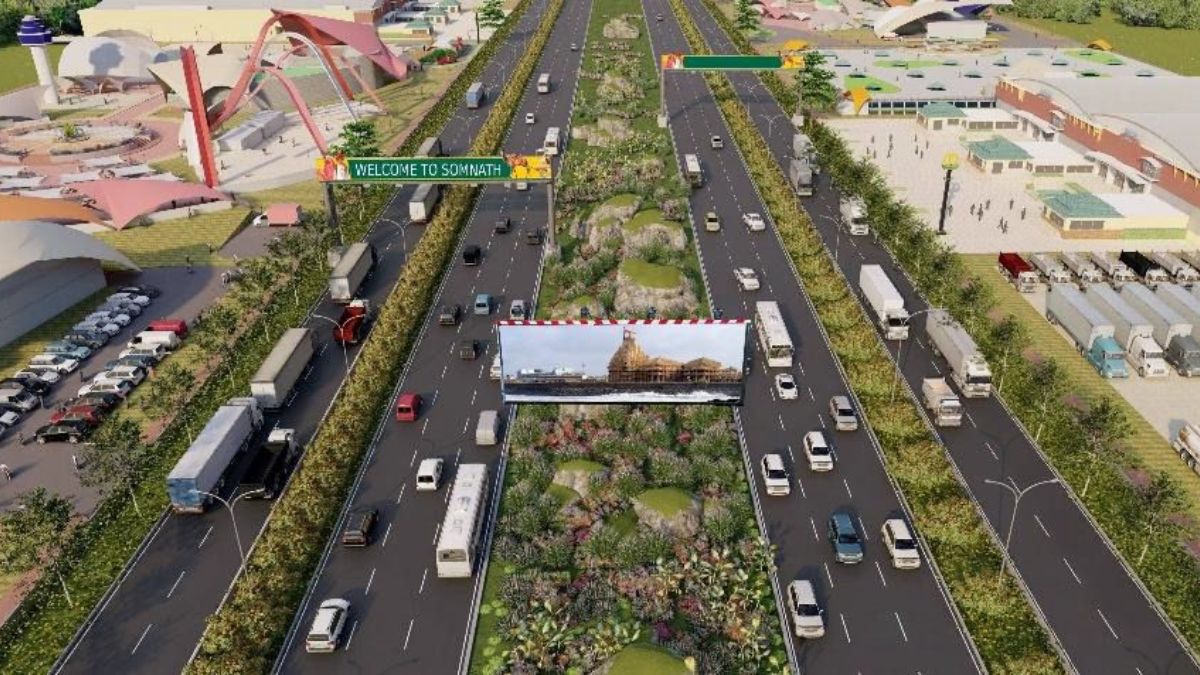
At the heart of this transformative initiative are two flagship greenfield expressways: the Namo Shakti Expressway and the Somnath-Dwarka Expressway. The Namo Shakti Expressway, a vital 430 km artery stretching from Deesa to Pipavav, is projected to cost an estimated ₹36,120 crore. This strategic corridor is meticulously designed to bolster economic activities in North Gujarat and Saurashtra. Complementing this, the Somnath-Dwarka Expressway will span an impressive 680 km, connecting key urban centers like Ahmedabad, Rajkot, and the sacred pilgrimage site of Dwarka, with an estimated investment of ₹57,120 crore.
These expressways are not merely roads; they are meticulously planned economic conduits. Both will provide direct, high-speed connectivity to Gujarat’s major ports, linking the state to national and international trade routes. This improved traffic flow is expected to significantly reduce congestion, lower transportation costs, and decrease pollution levels, contributing to a more sustainable logistical ecosystem.
The impact extends deeply into Gujarat’s industrial landscape. The Ahmedabad-Rajkot Expressway, for instance, traversing the influence area of the Dholera-Mumbai Industrial Corridor, is set to emerge as a critical industrial and manufacturing backbone. Thriving industrial hubs like Sanand will benefit immensely from enhanced logistics and streamlined supply chains. Manufacturers in Rajkot, especially those specializing in tools and machine equipment, will experience unprecedented connectivity. Similarly, Micro, Small, and Medium Enterprises (MSMEs) in Surendranagar will gain improved access to key urban markets, while agricultural businesses in Palanpur and Deesa in North Gujarat are poised for a significant boost from this strategic infrastructure.
The reach of this network is expansive, directly benefiting 13 districts: Amreli, Botad, Surendranagar, Patan, Banaskantha, Ahmedabad, Rajkot, Morbi, Jamnagar, Devbhoomi Dwarka, Porbandar, Junagadh, and Gir Somnath. This vast coverage encompasses nearly 45% of Gujarat’s population, ensuring that the expressways will be accessible within an hour from each district headquarters, drastically cutting down travel times and fostering regional development.
To ensure commuter convenience and robust regional integration, approximately 42 interchanges are planned across both expressways. Furthermore, wayside amenities will be established every 50 km, providing comprehensive services including parking for all vehicle types, restrooms, quality food and beverage options, essential medical services, and petrol pumps. A commitment to environmental stewardship is also evident, with planned overpasses and underpasses wherever necessary to ensure safe passage for local wildlife.
Upon completion, this transformative project will provide smooth and direct connectivity to numerous industrial and tourist hotspots. Pilgrimage sites and natural attractions like Ambaji, Dharoi, Polo Forest, Modhera, Bechraji, Jamnagar, Dwarka, Porbandar, and Somnath will become more accessible. Major industrial zones, including the Mandal Special Investment Region, Bavla, Sanand, Rajkot-Shapar, Porbandar-Kodinar, and Dholera, will see greatly enhanced logistical efficiency. This monumental undertaking will culminate in over 8,000 km of robust four to six-lane highways, solidifying Gujarat’s position as a leader in integrated, modern infrastructure.