






Surat Hot-Fix Film Under Regulatory Lens
SURAT : A seemingly small textile-support activity in Surat has opened up a much wider regulatory puzzle, with questions now being raised over how hot-fix film enters India, how it is classified by...

SURAT : A seemingly small textile-support activity in Surat has opened up a much wider regulatory puzzle, with questions now being raised over how hot-fix film enters India, how it is classified by Customs, where it is processed and, ultimately, where the polymer waste ends up.
The Surat Municipal Corporation (SMC) sought a scientific assessment of a 30-micron hot-fix film from MANTRA (Man-Made Textiles Research Association), bringing the material’s composition and characteristics into focus. Dr Pankaj Gandhi, associated with MANTRA’s technical assessment, has provided inputs on the scientific examination.
The issue goes beyond whether the material has a particular HSN description. Imported goods have to be classified under the applicable Customs Tariff, while the declared description, composition, thickness and other details should accurately correspond with the goods being imported.
The supplied assessment notes that MANTRA examined the material through techniques including polymer identification, thickness measurement, density determination, microscopic examination and residue analysis, with fire behaviour and recycling feasibility also being considered where appropriate.
The larger concern is traceability across the entire supply chain—from foreign manufacturer and Indian importer to Customs clearance, distributors, local vendors and small hot-fix units.
The issue also raises questions about MSME registrations. An Udyam registration does not automatically establish that a particular premises is authorised or suitable for every manufacturing activity. Units using heat presses and storing polymer films may require scrutiny of fire safety, electrical safety, building use and waste management.
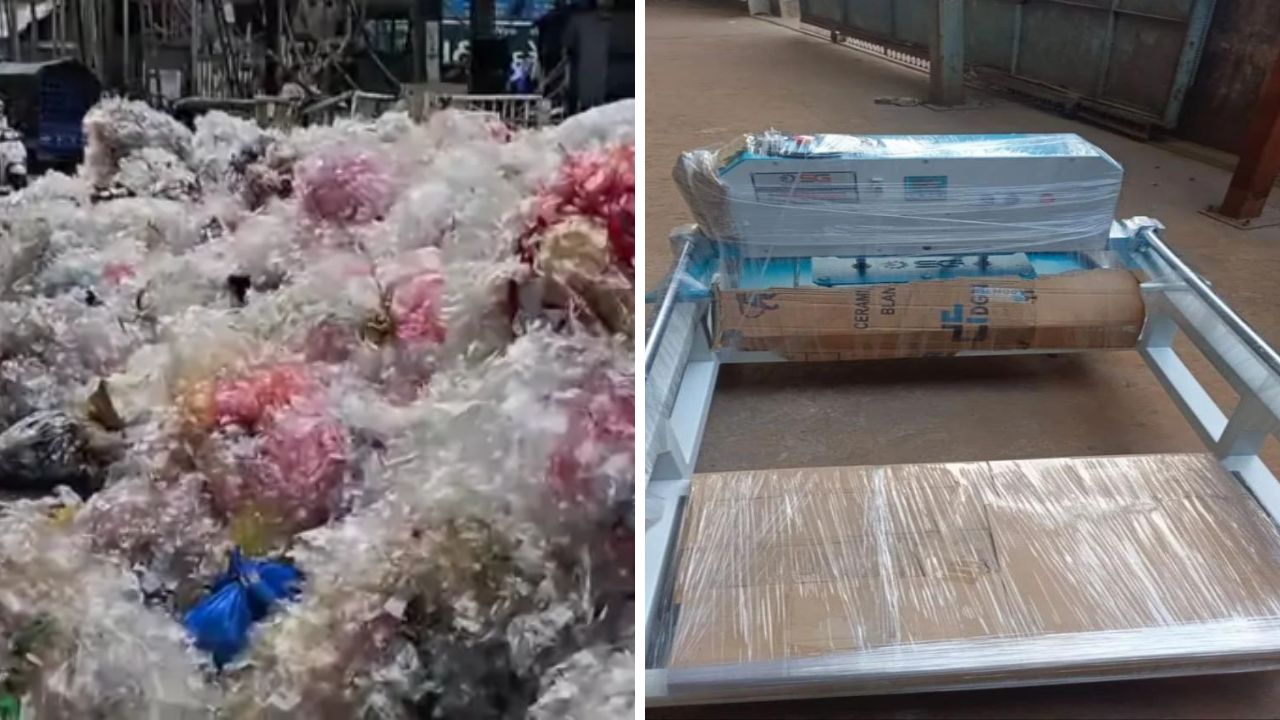
Environmental concerns are equally significant. While hot-fix operations may not generate conventional liquid effluent, they can produce rejected film, polymeric off-cuts, adhesive residues, carrier film and contaminated textile waste. “What happens to the film after it becomes waste?” is therefore a central question raised by the assessment.
Fire safety is another concern, particularly where polymer film, textile scraps and packaging are stored in congested industrial or mixed-use premises.
The assessment stresses that the issue should not automatically be treated as wrongdoing or a crackdown on MSMEs. Instead, authorities could examine Customs, GST, Udyam, municipal, fire-safety and waste-management records together to reconstruct the material’s journey.
As the supplied material notes, “Every link should be independently verified”—from import classification to final disposal.
The emerging question for Surat is therefore not simply who uses hot-fix film, but whether the entire import-to-consumption-to-waste chain is adequately traceable and regulated.