



How Eclectic Design India Helped Shape the Design Identity of Fairmont Udaipur Palace
Luxury hospitality architecture in Rajasthan often walks a thin line between spectacle and authenticity. Many large-format hotel developments borrow heavily from royal aesthetics, but few manage to...

Luxury hospitality architecture in Rajasthan often walks a thin line between spectacle and authenticity. Many large-format hotel developments borrow heavily from royal aesthetics, but few manage to translate regional identity into architecture that feels spatially coherent rather than decorative. Jaipur-based Eclectic Design India approached this challenge while contributing to the architectural design of Fairmont Udaipur Palace.
Founded in 2017 by Ar. Deep Vaid, the studio has steadily built a portfolio across luxury hospitality, retail environments, and premium interior architecture. At Fairmont Udaipur Palace, the firm was involved in architectural design including facades, landscape-sensitive planning, venue layouts, and spatial detailing that contributed to the overall visual identity of the property.
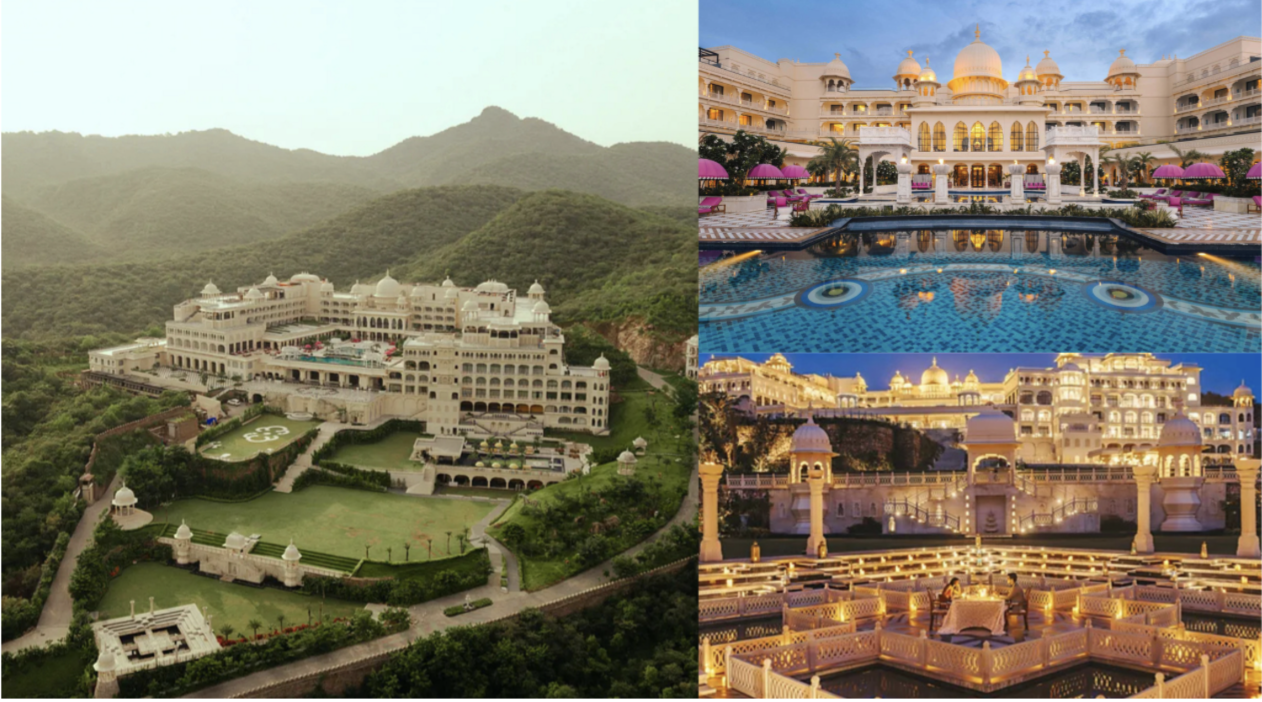
Located against the backdrop of the Aravalli landscape, the hotel references the architectural language of Udaipur without turning into a replica of historical palace structures. Instead of relying on excessive ornamentation, the project uses scale, symmetry, layered surfaces, arches, and open transitions to create a contemporary interpretation of Rajasthani grandeur.
One of the most technically demanding aspects of the project was the creation of the palace’s majestic 60-foot-high dome. Designed as a defining architectural feature of the property, the dome required extensive design development, structural coordination, and detailing to achieve both visual balance and engineering precision. Beyond functioning as a landmark element within the hotel’s skyline, the dome became central to the identity of the project itself, anchoring the palace-like character of the development while maintaining structural harmony with the larger architectural framework.
The facade design across the property also reflects a measured approach to luxury hospitality architecture. Rather than overwhelming the structure with ornamental excess, the facades were planned to create depth through proportion, texture, shadow play, and material layering. This gave the property a strong visual presence while allowing the surrounding landscape and spatial movement to remain equally important to the guest experience.
Eclectic Design India’s work extended beyond standalone structures into the relationship between architecture and movement across the property. Arrival zones, courtyards, event venues, and landscaped areas were designed as connected spatial experiences instead of isolated architectural moments. This continuity becomes especially significant in a hospitality project operating at the scale of weddings, destination events, and luxury tourism.
The planning of venue spaces was approached with operational functionality in mind while preserving the visual rhythm of the property. Large-format hospitality spaces often risk becoming disconnected from the architectural identity of the hotel itself, but here, circulation, framing, and spatial sequencing were integrated into the broader design narrative.
The Fairmont Udaipur Palace project reflects a larger shift currently visible across India’s luxury hospitality sector, where developers are increasingly prioritizing architectural identity over generic luxury aesthetics. For Eclectic Design India, the project stands as an example of how culturally rooted design, structural ambition, and hospitality functionality can exist within the same architectural language.