



Dignified menstruation is the cornerstone of gender equality and rights
This year’s Menstrual Hygiene Day as well International Day of Action for Women’s Health is a grim reminder that women’s health is far from being a fundamental human right in reality. The...

This year’s Menstrual Hygiene Day as well International Day of Action for Women’s Health is a grim reminder that women’s health is far from being a fundamental human right in reality. The writing on the wall is clear: if we are to deliver on the goal of gender equality for all by 2030, we must dismantle deep rooted stigma, secure bodily autonomy and eliminate period poverty.
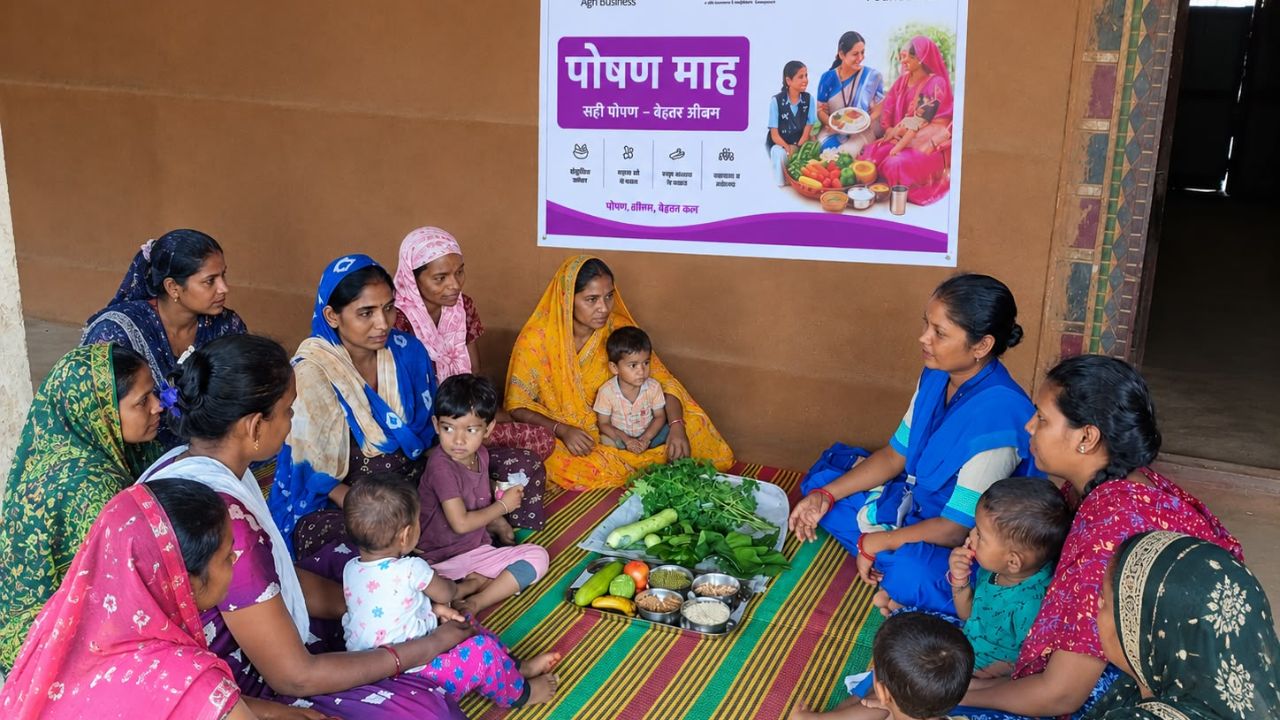
Menstruation – or period – is a natural and healthy biological process. Every month, more than two billion people around the world menstruate. But out of these, 500 million people experience period poverty every month – that is, they are unable to afford and access menstrual products, sanitation and hygiene facilities and education and awareness to manage their menstrual health. This interrupts their lives, rights, and freedoms, forcing individuals to miss school or work, compromise their health, and endure stigma simply because they menstruate.
Period-friendly world
This should not be so. We want a “period-friendly world” where menstruation is accepted as a normal, healthy biological process rather than something to hide or be ashamed of. It is a fundamental human right that no one is held back because they menstruate.
However, we are living through a poly-crisis – a period defined by the simultaneous and overlapping pressures of inflation, manmade as well as climate-induced disasters, and systemic poverty, alongside deep-rooted cultural stigmas.
This poly-crisis has shifted menstrual hygiene from a basic healthcare right to a financial trade-off, with families increasingly forced to prioritise food and fuel over menstrual products.
Thus, achieving a period-friendly world is becoming radically more complicated today in this anti-rights and anti-gender poly-crisis era.
Climate change, humanitarian crises and menstrual health
According to Rita Widiadana, a gender and health justice advocate, and former editor at the Jakarta Post, in Indonesia, period poverty is driven mostly by financial constraints and inadequate infrastructures.
“The climate crisis worsens the suffering of poor Indonesian women and girls during menstruation. They lose their safe spaces; they lose access to clean water and human dignity while facing increasing health risks. Indonesia faces floods and earthquakes, where women and girls suffer in evacuation centres”, said Rita.
For most girls in low-income households sanitary pads are a luxury. With inflation, the price of menstrual pads also increases. Moreover, in Indonesia pads are also subject to 11% value added tax (VAT), making them unaffordable for many, she added.
For Joie Cortina, menstrual health and dignity advocate in the Philippines who serves as a programme officer at Women’s Global Network for Reproductive Rights (WGNRR), “With menstruators from resource poor backgrounds already struggling to afford commodities like food or medicines, crises like climate disasters affect their bodies and wellbeing too, and their ability to make decisions about their bodies to advocate for themselves, to demand essential commodities, including period commodities.”
Joie gives the example of summer fires that are rampant in the Philippines. One such fire that recently broke out in an informal settlement in Manila affected 200 families. And when these displaced families were asked what they needed most, one item they mentioned was underwear.
According to Angel Babirye, President, African Youth and Adolescent Network East and Southern Africa (AfriYAN ESA), and Chief Executive Officer of Us for Girls Foundation, Uganda, the situation is no better in Africa.
“The ground reality for many households is that many menstruators are unable to afford essential menstrual products due to their rising prices. Many families are confronted with the dilemma whether to buy food for the household or menstrual pads. This forces families to end up stretching the menstrual products beyond safe use. For example, if a pad is to be used for 6-8 hours, many use it for longer hours or even for the whole day. Also, menstruating girls and women are often left with no choice but to resort to unsafe alternatives, such as socks, dried dung, among others. All of this increases their susceptibility to acquiring reproductive tract infections. Moreover, girls are forced to miss school when they fail to access menstrual products timely.”
Angel added that in climate crisis situations, like drought, even re-useable menstrual products cannot be used due to water scarcity. This lack of access to clean water doubles the challenge for girls and women as they cannot clean and re-use these menstrual products and cannot clean their bodies – this heightens their risk of reproductive tract infections.
Menstrual dignity and menstrual discrimination
Menstrual dignity is the fundamental human right to manage one’s menstrual cycle safely, comfortably and free from shame and discrimination.
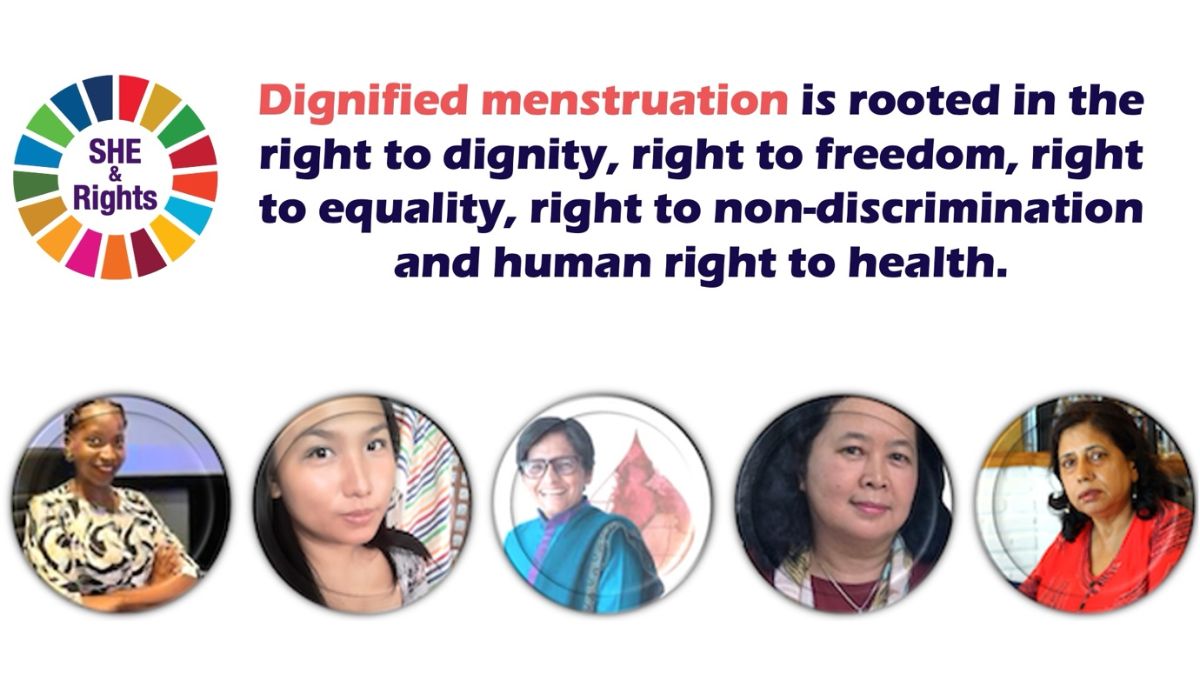
For Radha Paudel, a nurse and activist for dignified menstruation in Nepal, and founder of Global South Coalition for Dignified Menstruation, dignified menstruation is rooted in the right to dignity, right to freedom, right to equality, right to non-discrimination and human right to health. It means no matter where the menstruating persons are – whether in an evacuation camp or refugee camp or camps of the war affected population, or climate or manmade disaster relief camps, we need to prioritise their needs.
Menstrual discrimination, on the other hand, is a range of perceptions and practices, which includes silence, taboos, shame, stigma, restrictions, abuse, violence, and deprivation from resources and services that are associated with menstruation throughout the life cycle of menstruators in all their diversities. It is a form of sexual and gender-based violence and a violation of human rights. We must go beyond ensuring basic hygiene by addressing the emotional, social, and economic barriers faced by women, girls, and gender-diverse people.
Radha Paudel vehemently challenges menstrual discrimination which is widespread in various forms and asserts that it plays a vital role in reinforcing patriarchy and its unequal power relations, and exclusion.
Radha asserts that, “Beyond the issues of distribution or accessibility of menstrual pads we need to think about menstruators as human beings – be they persons with disabilities or gender diverse peoples. Because of menstrual discrimination, the menstruators may consider themselves as inferior, powerless and vulnerable whereas non-menstruators consider themselves as superior, powerful, and in control. We need to acknowledge the complex and multifaceted nature of menstrual discrimination. Menstruating girls and women face these discriminations at homes, in the education system, and all along.”
“We need to seriously incorporate the dignified menstruation in all health, education, information, and behavioural change communication. We have to understand that menstruation is life-affirming rather than a source of shame or impurity.”
Without having bodily autonomy or without being able to practice dignified menstruation at an individual and family level, how can menstruators say “no to child marriage”, or say “no to unsafe sex”, or “seek safe abortion services” when needed, wonders Radha.
“If we really want to ensure dignified menstruation, we need to realise that it is not only our right to dignity, but it is a composite outcome of the right to dignity, right to freedom, right to equality and right to non-discrimination”, she added.
Radha, Joie Rita and Angel were speaking at the SHE & Rights session.
And as Angel says, we need to realise that periods do not stop during wars or humanitarian crisis situations. That is why it is essential to integrate menstrual health in disaster preparedness plans. Menstrual health must not come as an ‘afterthought’ when we are struck with disasters or crisis situations. It is not just about access to menstrual pads; it is also about access to clean water, privacy and other essential needs of girls and women to feel safe and dignified.
Shobha Shukla – CNS (Citizen News Service)
(Shobha Shukla is a feminist, health and development justice advocate, and an award-winning founding Managing Editor and Executive Director of CNS (Citizen News Service). She serves as Chairperson of Global AMR Media Alliance (GAMA), Host and Coordinator of SHE & Rights (Sexual Health with Equity & Rights), President of Asia Pacific Media Alliance for Health, Gender and Development Justice (APCAT Media), and founder leader of DJOP (Development Justice for Older Persons) initiative. She was also the Lead Discussant for SDG-3 at United Nations inter-governmental High Level Political Forum 2025. GAMA, led by her, received the AMR One Health Emerging Leaders and Outstanding Talents Award at UN High Level Ministerial Conference on AMR 2024. Follow her on X @shobha1shukla or read her writings here www.bit.ly/ShobhaShukla)