





Featured
Congress joins Sonam Wangchuk protest, the blunt times
Congress Joins Sonam Wangchuk Protest as Political Heat Rises in Delhi
Gujarat carbon emission reduction, the blunt times
Gujarat Prevents 179 Million Tonnes of Carbon Emissions in Five Years
LiDAR flood control Surat, the blunt times
LiDAR Alone Won’t Save Surat From Floods, Expert Warns SMC
July 21, 2026
The Blunt Times The Blunt Times
  • National
  • City Events
  • Business Vibes
  • Education
  • Entertainment
  • Regional
    • Bharuch
    • Dang
    • Navsari
    • Surat
    • Valsad
    • Hindi
    • Gujarati
  • Health
  • Crime corner
  • Sports
  • Spotlight
Search the Site
Popular Searches:
Chatgpt Nasa Halloween
Recent Posts
Lajpore Central Jail cheque bounce case, the blunt times
Bhiwandi company director sent to Lajpore jail in Rs.10 lakh cheque bounce case
July 21, 2026
Rashmi Aarya-Pnn
Rashmi Aarya Makes Soulful Singing Debut with ‘Shiv Shambhu Shankara’, A Heartfelt Tribute to Lord Shiva and Her Late Mother
July 21, 2026
GIFT City Young Builders Program, the blunt times
Gujarat : GIFT City Launches Young Builders’ Program for FinTech Startups
July 21, 2026
The Blunt Times The Blunt Times
  • National
  • City Events
  • Business Vibes
  • Education
  • Entertainment
  • Regional
    • Bharuch
    • Dang
    • Navsari
    • Surat
    • Valsad
    • Hindi
    • Gujarati
  • Health
  • Crime corner
  • Sports
  • Spotlight
Follow us
Mahabharata -PNn
Home/Lifestyle/Did the Mahabharata Really Happen? Author Dr. Santa Acharya Chawla Explores What History and Science Reveal
Lifestyle

Did the Mahabharata Really Happen? Author Dr. Santa Acharya Chawla Explores What History and Science Reveal

New Delhi [India], June 08: For centuries, the Mahabharata has been revered as one of the greatest epics of Indian civilization. Yet a fundamental question continues to intrigue scholars, historians,...

TBT Online Desk
June 8, 2026 4 Min Read
New Delhi [India], June 08: For centuries, the Mahabharata has been revered as one of the greatest epics of Indian civilization. Yet a fundamental question continues to intrigue scholars, historians, and readers alike: Did the events described in the Mahabharata actually take place, or are they merely the products of mythology and imagination? In her thought-provoking book, Did the Mahabharata Really Happen? What History and Science Reveal, author and scientist Dr. Santa Acharya Chawla examines this question through the lens of modern scientific inquiry, bringing together evidence from astronomy, archaeology, geology, genetics, paleogeography, satellite imagery, and historical research. The book presents a comprehensive investigation into the historicity of the Mahabharata and the timing of the great Kurukshetra war. Drawing upon state-of-the-art scientific techniques, Dr. Chawla analyzes the detailed astronomical descriptions recorded in the epic by Veda Vyasa, including planetary alignments and celestial conjunctions associated with the war. She explores whether these descriptions can be scientifically validated and whether they can help establish an accurate chronology of the events described in the Mahabharata. One of the central themes of the book is the intersection of ancient knowledge and modern science. Dr. Chawla examines archaeological findings from significant sites such as Mehrgarh, Bhirrana, and Rakhigarhi, which indicate the existence of advanced settlements in the Indian subcontinent dating back thousands of years. The book also investigates the role of the ancient Saraswati River, whose existence has been supported by satellite imagery and geological studies, and analyzes how these discoveries correspond with descriptions found in Vedic literature and the Mahabharata. The inspiration behind the book emerged from the author’s deep curiosity while reading the unabridged Mahabharata. The vivid descriptions of astronomical events, geographical locations, and the eighteen-day Kurukshetra war prompted her to question whether these accounts were based on actual historical events. As a scientist trained in Physics and Geochronology, Dr. Chawla approached the subject with a research-oriented mindset, seeking evidence rather than assumptions. Her extensive academic background, including a doctorate in Physics from Banaras Hindu University and a distinguished scientific career at the CSIR National Physical Laboratory, provided her with the tools necessary to evaluate the available evidence critically and objectively. Among the most significant insights presented in the book is the proposed date of the Mahabharata war derived through archaeoastronomical analysis. By studying the astronomical conjunctions described in the epic and comparing them with simulations of the ancient sky, the author presents a scientifically supported chronology that aligns with multiple descriptions recorded in the text. The book also discusses evidence suggesting that the Harappan civilization and the broader Sindhu-Saraswati civilization may have developed indigenously over several millennia, offering readers a broader perspective on the cultural and historical evolution of ancient India. Dr. Chawla also examines debates surrounding the Aryan Invasion Theory and the interpretation of genetic evidence. By reviewing archaeological discoveries, genetic studies, and historical records, she presents a detailed analysis of how Vedic culture may have evolved within the Indian subcontinent. These discussions encourage readers to engage with ongoing scholarly debates while appreciating the complexity of India’s ancient past. One of the compelling aspects of the book is its exploration of how historical narratives have been shaped over time. The author discusses how colonial-era educational frameworks influenced perceptions of Indian scriptures and traditions, often categorizing them as myths rather than potential historical sources. Through scientific evidence and careful analysis, the book invites readers to reconsider these assumptions and approach ancient texts with an open and analytical mindset. Despite the challenges involved in reconciling diverse scientific findings and differing scholarly interpretations, Dr. Chawla meticulously examines available evidence to construct a coherent narrative. Her work demonstrates how interdisciplinary research can provide valuable insights into questions that have fascinated generations. Readers of Did the Mahabharata Really Happen? What History and Science Reveal can expect to gain a deeper understanding of the scientific investigations surrounding one of humanity’s most enduring epics. The book encourages critical thinking while fostering an appreciation for India’s rich cultural and intellectual heritage. By connecting ancient literature with modern scientific discoveries, it offers a unique perspective on history, identity, and the enduring relevance of the Mahabharata. In a rapidly evolving world, the questions explored in this book remain as relevant as ever. Curiosity about the Mahabharata, its historical foundations, and its cultural significance continues to inspire new generations of researchers and readers. Through rigorous scientific inquiry and thoughtful analysis, Dr. Santa Acharya Chawla provides a compelling contribution to this ongoing exploration, inviting readers to discover what history and science may reveal about one of the greatest epics ever written. Available now on Amazon. Explore the evidence, examine the questions, and discover what history and science may reveal about one of humanity’s most enduring epics.  

Share Article

Harsh Gupta on Acting, Producing, and Building an Off-Broadway Career-TBT
Previous Post

Harsh Gupta on Acting, Producing, and Building an Off-Broadway Career

Hamstech Unveils ‘Hamstech Launchpad’ to Empower Young Entrepreneurs-TBT
Next Post

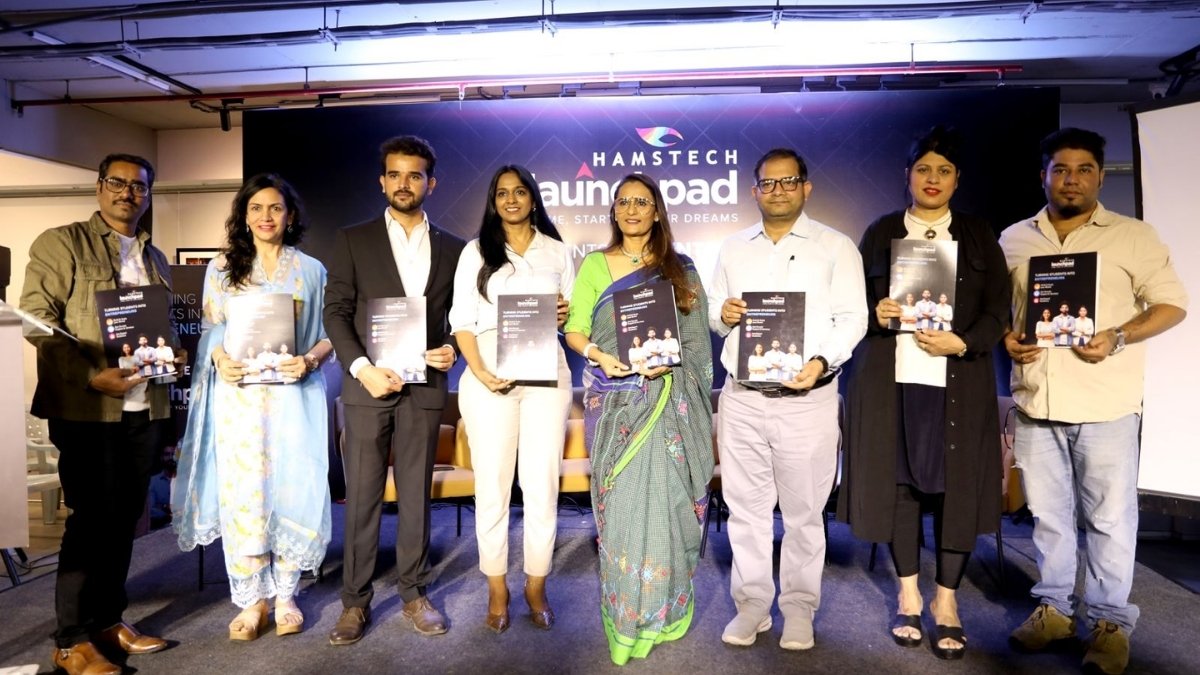
Hamstech Unveils ‘Hamstech Launchpad’ to Empower Young Entrepreneurs

Picked
IIT Gandhinagar climate resilient roads, the blunt times
IIT Gandhinagar Uses AI to Build Climate-Resilient Roads for India’s Future
Congress joins Sonam Wangchuk protest, the blunt times
Congress Joins Sonam Wangchuk Protest as Political Heat Rises in Delhi
Gujarat carbon emission reduction, the blunt times
Gujarat Prevents 179 Million Tonnes of Carbon Emissions in Five Years
LiDAR flood control Surat, the blunt times
LiDAR Alone Won’t Save Surat From Floods, Expert Warns SMC
UNEP textile sustainability project MANTRA, the blunt times
Surat :MANTRA President Joins UNEP Global Textile Sustainability Project
AHP
AHP and HOTREMAI Join Forces to Drive Hospitality Growth Through Experium Summit and 9th Hospitality Excellence Awards 2026
Popular Posts
UNEP textile sustainability project MANTRA, the blunt times
Surat :MANTRA President Joins UNEP Global Textile Sustainability Project
By Times News Network
AHP
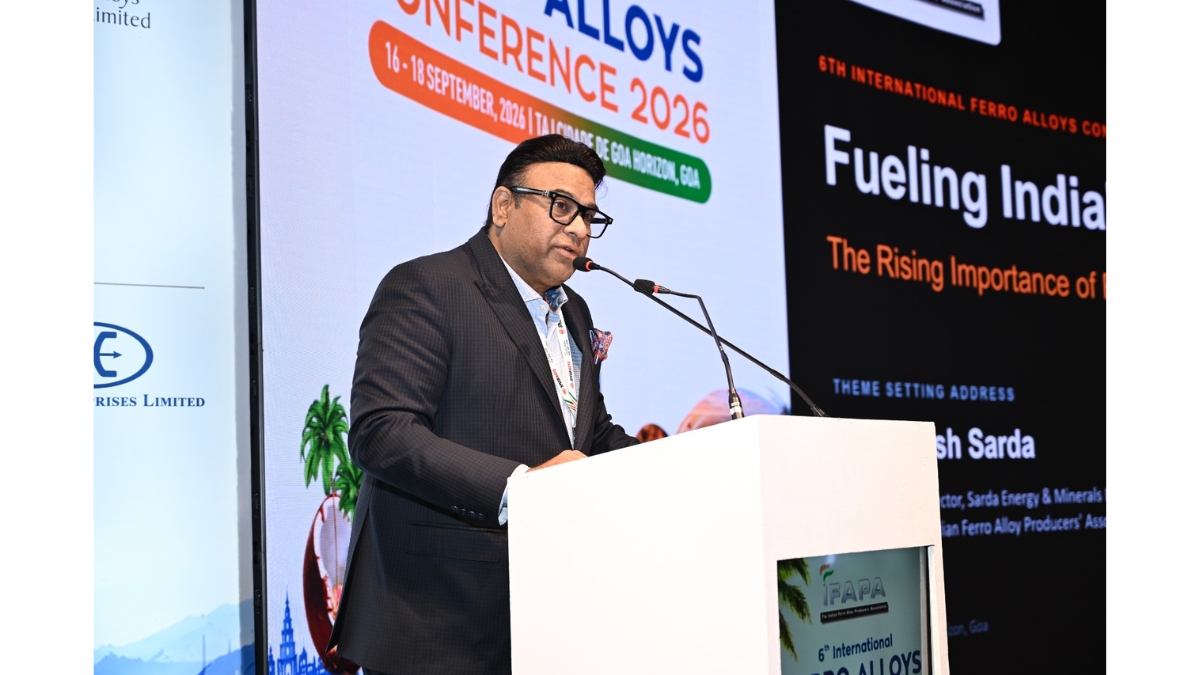
AHP and HOTREMAI Join Forces to Drive Hospitality Growth Through Experium Summit and 9th Hospitality Excellence Awards 2026
By TBT Online Desk
TNS
From Airport Bookstores to Lifestyle Retail: TNS Celebrates 50th Store in India
By TBT Online Desk
Surat modern slaughterhouses, the blunt times
Expert Calls for Modern Slaughterhouses in Surat to Curb Floods and Pollution
By Times News Network
Govind Dholakia Surat roads, the blunt times
Surat : BJP MP Govind Dholakia’s Viral Road Video Leaves His Own Government Red-Faced
By Times News Network
Shivasuman Balugoni Redefines Modern Leadership Through Business Growth, People-First Values, and Award-Winning Authorship 
By TBT NEWS SERVICE

Read Next

Ahmedabad-PNn
Lifestyle
Ahmedabad Successfully Hosted India’s Premier Coronary Surgery Conference
July 21, 2026
3 Min Read
From Viral Shorts to Live Streams: Subhashree Sahu's Next Creator Move-TBT
Lifestyle
From Viral Shorts to Live Streams: Subhashree Sahu’s Next Creator Move
July 20, 2026
1 Min Read
Shikkhar Suri: Left Director Role to Tackle India's Low-Salary Crisis-TBT
Lifestyle
Shikkhar Suri: Left Director Role to Tackle India’s Low-Salary Crisis
July 20, 2026
2 Min Read
India's First Lady Tantra Guru, Dr. Manmit Kumarr, Awakens Shakti Consciousness at Historic Kali Darbar 2026-TBT
Lifestyle
India’s First Lady Tantra Guru, Dr. Manmit Kumarr, Awakens Shakti Consciousness at Historic Kali Darbar 2026
July 18, 2026
2 Min Read
The Blunt Times

The Blunt Times is a 24-hour news portal from Surat and south Gujarat. It was launched by senior journalist Melvyn Thomas, who has over 21 years of experience working with the top news organizations such as The Indian Express, The Times of India, and The Economic Times.

Popular
IIT Gandhinagar Uses AI to Build Climate-Resilient Roads for India’s Future
July 21, 2026
Congress Joins Sonam Wangchuk Protest as Political Heat Rises in Delhi
July 21, 2026
Gujarat Prevents 179 Million Tonnes of Carbon Emissions in Five Years
July 21, 2026
LiDAR Alone Won’t Save Surat From Floods, Expert Warns SMC
July 21, 2026
Categories
City Events
National
Business Vibes
Lifestyle
Spotlight
Education
Business
Regional
Entertainment
Health
Press Release
Sports

© 2026 All Rights Reserved, The Blunt Times

  • Terms of Service
  • Privacy Policy