







CSR projects boost rural incomes and climate resilience;SoulAce Study
Ahmedabad | Gujarat — Corporate Social Responsibility (CSR) initiatives are emerging as a powerful force in transforming rural India, complementing government schemes and strengthening...

Ahmedabad | Gujarat — Corporate Social Responsibility (CSR) initiatives are emerging as a powerful force in transforming rural India, complementing government schemes and strengthening climate-resilient livelihoods, according to a new study by SoulAce.
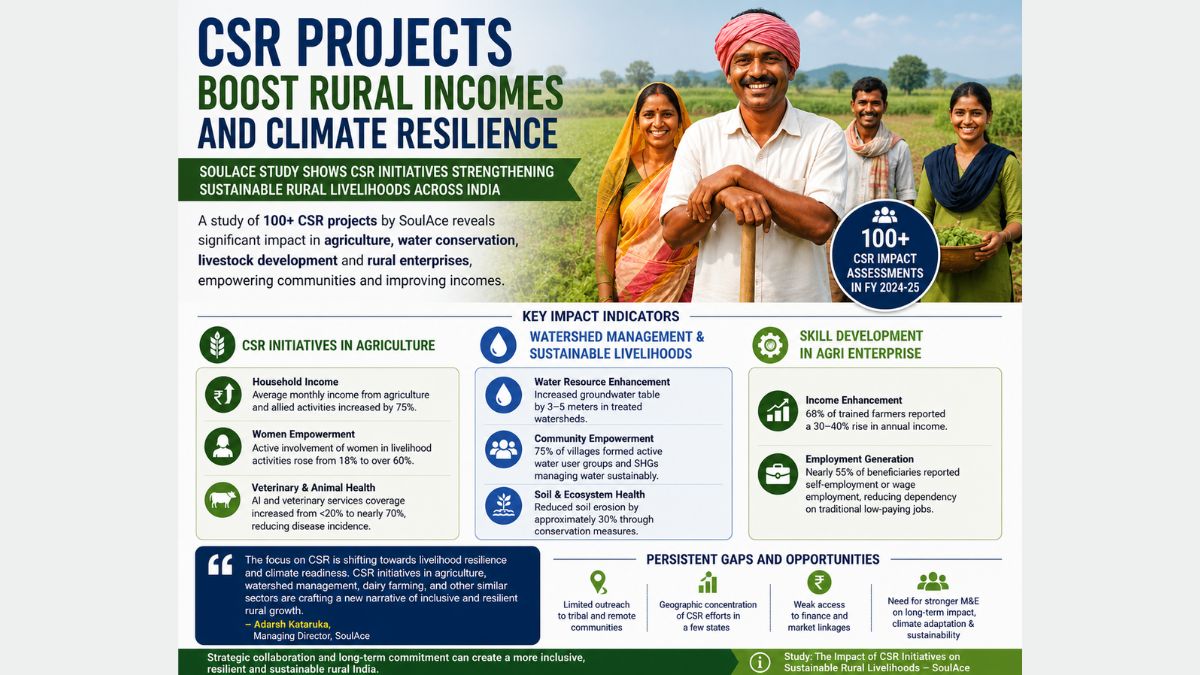
The research, based on more than 100 CSR impact assessments conducted in FY 2024–25, highlights how corporate investments in agriculture, water conservation, livestock and farmer producer organisations are helping rural communities increase incomes and build long-term resilience.
“The focus on CSR is shifting towards livelihood resilience and climate readiness,” said Adarsh Kataruka, Managing Director of SoulAce. “Our studies show that these initiatives are crafting a new narrative of inclusive and resilient rural growth.”
Major income and women empowerment gains
The report, titled The Impact of CSR Initiatives on Sustainable Rural Livelihoods, assessed programmes across rural households, youth, women’s self-help groups and tribal communities.
One of the most striking findings was the rise in household income. Average monthly income from agriculture and allied activities increased by 75% in many project areas, driven by improved yields and better market access.
Women’s participation in livelihood activities surged from 18% to over 60%, with increased leadership in self-help groups and better access to digital finance.
Veterinary services also expanded significantly, with artificial insemination and animal health coverage rising from below 20% to nearly 70%, reducing livestock disease and improving productivity.
Water and soil conservation show strong impact
Watershed management emerged as a key driver of sustainable livelihoods. The study found groundwater levels increased by 3–5 metres in treated areas, while soil erosion reduced by around 30%.
Community participation also improved, with 75% of villages forming water user groups and SHGs to manage resources sustainably.
Skill development creating new jobs
CSR initiatives in agri-enterprise training are helping rural communities move beyond traditional low-paying jobs. Nearly 68% of trained farmers reported a 30–40% increase in annual income, while 55% of beneficiaries found self-employment or wage employment opportunities.
Gaps remain despite progress
Despite the positive outcomes, the report highlights key challenges including limited outreach to tribal and remote regions, weak market linkages and access to finance, and sustainability issues after project completion.
Experts say these gaps present opportunities for more collaborative and long-term CSR strategies to strengthen rural livelihoods across India.