





Featured
Gujarat Police public grievance hearing, the blunt times
Gujarat DGP Mandates Daily Public Hearings to Bring Justice Closer to Citizens
Navsari illegal sand mining, the blunt times
CRZ Under Siege: ₹350 Crore Revenue Loss Alleged as Illegal Sand Trade Thrives in Navsari Villages
Kratos Club fraud allegations Surat, the blunt times
Surat :  Kratos Club Row Escalates as 1,100 Members Accuse Management of Cheating, Approach Police
June 11, 2026
The Blunt Times The Blunt Times
  • National
  • City Events
  • Business Vibes
  • Education
  • Entertainment
  • Regional
    • Bharuch
    • Dang
    • Navsari
    • Surat
    • Valsad
    • Hindi
    • Gujarati
  • Health
  • Crime corner
  • Sports
  • Spotlight
Search the Site
Popular Searches:
Chatgpt Nasa Halloween
Recent Posts
Abhishek Rungta: India's GCCs Are at Their Most Critical Inflection Point in 25 Years. Here Is What Must Change-TBT
Abhishek Rungta: India’s GCCs Are at Their Most Critical Inflection Point in 25 Years. Here Is What Must Change
June 11, 2026
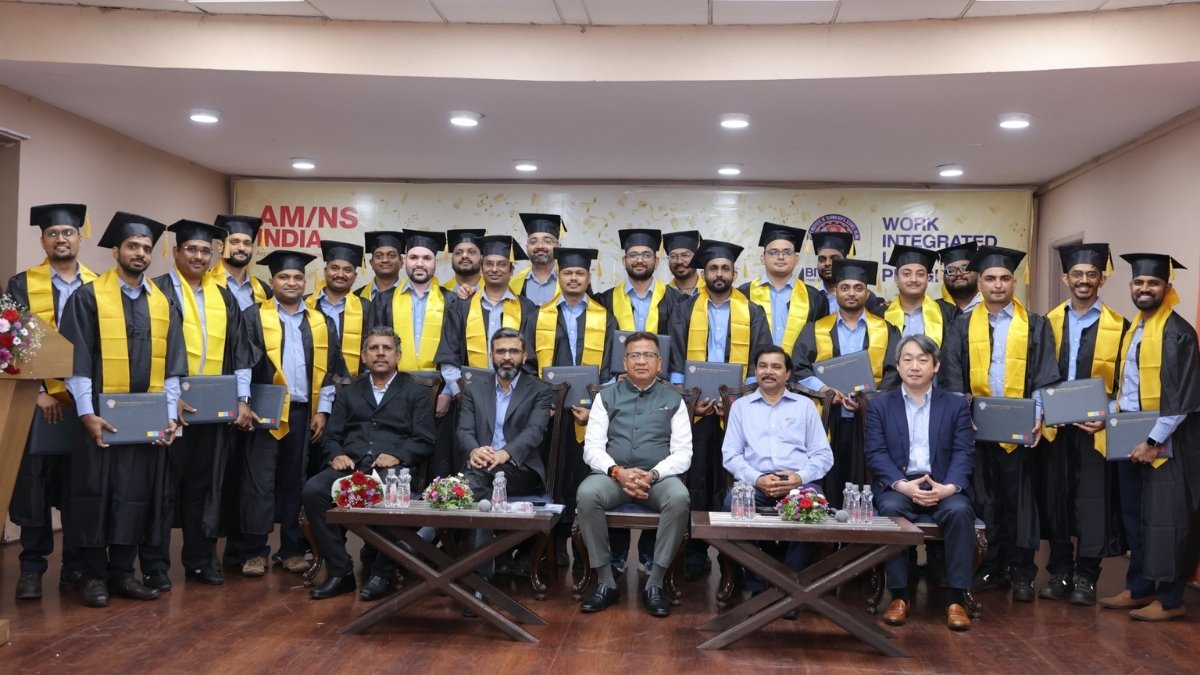
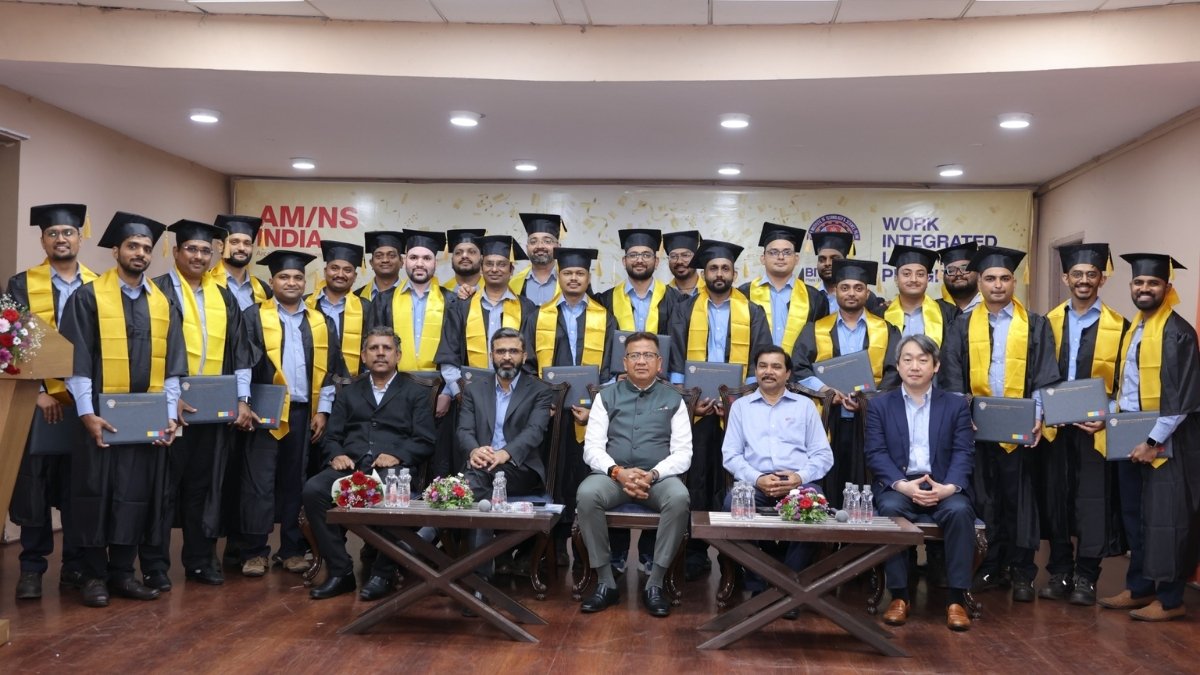
AM/NS India and BITS Pilani Graduate First MBA Cohort in Manufacturing Management -PNn
AM/NS India and BITS Pilani Graduate First MBA Cohort in Manufacturing Management
June 11, 2026
Addressing India's Employability Challenge: How Tata IIS Is Creating Industry-Ready Talent for the Future-TBT
Addressing India’s Employability Challenge: How Tata IIS Is Creating Industry-Ready Talent for the Future
June 11, 2026
The Blunt Times The Blunt Times
  • National
  • City Events
  • Business Vibes
  • Education
  • Entertainment
  • Regional
    • Bharuch
    • Dang
    • Navsari
    • Surat
    • Valsad
    • Hindi
    • Gujarati
  • Health
  • Crime corner
  • Sports
  • Spotlight
Follow us
Abhishek Rungta: India's GCCs Are at Their Most Critical Inflection Point in 25 Years. Here Is What Must Change-TBT
Home/Business/Abhishek Rungta: India’s GCCs Are at Their Most Critical Inflection Point in 25 Years. Here Is What Must Change
Business

Abhishek Rungta: India’s GCCs Are at Their Most Critical Inflection Point in 25 Years. Here Is What Must Change

Kolkata (West Bengal) [India], June 10: India’s Global Capability Centre story is extraordinary by almost any measure. The latest NASSCOM-Zinnov report puts the number at 2,117 GCCs operating across...

TBT Online Desk
June 11, 2026 5 Min Read
Kolkata (West Bengal) [India], June 10: India’s Global Capability Centre story is extraordinary by almost any measure. The latest NASSCOM-Zinnov report puts the number at 2,117 GCCs operating across India as of FY26, employing 2.36 million professionals and generating $98.4 billion in annual revenue. More than one-third of Fortune Global 500 companies now have GCCs in India, and over 1,200 centres have embedded AI and machine learning capabilities. By the headline numbers, this is a triumph. And in many ways, it genuinely is. But scale is no longer the question. Relevance is. After nearly three decades of building enterprise technology systems for clients across 45 countries, I see a deeper shift underway. Many GCCs were built for a world of efficiency, execution and cost leverage. The next decade will reward GCCs that can own outcomes, redesign processes, apply AI responsibly, and influence enterprise decisions. That is a very different game. The decisions made over the next 18 to 24 months will determine which GCCs become genuine global enterprise nerve centres and which are reduced to execution arms, consolidated, or restructured when global boards reassess value. The cost-arbitrage era is over. Many GCCs are still managed for it. The EY GCC Pulse Survey 2025 found that 92% of GCC leaders say their centres now contribute far beyond cost arbitrage, with 87% aiming to manage end-to-end processes for their global parent organisations. The aspiration is clear. The reality is more complicated. Most GCCs were designed, staffed, and measured for a world that no longer exists. Their processes are inherited from a decade of execution-first mandates. Their technology stacks reflect what was available five years ago. Their leadership structures are optimised for reporting to headquarters, not for owning outcomes. The aspiration to become an “innovation hub” collides, every quarter, with KPIs built around headcount, utilisation, and ticket resolution speed. You cannot build an AI-native enterprise capability centre on a foundation designed for cost arbitrage. The physics do not work. And yet that is precisely what many GCCs are attempting. Many of them do not have a technology problem. They have a process-memory problem. They continue to run workflows that made sense when the mandate was efficiency and control. AI will not fix those workflows. In many cases, it will only make the wrong workflow run faster. AI cannot be a layer. It has to become the operating architecture. India’s GCC sector has moved faster on AI adoption than almost any comparable global segment. More than 58% of GCCs are actively investing in Agentic AI, according to the EY GCC Pulse Survey. The ambition is real. But the execution gap is equally real. Here is what I observe from the enterprise delivery side: most GCCs are grafting AI tools onto legacy workflows and calling it transformation. They are adding a GenAI interface to a broken process and measuring success by the interface adoption rate, not by whether the underlying business outcome changed. The result is impressive-looking pilots, rising AI expenditure, and persistent frustration at the senior leadership level when results do not compound. The GCCs that will define the next decade are not adding AI to their existing operating models. They are rebuilding their operating models around AI. That is a fundamentally different exercise. It requires different leadership skills, different vendor relationships, different ways of measuring performance, and a willingness to retire processes that still “work” in a narrow sense but were never designed for the speed, complexity, and autonomy that AI-native operations demand. The talent problem is real, but it is being misdiagnosed. KPMG found that over 70% of GCC leaders identified talent as their top risk. That number does not surprise me. But the diagnosis is usually wrong. The challenge is not finding people who know how to use AI tools. India produces AI talent at a scale no other country can match. The challenge is finding people who can think in systems, translate between business context and technical architecture, and own an outcome rather than execute a specification. These are leadership skills, not technical skills. And they are not produced at scale by the same hiring pipelines that built India’s first generation of GCC talent. Building this capability requires a different relationship with talent: longer development cycles, broader rotation across functions, and deliberate exposure to strategic decision-making, not just operational delivery. What must change, specifically? Three things need to happen for India’s GCCs to realise their potential to generate $98.4 billion in annual revenue. First, performance measurement has to shift from operational metrics to business outcomes. Utilisation rates and response times tell you nothing about whether the GCC is creating value for the enterprise. Measure revenue impact, product velocity, and decision quality instead. Second, the relationship between GCCs and their service partners needs to mature from vendor management to co-creation. The NASSCOM-Zinnov report notes that 75% of India’s GCCs have the potential to evolve into portfolio or transformation hubs over the next five years. None of that evolution happens through transactional vendor relationships. It happens through partnerships where both parties carry real accountability for outcomes. Third, the AI strategy must be set by people who understand both the technology and the business context deeply enough to make trade-offs. Not just by technology teams optimising for model performance, and not just by business teams adding AI line items to budget plans. The integration of those two perspectives is what separates productive AI investment from expensive experimentation. India’s GCC sector is at an inflection point that comes around once in a generation. The infrastructure is built. The talent pool is deep. The policy environment is supportive. What remains is the harder work: changing the operating system. The next chapter of India’s GCC story will not be written by centres that merely adopt AI faster. It will be written by those who redesign themselves around outcomes. That work will define whether India’s GCCs remain efficient delivery engines or become true enterprise nerve centres for the world. The winners will not be the ones who move fastest. They will be the ones that move most deliberately, with clarity on the outcomes they exist to create. Abhishek Rungta is the Founder and CEO of INT (Indus Net Technologies), a full-stack digital transformation company serving 500+ enterprise clients across 45 countries. He writes on enterprise AI adoption, digital transformation, and long-term business building.  

Share Article

AM/NS India and BITS Pilani Graduate First MBA Cohort in Manufacturing Management -PNn
Previous Post

AM/NS India and BITS Pilani Graduate First MBA Cohort in Manufacturing Management

Picked
India-TBT
India’s Energy Transition Needs better infrastructure to support 500 GW Future
Gujarat Police public grievance hearing, the blunt times
Gujarat DGP Mandates Daily Public Hearings to Bring Justice Closer to Citizens
Navsari illegal sand mining, the blunt times
CRZ Under Siege: ₹350 Crore Revenue Loss Alleged as Illegal Sand Trade Thrives in Navsari Villages
Kratos Club fraud allegations Surat, the blunt times
Surat :  Kratos Club Row Escalates as 1,100 Members Accuse Management of Cheating, Approach Police
PM-KUSUM solar pumps in Gujarat, the blunt times
How Solar Pumps Are Changing Tribal Farmers’ Lives in Gujarat
Surat Nasirnagar demolition controversy, the blunt times
Surat : Nasirnagar Demolition Row Takes New Twist as SOG Publishes Criminal List Amid Mounting Questions
Popular Posts
PM-KUSUM solar pumps in Gujarat, the blunt times
How Solar Pumps Are Changing Tribal Farmers’ Lives in Gujarat
By Times News Network
Surat Nasirnagar demolition controversy, the blunt times
Surat : Nasirnagar Demolition Row Takes New Twist as SOG Publishes Criminal List Amid Mounting Questions
By Times News Network
"CodeStory Labs: Redefining What a Full-Service Digital Agency Can Do for Brands"-TBt
“CodeStory Labs: Redefining What a Full-Service Digital Agency Can Do for Brands”
By TBT Online Desk
steelcase-PNn
Steelcase India launches ‘Made in India Fabric’ collection to strengthen local sourcing and workplace design innovation
By TBT Online Desk
Dr. Sohini Sastri-PNN
Dr. Sohini Sastri’s New Book Highlights Growing Interest in Spiritual Wellness and Holistic Healing
By TBT Online Desk
DNH Daman education rules 2026, the blunt times
DNH & Daman Notify School Education Rules 2026, Aligning System with NEP 2020
By Times News Network

Read Next

Abhishek Rungta: India's GCCs Are at Their Most Critical Inflection Point in 25 Years. Here Is What Must Change-TBT
Business
Abhishek Rungta: India’s GCCs Are at Their Most Critical Inflection Point in 25 Years. Here Is What Must Change
June 11, 2026
5 Min Read
India-TBT
Business
India’s Energy Transition Needs better infrastructure to support 500 GW Future
June 11, 2026
3 Min Read
"CodeStory Labs: Redefining What a Full-Service Digital Agency Can Do for Brands"-TBt
Business
“CodeStory Labs: Redefining What a Full-Service Digital Agency Can Do for Brands”
June 11, 2026
3 Min Read
steelcase-PNn
Business
Steelcase India launches ‘Made in India Fabric’ collection to strengthen local sourcing and workplace design innovation
June 11, 2026
4 Min Read
The Blunt Times

The Blunt Times is a 24-hour news portal from Surat and south Gujarat. It was launched by senior journalist Melvyn Thomas, who has over 21 years of experience working with the top news organizations such as The Indian Express, The Times of India, and The Economic Times.

Popular
India’s Energy Transition Needs better infrastructure to support 500 GW Future
June 11, 2026
Gujarat DGP Mandates Daily Public Hearings to Bring Justice Closer to Citizens
June 11, 2026
CRZ Under Siege: ₹350 Crore Revenue Loss Alleged as Illegal Sand Trade Thrives in Navsari Villages
June 11, 2026
Surat :  Kratos Club Row Escalates as 1,100 Members Accuse Management of Cheating, Approach Police
June 11, 2026
Categories
City Events
National
Business Vibes
Lifestyle
Spotlight
Regional
Education
Entertainment
Health
Press Release
Business
Trending

© 2026 All Rights Reserved, The Blunt Times

  • Terms of Service
  • Privacy Policy