



How Schools in Bhandara Are Helping Students Develop Observation and Problem-Solving Skills Through Real-World Learning?
This Bhandara school feature explains how Podar International School uses observation, activity-based learning, and real-world examples to strengthen student problem-solving and confidence.

Bhandara (Maharashtra) [India], July 21: Schools in Bhandara are increasingly focusing on real-world learning to help students develop stronger observation and problem-solving skills. The approach encourages students to look beyond textbooks, notice everyday situations, ask meaningful questions and understand how classroom concepts connect with life around them.
Real-world learning is becoming important because students today need more than memorised answers. They need to observe carefully, think clearly, analyse situations and find practical solutions. Whether they are studying science, mathematics, social studies, languages or environmental topics, students benefit when they can connect lessons with real examples.
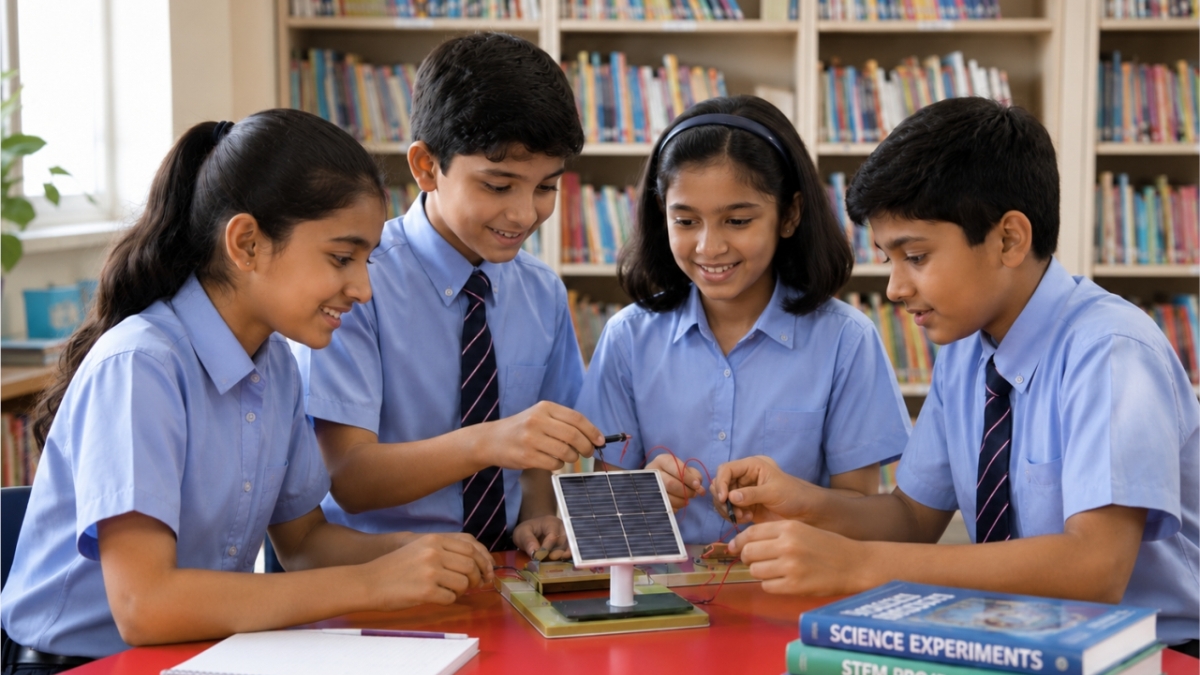
At Podar International School in Bhandara, teachers are helping students build these skills through classroom discussions, activity-based learning, field observations, projects, group work, experiments and reflective assignments. These methods are designed to make students more active in the learning process. Instead of only listening to explanations, students are encouraged to observe, compare, question and respond.
A school academic counsellor from Bhandara said:
“Observation is one of the first steps towards problem-solving. When students learn to notice details, patterns and changes around them, they begin to think more deeply. Real-world learning helps students understand that knowledge is not limited to books. It is present in their environment, community and daily experiences.”
Teachers are also encouraging students to connect classroom topics with familiar surroundings. For example, a science lesson may include observing plant growth, water use, waste management or weather patterns. A mathematics lesson may include understanding measurements, budgeting, data or simple calculations from daily life. A social studies lesson may involve discussions on local communities, transport, markets or civic responsibility. These examples help students understand why learning matters.
The steps taken by schools include giving students small observation tasks, encouraging them to record findings, asking them to discuss possible causes, and guiding them to suggest solutions. Students may be asked to observe how water is used at home, how traffic moves near school, how plants respond to sunlight, or how waste can be reduced in their surroundings. Such activities help them see problems from a practical point of view.
A student from Bhandara shared:
“When we study through real examples, I understand the topic better. It feels less like memorising and more like discovering something. I also feel more confident when I can explain a lesson using something I have seen myself.”
Problem-solving skills are also developed through teamwork. When students work in groups, they learn to listen to different ideas and compare possible solutions. They also learn that one problem can have more than one way of being solved. This is an important skill for academic growth and future readiness.
Parents are also noticing the difference. A parent from Bhandara said:
“Earlier, our child would come home and only talk about homework or tests. Now, the child talks about what was observed in class, what questions were discussed and how the topic is connected to real life. This makes learning more meaningful.”
Another parent added:
“Real-world learning helps students become more aware of their surroundings. It also encourages them to think before giving an answer. As parents, we feel this is useful because students need practical understanding, not just exam preparation.”
For parents exploring school admission in Bhandara, this kind of learning approach can be an important factor to consider. A school that encourages students to observe, question and solve problems helps them build confidence beyond textbook learning.
Teachers play a key role in making this approach effective. They help students move from simple observation to deeper thinking. For instance, if students observe that plants grow differently in different areas, the teacher can guide them to think about sunlight, water, soil and care. If students observe waste in public places, the teacher can discuss responsibility, cleanliness, civic sense and possible solutions.
Real-world learning also supports communication skills. When students explain what they observed, they learn to organise their thoughts. They learn to speak clearly, write better and support their answers with examples. This helps them in classroom participation, projects and examinations.
For students who may not respond well to traditional textbook-only learning, real-world activities can be especially helpful. Some students understand better through practical examples. Some learn through discussion. Some gain confidence when they can see and experience what they are studying. Real-world learning gives different kinds of learners more ways to participate.
An academic counsellor said:
“Every student does not learn in the same way. Some students are strong readers. Some understand better through visuals, activities or examples. Real-world learning gives students multiple entry points into a topic. It can make learning more inclusive and less intimidating.”
At Podar International School in Bhandara, the focus is on helping students become thoughtful learners who can connect knowledge with life. By encouraging observation, discussion, reflection and practical problem-solving, the school aims to help students build skills that support both academic success and personal growth.
For more information about Podar International School in Bhandara, its facilities and admission process, please get in touch with their team.
Email Address: admissions@podar.org
Telephone No: 6366437961