






Surat Textile Crisis: 1000 Yarn Containers Frozen at Ports, Industry Faces Rs.250 Crore Blow
Surat | Gujarat —- Surat’s globally renowned textile industry—often described as Asia’s largest fabric and yarn hub—is facing one of its most severe supply chain disruptions in recent years, as...

Surat | Gujarat —- Surat’s globally renowned textile industry—often described as Asia’s largest fabric and yarn hub—is facing one of its most severe supply chain disruptions in recent years, as nearly 1000 imported yarn containers remain stranded at ports, freezing trade worth an estimated ₹250 crore.
The crisis has erupted after customs authorities halted clearance of high-quality specialty yarn shipments at Mumbai’s Nhava Sheva Port and Surat’s Hazira Port, following a legal stay issued by the Gujarat High Court. The sudden freeze has triggered panic across the textile value chain, leaving traders, importers, and weavers grappling with mounting financial losses and an acute liquidity crunch.
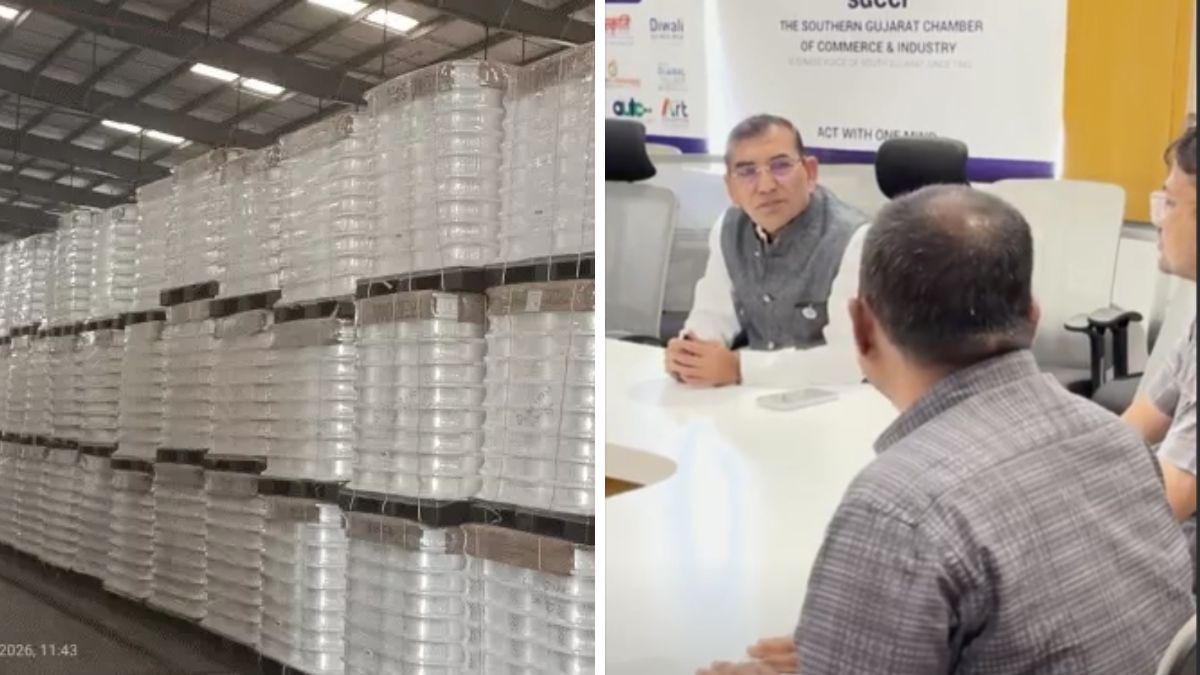
According to industry sources, approximately 500 containers are stuck at each port, carrying premium yarn imported from countries including China, Vietnam, and Indonesia. The consignments were ordered months in advance by Surat-based traders, who had already completed advance payments and opened letters of credit through banking channels.
“This is not just a delay; it is a financial chokehold on the entire industry,” said a senior yarn importer from Surat, speaking on condition of anonymity. “Our capital is locked, our goods are stuck, and daily charges are piling up. We are paying lakhs in demurrage and detention without any clarity on release.”
The controversy stems from a central government notification issued on November 11, which had allowed import of specialty yarn to strengthen the domestic textile sector and help it remain globally competitive. Encouraged by this policy, Surat traders placed large-scale international orders.
However, five major spinning companies challenged the notification in the Gujarat High Court, arguing that it could impact their business interests. The court subsequently issued a stay order, following which customs authorities froze the clearance of all related shipments, including consignments already in transit or those that had arrived before the legal dispute.
Traders argue that the retrospective impact of the stay has caused widespread injustice. “Orders were placed legally months ago. Goods were already shipped and payments completed. Now we are being punished for circumstances beyond our control,” said another trader affected by the freeze.
The crisis has also triggered sharp price volatility in the local market. Within just 10 days, yarn prices have surged by ₹15 to ₹20 per kilogram, intensifying pressure on manufacturers and small-scale weavers. Many fear production slowdowns if the situation continues.
More than 15 leading traders from Surat’s yarn sector recently met representatives of the Southern Gujarat Chamber of Commerce and Industry (SGCCI), urging immediate intervention. They warned that prolonged delays could bring the city’s textile production to a halt and lead to large-scale job losses.
“If these 1000 containers are not released urgently, the entire Surat textile ecosystem will come to a standstill,” the delegation reportedly submitted in a written representation.
SGCCI President Ashok Jirawala acknowledged the gravity of the situation, stating, “We stand with the traders in this legal and economic crisis. We will urge authorities to consider a humanitarian approach for clearing goods that were imported before the stay order.”