




Indo-Dutch Partnership Revives Momentum for Gujarat’s Mega Kalpasar Dream
Gandhinagar | Gujarat — Gujarat’s decades-old vision of transforming the Gulf of Khambhat into a giant freshwater reservoir has received a decisive global push after Prime Minister Narendra Modi’s...

Gandhinagar | Gujarat — Gujarat’s decades-old vision of transforming the Gulf of Khambhat into a giant freshwater reservoir has received a decisive global push after Prime Minister Narendra Modi’s recent visit to the Netherlands, where India signed a Letter of Intent for technical cooperation on the ambitious Kalpasar Project.
The agreement between India’s Ministry of Jal Shakti and the Netherlands’ Ministry of Infrastructure and Water Management marks a major milestone for the long-pending project, widely regarded as one of the most complex water engineering plans in the world.
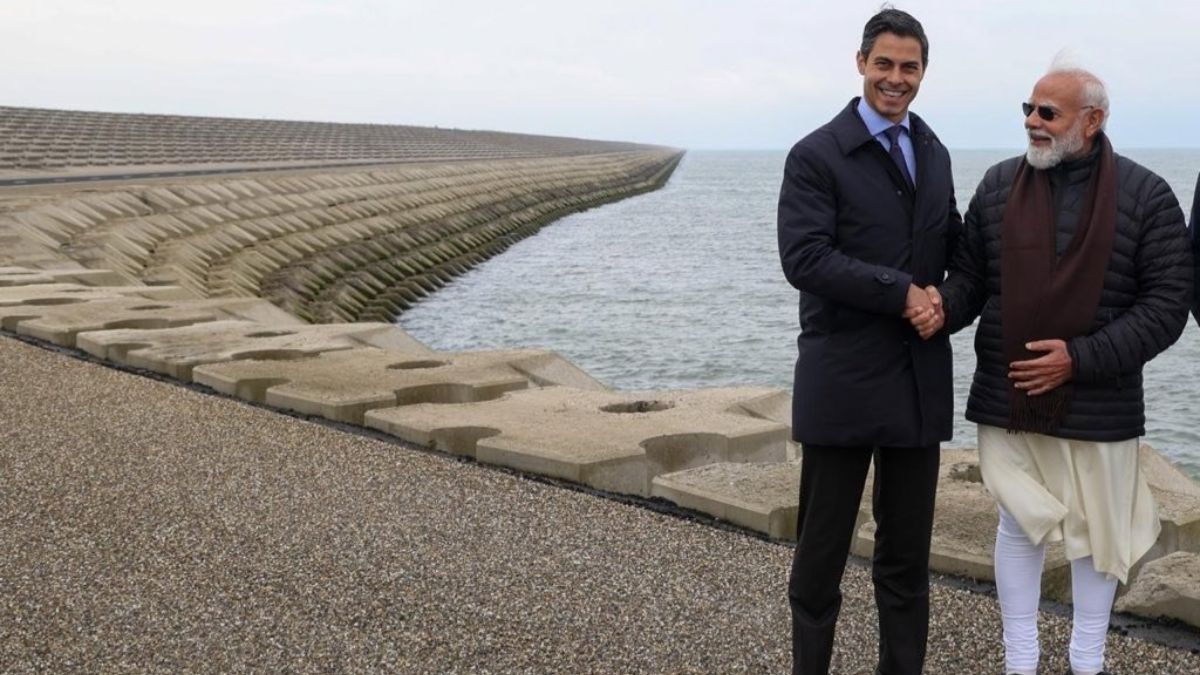
During the visit, Modi inspected the Netherlands’ iconic Afsluitdijk barrier dam and described its technology as “highly worthy of learning,” noting striking similarities with Gujarat’s proposed mega project.
Officials said the partnership will help fast-track the project using advanced Dutch expertise in marine dam construction and water resource management.
A Vision Born in Gujarat
The Kalpasar Project was originally envisioned when Modi served as Gujarat’s Chief Minister, with the goal of ensuring long-term water security for a drought-prone state.
While the Sardar Sarovar Dam brought major relief to Gujarat, experts have long stressed the need for multiple large-scale water sources to secure the state’s future.
“The Kalpasar Project is crucial to reduce dependence on a single water source and ensure wider availability of water for drinking and irrigation,” officials said.
The plan involves constructing a massive dam across the Gulf of Khambhat to capture water from seven rivers that currently flow into the sea, creating a vast freshwater reservoir integrated with power generation and transport infrastructure.
Benefits Expected to Transform Gujarat
Once completed, Kalpasar is expected to provide irrigation benefits to nearly 10 lakh hectares across 42 talukas in nine districts of Saurashtra. It will also reduce travel distance between South Gujarat and Saurashtra from 240 km to just 60 km through a proposed transport corridor atop the dam.
The project is expected to generate around 1500 MW of wind energy and 1000 MW of solar power while boosting fisheries and tourism.
Dutch Expertise to Tackle Engineering Challenges
The project’s technical complexity has been one of the main reasons for delays over the years. The Netherlands, known globally for building dams in marine environments, is expected to play a crucial role in solving key engineering challenges.
Experts noted that the Afsluitdijk, built nearly 80 years ago, successfully separated seawater from freshwater while protecting low-lying regions from flooding — a model Gujarat hopes to replicate.