




When Maharaja Sayajirao Helped Dr Ambedkar After His Belongings Sank in WWI
Vadodara | Gujarat — History often remembers towering achievements but quietly forgets the human struggles behind them. One such lesser-known episode reveals how royal patronage helped shape the...

Vadodara | Gujarat — History often remembers towering achievements but quietly forgets the human struggles behind them. One such lesser-known episode reveals how royal patronage helped shape the journey of B. R. Ambedkar after tragedy struck during World War I.
In July 1917, a German torpedo attack in the English Channel targeted the ship SS Salsette. Around 15 people lost their lives. Along with the human tragedy, the ship carried something priceless — the academic belongings, books and research of Dr Ambedkar, who had just completed his studies in the United States. The intellectual treasure sank to the bottom of the sea.
Ambedkar himself was travelling to India on a different ship, unaware that years of academic work and personal possessions had been lost forever.
Scholarship That Changed a Life
The relationship between Ambedkar and Sayajirao Gaekwad III had begun years earlier. In 1907, Ambedkar became the first student from the Mahar community to pass matriculation — a historic milestone at a time of deep caste discrimination.
During a felicitation ceremony, scholar Krishnaji Arjun Keluskar recommended that the young Ambedkar deserved higher education. He introduced him to the progressive ruler of Baroda, Sayajirao Gaekwad.
Impressed by Ambedkar’s intelligence and determination, the Maharaja granted him a monthly scholarship of Rs. 25, enabling him to study at Elphinstone College. Later, in 1913, the Maharaja approved a larger scholarship of 11.5 pounds per month for Ambedkar to pursue higher studies in America — a rare opportunity at the time.
Loss at Sea and Royal Compensation
After completing his education abroad, Ambedkar returned to India during the peak of World War I. While he travelled separately, his luggage — including valuable books, notes and academic material — was shipped via the ill-fated SS Salsette, which was torpedoed and sunk.
The loss was devastating. For a scholar who had struggled against poverty and discrimination, these belongings represented years of hard work and intellectual growth.
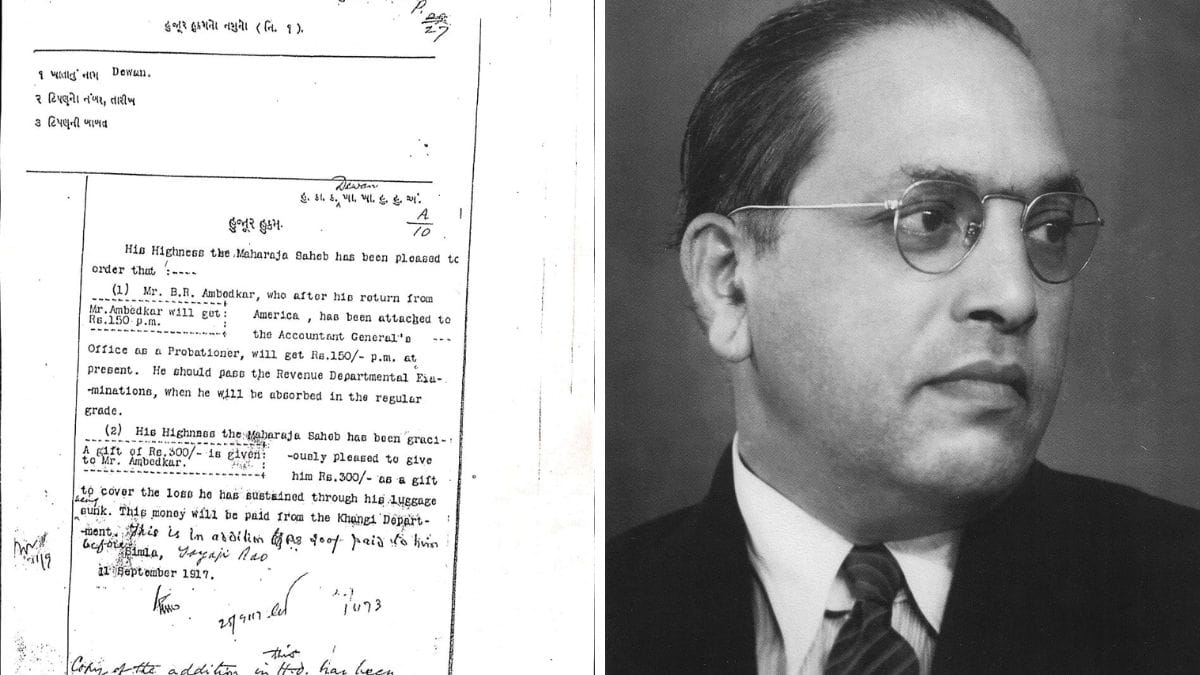
When the Maharaja learned about the tragedy, he issued a special royal order, known as a ‘Hujur Hukam’, in September 1917. The order confirmed Ambedkar’s appointment as a probationer in the Accountant General’s office of Baroda and approved a compensation of Rs. 300 to cover the loss of his belongings.
Historians say this gesture demonstrated Sayajirao Gaekwad’s commitment to education, equality and social reform.
A Turning Point in History
Ambedkar’s later experiences in Baroda were marked by discrimination and hardship, yet these struggles became the foundation of his lifelong mission for social justice and equality.