








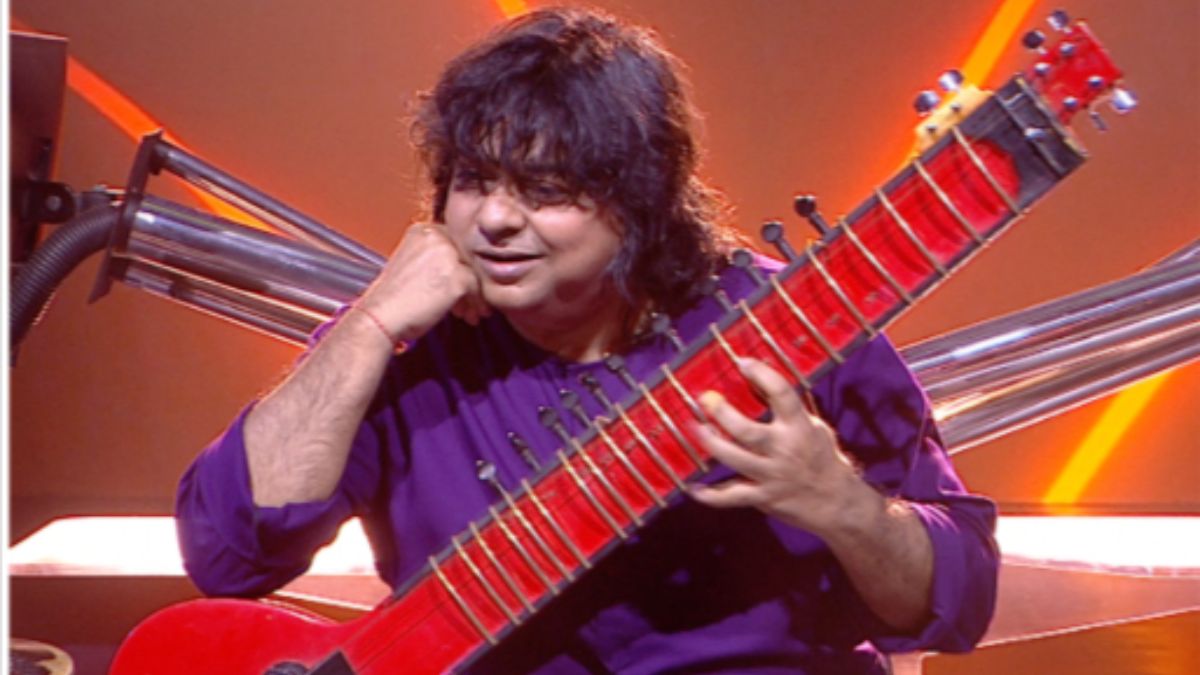
Not Just Music, But a Movement: The trend that Niladri Kumaar set several decades ago continues to influence generations today
Mumbai | Gujarat — On the maestro’s birthday, fans are in for a surprise as the iconic artist offers a rare glimpse into the story of the Zitar. Taking a look at his musical journey that did...

Mumbai | Gujarat — On the maestro’s birthday, fans are in for a surprise as the iconic artist offers a rare glimpse into the story of the Zitar. Taking a look at his musical journey that did not just evolve Indian classical music, but shook the space with pride – rooted in tradition, yet expanding its possibilities.
We have heard the Zitar and its music. But today, Niladri Kumaar offers a glimpse into how it was created – an invention that transformed not just an instrument, but the culture around sitar playing itself.
Guided by his philosophy of “Virasat and Vikas” – heritage and progress, he has remained deeply rooted while pushing boundaries. What emerged was not just a sound, but a new musical language.
The journey began in 1999, when he performed alongside DJs. At a time when classical instruments struggled in modern sound environments, he experimented with an AKG C411 pickup microphone, attaching it to his sitar.
It resulted in his first experiments with amplification – the desire to be heard. The response grew so rapidly amongst musicians that AKG was going to discontinue that microphone, but with demand so high, they restarted manufacturing.
Determined to go further, he took an unconventional step, to experiment with a guitar pickup on his sitar. With the help of engineer Aslam Khan, he created a makeshift, handheld circuitry, and that was the first time he heard the sound and realised his experiment worked.
Excited to purchase his own guitar pickup, he went to Malad and bought one, a significant investment at the time, and entered the workshop. It was the first time a sitar player had entered a guitar workshop.
Hesitant to try the experiment on his own sitar, he took his father and guru Pandit Kartick Kumar’s sitar, removed the strings, reducing them to five, replaced the copper string with steel, and was determined to do this without drilling holes or using glue on his instrument. He used velcro and, at the workshop, built the circuitry, all while ensuring the integrity of the sitar remained untouched.
Without drilling or permanent changes, he created a working electric prototype.
This marked the birth of what would become the Zitar.
In 2003, he performed live with this new sound at the Santro Xing launch at Taj Lands End, Mumbai. Visually, it remained a sitar. Sonically, it had changed.
The next step was evolution.
Inspired by a smaller sitar he had played at the age of seven on Doordarshan (archival footage available online), he envisioned a more compact instrument.
This led him to instrument maker Bishan Dass Ji in Delhi, who had made travelling tanpuras and travelling sitars — which was exactly like a sitar with all the strings but smaller in size. Niladri who already had in mind his smaller sitar which he played for the TV show, decided to buy the smaller sitar and acquired it as he knew what he had to do with it, and rebuilt his entire circuitry on it.
A defining moment followed.
He recorded his first track in 2004 for the album Chillout Forever, followed by the film track “Bheegi Bheegi” recorded in 2005 from Gangster, released in 2006. He named it the Zitar – Z inspired by its electric edge and it being an inverted S.
During a visit to Delhi, his peg broke. As he needed to repair it, he sent his Zitar with a student to Rikhi Ram Musical Instruments. This was the first time they saw the modified instrument and all that he had done to it.
Niladri then requested a plain sitar with no ornamentation, painted red — but they gasped, saying it would kill the sound. Not knowing what he was aiming for, Niladri said:
“That’s exactly what I want. Paint it red.”
“I may never own a Ferrari, so this will be my Ferrari.”
The instrument was painted red. Back in Mumbai, he rebuilt the circuitry on it.
By 2006, he had his iconic Red Zitar, now visually bold and sonically, already distinct.
Today, the Zitar exists in many forms, colours, shapes, and sizes, but the circuitry, the core invention, and the music opened a path for the rest to follow. What Niladri Kumaar created was a shift, a new way of thinking about Indian classical music, never imagined or heard before.
From experimenting with how he could be heard, to building a sound that became a style and a stamp across the globe, his journey truly inspires anyone who wishes to walk the path less travelled and dares to dream different.
On his birthday, audiences get a teaser glimpse into a story they have long heard through music, but are only now beginning to discover. The full untold story, with deeper insights and unseen moments and original photos, will be coming soon.
Watch the Maestro play on Amitabh Bachchan’s Birthday at: https://youtu.be/KbE9TQhWU7w