



Featured
Kicky & Perky launches Pietra collection celebrating colour stones and modern design
GOBARdhan Just Changed the Rules for India's Biogas Sector. Here Is Where Organic Recycling Systems Limited Stands.
GOBARdhan Just Changed the Rules for India’s Biogas Sector. Here Is Where Organic Recycling Systems Limited Stands.
Led by CEO & Co-Founder Neha Khanna, the company is building a global brand across home décor, accessories and jewellery through craftsmanship, conscious design and purposeful innovation
From Indian Craftsmanship to Global Markets: House of Kraft Named Runner-up at Payoneer Awards
September 30, 2026
The Blunt Times The Blunt Times
  • National
  • City Events
  • Business Vibes
  • Education
  • Entertainment
  • Regional
    • Bharuch
    • Dang
    • Navsari
    • Surat
    • Valsad
    • Hindi
    • Gujarati
  • Health
  • Crime corner
  • Sports
  • Spotlight
Search the Site
Popular Searches:
Chatgpt Nasa Halloween
Recent Posts
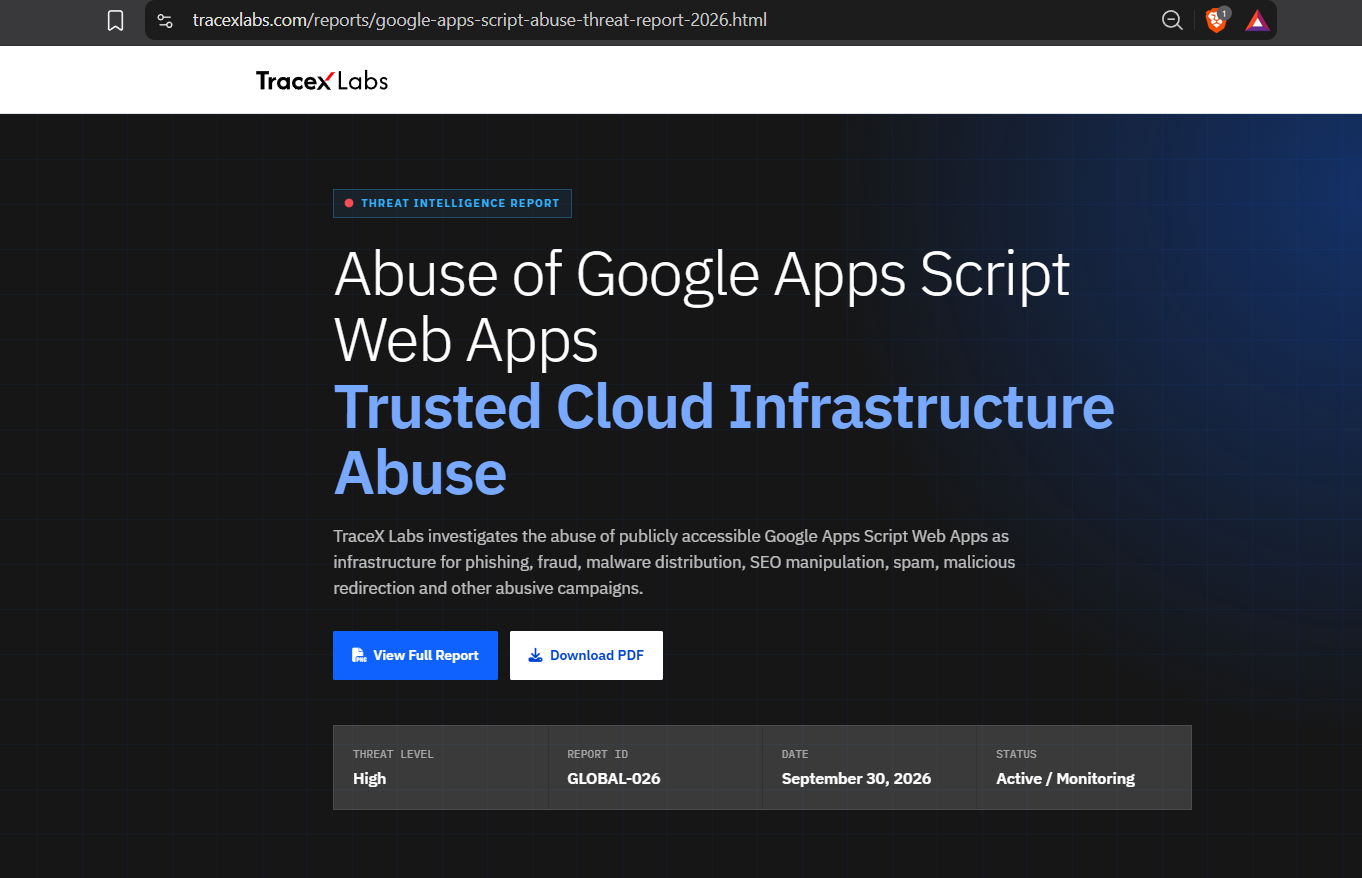
Google Apps Script Abuse: Phishing, Fraud, Malware and CSAM Risks Identified in TraceX Labs Report
September 30, 2026
Abuse of Google Apps Script Web Apps Trusted Cloud Infrastructure Abuse
TraceX Labs Report Highlights Google Apps Script Abuse for Phishing, Malware and SEO Spam
September 30, 2026
Repono receives key Railway approval for proposed Mathura fuel terminal-TBT
Repono receives key Railway approval for proposed Mathura fuel terminal
September 30, 2026
The Blunt Times The Blunt Times
  • National
  • City Events
  • Business Vibes
  • Education
  • Entertainment
  • Regional
    • Bharuch
    • Dang
    • Navsari
    • Surat
    • Valsad
    • Hindi
    • Gujarati
  • Health
  • Crime corner
  • Sports
  • Spotlight
Follow us
Team Computers on the Future of Marketing: When AI Runs the Campaign, What Is Left for Marketers?
Home/Business/Team Computers on the Future of Marketing: When AI Runs the Campaign, What Is Left for Marketers?
Business

Team Computers on the Future of Marketing: When AI Runs the Campaign, What Is Left for Marketers?

Team Computers on the Future of Marketing: When AI Runs the Campaign, What Is Left for Marketers?


TBT Online Desk
August 21, 2026 5 Min Read
New Delhi [India], August 20: Artificial intelligence is rapidly changing the way marketing teams plan, create, execute, and measure campaigns. Tasks that once required significant time and human effort – from content creation and audience segmentation to media optimisation and performance analysis – can now be automated or accelerated with AI. As adoption grows, the role of the marketer is inevitably changing too. The question, therefore, is no longer whether AI will become part of marketing, but where human expertise remains essential. Mr. Sagar Kukreja, Head of Marketing, Team Computers, shares his perspective on the changing role of marketers as artificial intelligence takes on an increasingly central role in campaign strategy and execution. 1. AI can now run large parts of a campaign. At what point should brands draw the line between automation and human judgment? The line should be drawn wherever decisions begin to influence customer trust, brand perception, and long-term business outcomes. AI is exceptionally good at execution – it can generate campaign variations, personalise communication, optimise media spend, and analyse performance at a speed humans cannot match. HubSpot’s 2026 State of Marketing reports that 80% of marketers already use AI for content creation and 75% for media production, proving that automation has become mainstream. But execution is only one part of marketing. Humans still need to decide whether a message truly reflects the brand, solves a customer problem, or builds lasting trust. As we often say, “AI can optimize the campaign, but the marketer must define what success actually means.” Automation without judgment is simply faster noise. 2. Marketing has traditionally rewarded execution speed. In an AI-first environment, what new skills will define a successful marketer? The biggest shift is from execution to judgment. For years, marketers were rewarded for producing more campaigns, more content, and faster launches. AI now handles much of that operational work, freeing marketers to focus on what machines cannot replicate. The most valuable skills will be strategic thinking, customer understanding, storytelling, business alignment, and the ability to ask better questions. AI can generate hundreds of ideas, but it cannot decide which one deserves to represent the brand. In a world where everyone has access to similar AI tools, judgment – not execution – becomes the competitive advantage. The future belongs to marketers who can lead AI rather than simply use it. 3. With AI enabling brands to create hundreds of campaign variations instantly, how can marketers ensure they create meaningful communication instead of just more content? The real challenge is no longer creating content – it is creating meaning. AI has made content production almost limitless, but it has also made much of it look and sound the same. When every brand can generate hundreds of campaign variations, volume stops being a differentiator. What matters is relevance, originality, and what we call “taste.” Taste is knowing what feels authentic to the brand, what should be published, and what should be deleted. A technology company, for example, doesn’t win by using more AI-generated jargon; it wins by clearly addressing a CIO’s business problem. AI can create the campaign, but marketers still create the meaning. 4. How is AI expected to change the way marketing success is measured in the coming years? AI will shift marketing measurement from activity metrics to business outcomes. Clicks, impressions, open rates, and cost per lead will remain useful, but they are no longer enough. AI is excellent at optimising campaigns, but it can also optimise for the wrong objective. For example, a B2C brand may increase conversions through constant discounts while weakening long-term brand value. In B2B, AI may reduce cost per lead but generate conversations with the wrong accounts. The real question is no longer “Did the campaign perform?” but “Did it move the business forward?” AI measures efficiency. Marketers must define impact. 5. Many companies aim for AI-driven personalisation but struggle with fragmented data. What foundational changes are needed before brands can fully benefit from AI in marketing? Successful AI starts with connected, reliable data. Salesforce reports that while 84% of marketers use first-party data, only 31% are fully satisfied with their ability to unify it. That gap is where many AI initiatives fail. Customer information often sits across CRM systems, websites, sales conversations, purchase history, and service interactions without being connected. The result is poor personalisation – a loyal customer receives a first-time buyer offer, or a high-value B2B account gets a generic nurture email while sales discussions are already underway. AI cannot compensate for fragmented information. Bad data does not become good marketing because AI is added – it simply becomes bad marketing at scale. This makes business analytics and connected data solutions increasingly important for organisations looking to build effective AI-driven personalisation. 6. What are some common mistakes organisations make while integrating AI into their marketing workflows? One of the biggest mistakes is treating AI purely as a productivity tool instead of a strategic decision-support system. Many organisations focus on producing more content, launching more campaigns, and automating more workflows without asking whether those activities improve business outcomes. Another common mistake is removing human validation too early. According to McKinsey’s 2025 State of AI, 51% of organisations using AI have experienced at least one negative consequence, including inaccurate outputs. In marketing, one incorrect claim or poorly targeted message can quickly damage trust. AI should automate execution, but marketers must continue to provide judgment, context, and accountability. 7. Are marketers currently overestimating or underestimating the capabilities of AI? In many ways, both. Some marketers overestimate AI by assuming it understands customers, emotions, culture, and business priorities. In reality, AI understands patterns – not people. At the same time, others underestimate AI by limiting it to content generation, when its real value extends to customer insights, segmentation, forecasting, and campaign optimisation. The most effective organisations avoid both extremes. They neither hand over every decision to AI nor ignore its capabilities. Instead, they recognise that AI can explain what is happening through data, but marketers still need to understand why it is happening by staying close to customers, sales teams, and the business. 8. Which marketing skills are likely to become more valuable because of AI rather than less relevant? The skills that become more valuable are the ones AI cannot easily replicate – customer insight, strategic thinking, storytelling, creativity, brand building, and decision-making. AI will increasingly take over repetitive execution, standard content creation, and performance analysis. That raises the bar for human contribution. As AI makes average content easier to produce, average creativity becomes less valuable. What will differentiate marketers is their ability to uncover unique insights, connect campaigns to business strategy, and build authentic customer relationships. The future will not belong to people who simply know how to use AI tools. It will belong to people who know how to lead AI while continuing to lead the brand. With more than 17 years of experience spanning B2B technology marketing, brand strategy, market research, and enterprise-focused marketing across leading organisations, Mr. Sagar Kukreja brings a broad industry perspective to this evolving conversation.

Share Article

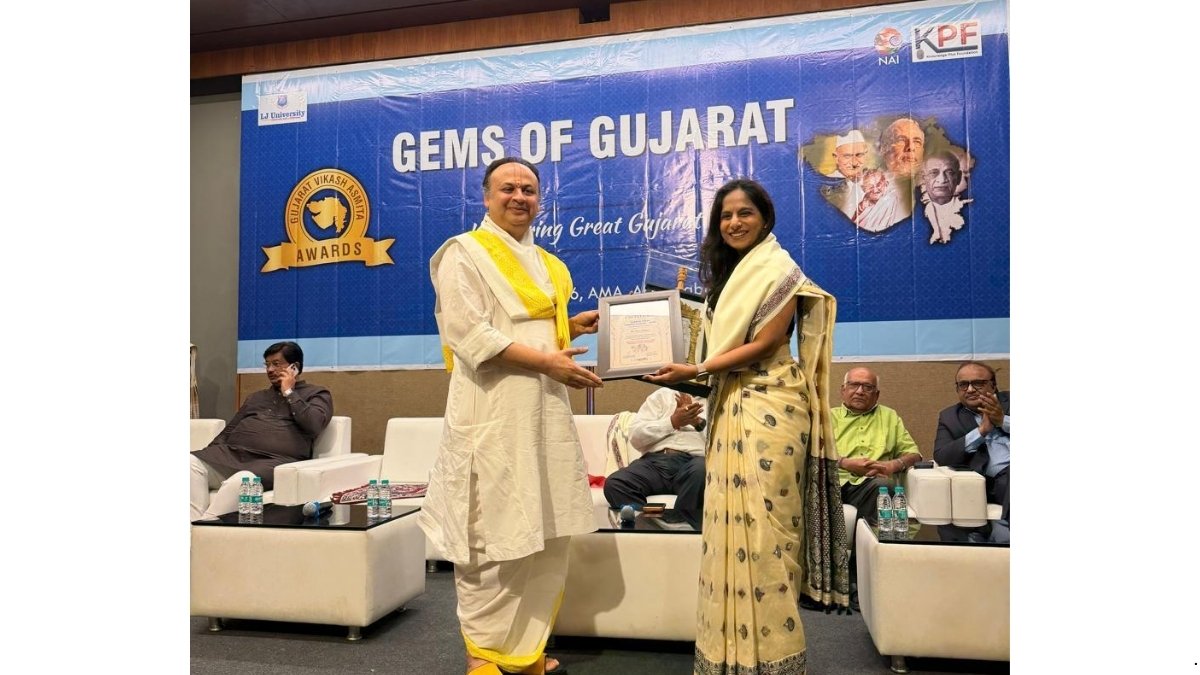
Charvi Rajput of Gunnercooke LLP honoured with Gujarat Vikas Asmita Award
Previous Post

Charvi Rajput of Gunnercooke LLP honoured with Gujarat Vikas Asmita Award

By Dr. Avtar Singh, Chief Orthopaedic & Robotic Joint Replacement Surgeon, Amandeep Hospitals, in partnership with Ujala Cygnus
Next Post

The Robotic Revolution in Orthopaedics: Making Global-Standard Joint Care Accessible Across India

Picked
Shiv Mandlik’s Heritage Robot Wins Bronze at WRO India
Kicky & Perky launches Pietra collection celebrating colour stones and modern design
GOBARdhan Just Changed the Rules for India's Biogas Sector. Here Is Where Organic Recycling Systems Limited Stands.
GOBARdhan Just Changed the Rules for India’s Biogas Sector. Here Is Where Organic Recycling Systems Limited Stands.
Led by CEO & Co-Founder Neha Khanna, the company is building a global brand across home décor, accessories and jewellery through craftsmanship, conscious design and purposeful innovation
From Indian Craftsmanship to Global Markets: House of Kraft Named Runner-up at Payoneer Awards
Focus Keyphrase: Daman-Diu destination wedding GST relief, the blunt times
Daman-Diu Offers Rs.5 Lakh GST Relief for Wedding MSMEs
PC Jeweller Gets No-Dues Letters After Repaying Consortium Bank Debt
Popular Posts
Focus Keyphrase: Daman-Diu destination wedding GST relief, the blunt times
Daman-Diu Offers Rs.5 Lakh GST Relief for Wedding MSMEs
By Times News Service
PC Jeweller Gets No-Dues Letters After Repaying Consortium Bank Debt
By TBT Online Desk
Gujarat startup TAPAS-1 thermal infrared camera, the blunt times
Gujarat Startup’s Thermal Camera TAPAS-1 to Launch on SpaceX Falcon 9
By Times News Service
TNA Solutions to raise up to Rs. 37.86 crore through IPO-TBT
TNA Solutions to raise up to Rs. 37.86 crore through IPO
By TBT Online Desk
Technopaints Files IPO Papers With SEBI to Raise ₹500 Crore
By TBT Online Desk
Rajkot Civil Hospital body swap, the blunt times
Rajkot Civil Hospital Body Swap: Wrong Man Cremated
By Times News Service

Read Next

Repono receives key Railway approval for proposed Mathura fuel terminal-TBT
Business
Repono receives key Railway approval for proposed Mathura fuel terminal
September 30, 2026
3 Min Read
Best Judiciary Coaching in Delhi: An Expert Guide by Lex Cyber Attorneys
Business
Best Judiciary Coaching in Delhi: An Expert Guide by Lex Cyber Attorneys
September 30, 2026
5 Min Read
Business
Kicky & Perky launches Pietra collection celebrating colour stones and modern design
September 30, 2026
2 Min Read
GOBARdhan Just Changed the Rules for India's Biogas Sector. Here Is Where Organic Recycling Systems Limited Stands.
Business
GOBARdhan Just Changed the Rules for India’s Biogas Sector. Here Is Where Organic Recycling Systems Limited Stands.
September 30, 2026
4 Min Read
The Blunt Times

The Blunt Times is a 24-hour news portal from Surat and south Gujarat. It was launched by senior journalist Melvyn Thomas, who has over 21 years of experience working with the top news organizations such as The Indian Express, The Times of India, and The Economic Times.

Popular
Shiv Mandlik’s Heritage Robot Wins Bronze at WRO India
September 30, 2026
Kicky & Perky launches Pietra collection celebrating colour stones and modern design
September 30, 2026
GOBARdhan Just Changed the Rules for India’s Biogas Sector. Here Is Where Organic Recycling Systems Limited Stands.
September 30, 2026
From Indian Craftsmanship to Global Markets: House of Kraft Named Runner-up at Payoneer Awards
September 30, 2026
Categories
City Events
National
Business Vibes
Lifestyle
Business
Education
Entertainment
Spotlight
Regional
Health
Press Release
Sports

© 2026 All Rights Reserved, The Blunt Times

  • Terms of Service
  • Privacy Policy