



SOMAWA Explains What Your RO Purifier Removes — Including What It Shouldn’t
RO systems can reduce dissolved minerals, while water-ionizer claims about pH, calcium, magnesium, and molecular hydrogen require independent testing and careful interpretation.
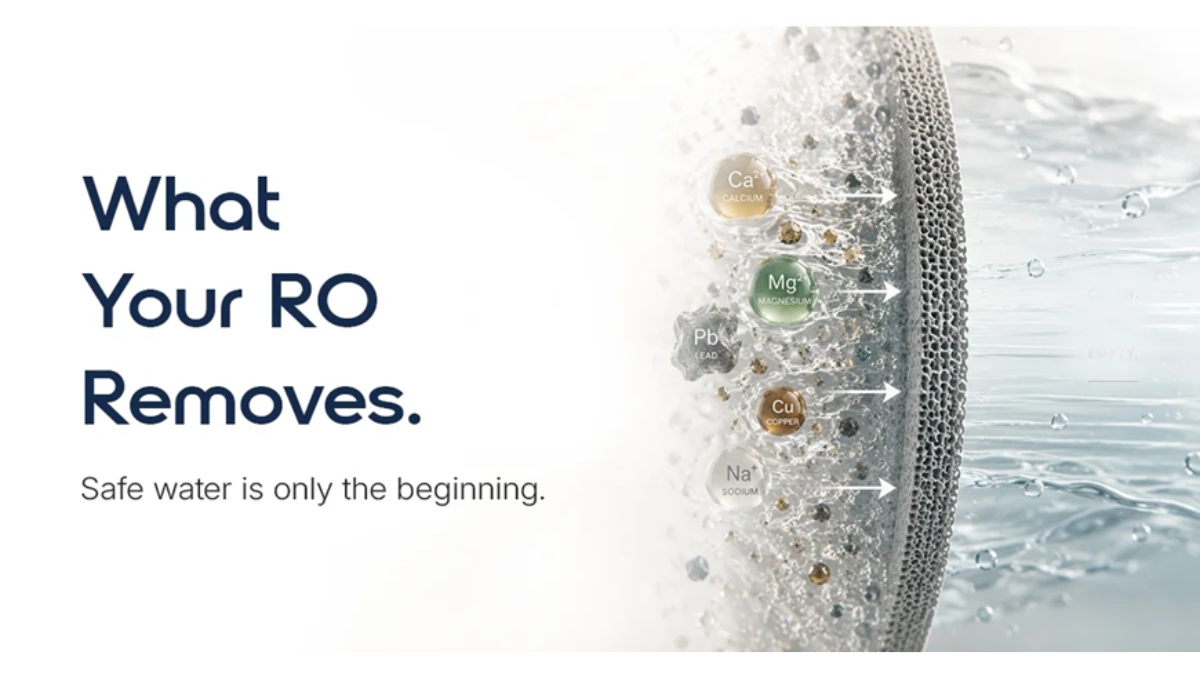
India’s most trusted home water appliance made drinking water safe for a generation. But a reverse-osmosis membrane cannot distinguish calcium from lead — and it removes both.
New Delhi [India], August 17: The RO purifier solved a real problem. For a generation of Indian households, tap water carried genuine risks — heavy metals, bacteria, dissolved contaminants that made people sick. Reverse osmosis addressed that problem decisively. It made water safe. That matters, and it should not be forgotten.
But a reverse-osmosis membrane is indiscriminate. It cannot tell arsenic from calcium. It removes both. And calcium — along with magnesium — is a mineral your body uses, not a contaminant it defends against.
SOMAWA, India’s only water ionizer brand institutionally backed by the National Research Development Corporation (NRDC), an enterprise of the Ministry of Science and Technology, Government of India, has published a guide examining precisely what RO removes and what the consequences are — for mineral intake, for pH, and for what the TDS reading on your meter is actually telling you.
The World Health Organization recommends a minimum mineral content in drinking water: at least 30 mg per litre of calcium and 10 mg per litre of magnesium. Standard RO output falls significantly below both thresholds. The water is clean. It is also empty.
The pH problem compounds this. RO water typically reads between 5.5 and 6.5 — chronically acidic, without visible symptoms. And the TDS meter most Indian households use to verify their purifier cannot distinguish between what was removed (contaminants) and what should have stayed (minerals). It measures quantity. It cannot measure quality.
SOMAWA’s position is not to replace RO but to complete it. The ionizer takes the clean water the RO produces and passes electric current through it — supercharging the calcium and magnesium ions, raising pH naturally, and adding dissolved molecular hydrogen at measurable concentrations. The result is water that is safe and mineral-rich. Not safe and empty.
“RO gave India safe water. That was the right solution for the right problem. The next question — now that the water is safe — is whether it is also doing enough. That is a different conversation, and it starts with what the membrane took out that it shouldn’t have.”
— Gitanshu Mittal, Founder, SOMAWA
The full article — including the complete research breakdown, comparisons, and answers to the most common questions — is available at somawa.com/journal/what-your-ro-removes.
About SOMAWA
SOMAWA is a luxury water wellness brand, and the only water ionizer company in India institutionally backed and incubated by NRDC (National Research Development Corporation), an enterprise of DSIR under the Ministry of Science and Technology, Government of India. SOMAWA water delivers a minimum of 1,500 parts per billion of dissolved molecular hydrogen with a pH starting at 8.5, designed to hydrate deeply while retaining the natural minerals water was always meant to carry. The brand’s range — Modish, Amara, Amara NXT, Udaka, and Toya — serves households across India with indigenously manufactured ionizers engineered for Indian water conditions, backed by a service infrastructure across 500+ cities.
Disclaimer: SOMAWA products are wellness devices, not medical treatments. Nothing in this article constitutes medical advice. SOMAWA does not claim to cure, treat, or prevent any condition. SOMAWA is institutionally backed and incubated by NRDC, an enterprise of DSIR under the Ministry of Science and Technology, Government of India.