





Gujarat : Bhavnagar Police Beating of Murder Accused in Public Raises Questions
BHAVNAGAR :A murder investigation in Bhavnagar has triggered a far more disturbing question: can the police punish an accused in public before a court has even decided his guilt? A video of the scene...

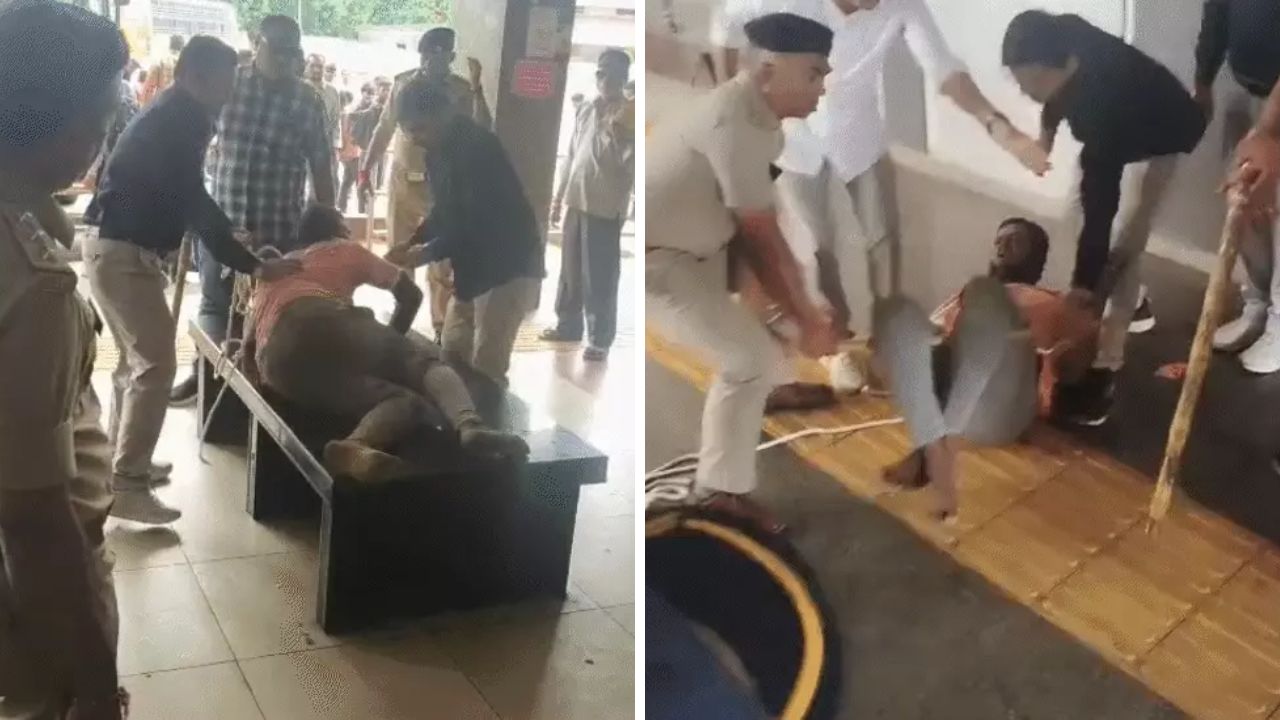
BHAVNAGAR :A murder investigation in Bhavnagar has triggered a far more disturbing question: can the police punish an accused in public before a court has even decided his guilt? A video of the scene reconstruction of murder accused Faizal alias Khatki has raised serious questions after he was allegedly tied with a rope and beaten repeatedly by a police officer.
Faizal was arrested in connection with the alleged killing of his live-in partner Kajal at the Bhavnagar ST bus stand on September 3. During the subsequent reconstruction of the crime scene, Neelambagh Police Station PI D.P. Unadkat allegedly beat the accused with a baton 107 times in around 10 minutes, according to the video cited in the report.
The footage has prompted questions over whether such treatment complies with established safeguards governing accused persons.
In a telephonic conversation, Unadkat defended the action, saying, “The service was done in public so that this does not happen to any other women.”
According to the video, 48 blows were allegedly delivered during the first four minutes. The accused was also reportedly made to lie down and was later tied to a pillar while the beating continued.
The controversy comes against the backdrop of police conduct guidelines. In April 2025, the Supreme Court reiterated that police cannot publicly beat, parade or assault accused persons and that punishment is the responsibility of courts, not investigating officers.
The Gujarat High Court has also strongly criticised public parading, handcuffing and beating of accused persons, observing that such conduct has no place in a constitutional democracy.
Murder case behind the controversy
According to the complaint, 40-year-old Kajal was allegedly attacked after an argument involving her relationship with Faizal. Police allege that she was repeatedly assaulted and later taken to Sir T Hospital, where doctors declared her dead.
The case has now acquired a second dimension—whether the manner in which the accused was treated during investigation itself warrants scrutiny.
The incident raises a fundamental question for law enforcement: in seeking justice for a victim, can the police themselves cross the line drawn by the law?