






Hackathons Are Evolving Beyond Competitions. NAMESPACE Is Building What Comes Next
From large-scale community programs to institutional and corporate innovation initiatives, NAMESPACE is expanding the role of hackathons from short-term competitions into platforms for learning,...

From large-scale community programs to institutional and corporate innovation initiatives, NAMESPACE is expanding the role of hackathons from short-term competitions into platforms for learning, building and opportunity.
For years, hackathons have largely been understood as competitions. Developers and students come together for a fixed period, build something, submit it to a panel of judges, and compete for prizes. Once the winners are announced, the event often ends.
A well-designed hackathon is also an intensive learning environment. Participants learn new technologies by actually using them, collaborate with people they may have never met, solve ambiguous problems, receive mentorship, build projects they can showcase, and interact with companies working with the technologies they are learning.
In that sense, the most valuable outcome of a hackathon may not be the winning project. It may be the skills developed, the evidence of those skills, and the opportunities created around them.
From events to infrastructure
Founded by Delhi-based entrepreneurs Pradeepto Sarkar and Diksha Sharma, NAMESPACE began with a focus on hackathons and builder communities, but operating these programs at scale revealed a broader opportunity. Institutions need practical mechanisms to supplement traditional education with hands-on innovation. Companies want better ways to engage technical communities, experiment with ideas and discover capable talent.
Sarkar, who leads the company as CEO and has expertise in designing and executing global innovation programs, identified that builders needed more meaningful ways to learn and demonstrate what they could do. NAMESPACE’s approach is to treat the hackathon not as the final destination, but as infrastructure connecting learning, experimentation, project development, mentorship, community and opportunity.
HACKHAZARDS: testing the model at scale
The clearest demonstration of that approach is HACKHAZARDS, NAMESPACE’s flagship hackathon.
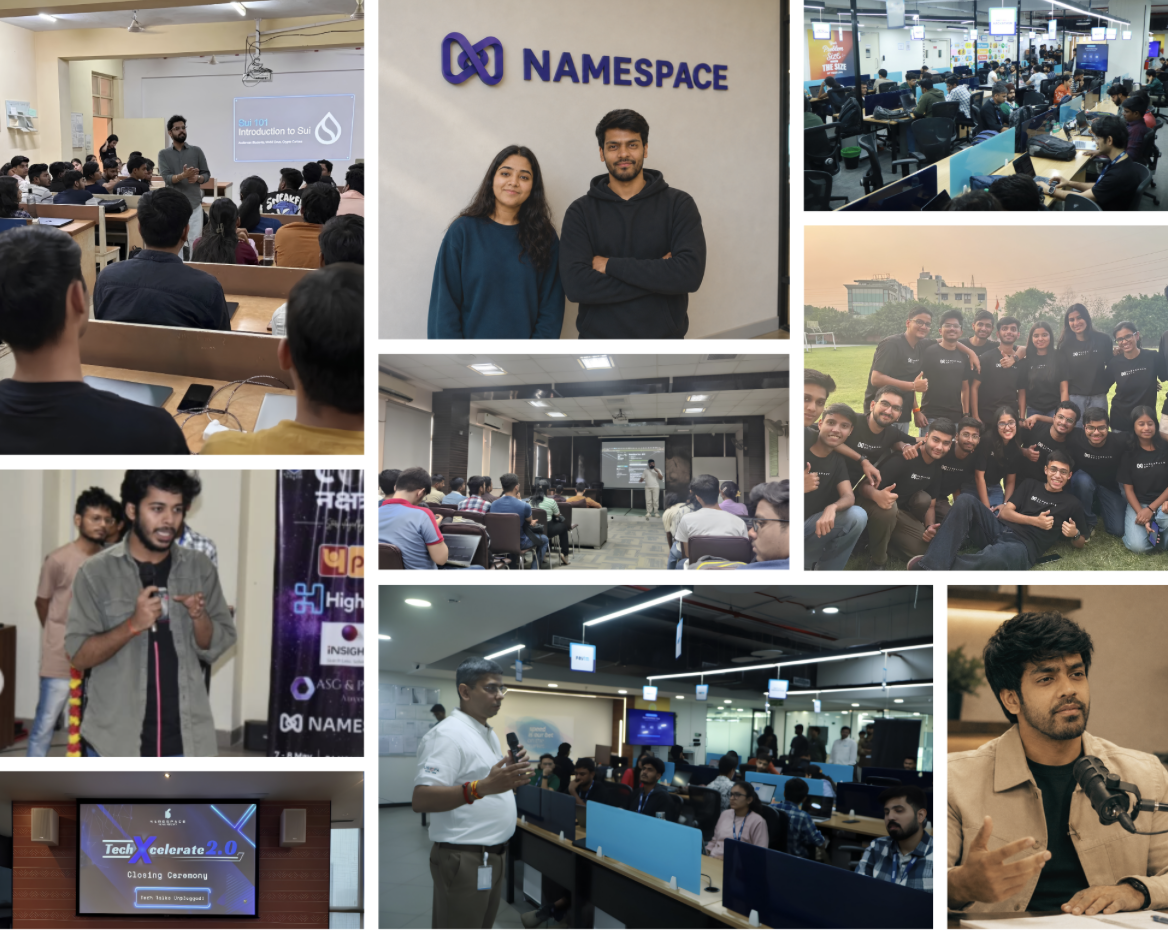
The latest edition, culminating in July this year, received over 31,000 registrations and 2,600+ final project builds, with participants spanning 51 countries and more than 2,000 institutes and companies.
The numbers illustrate something beyond the size of a single event. There is a significant gap between registering for a hackathon and actually building something. Moving thousands of people from initial interest to completed projects requires technology access, mentorship, community support and structured engagement.
HACKHAZARDS provided more than 200 hours of mentorship and co-learning, while distributing more than $100,000 worth of credits and resources to participants.
Its participant mix also reflects the broader role hackathons can play in opening pathways into technology. Eighteen percent of participants were at the pre-college level, 21% came from outside traditional tech education, 24% were already working in industry, and women accounted for 40% of participation.
Building with Institutions and Companies
Beyond community programs, NAMESPACE partners with institutions and companies to design and run hackathons and open-innovation programs tailored to their specific goals. To date, the company has worked with more than 50 companies and 30 institutions, spanning different sectors, communities and innovation objectives.
For educational institutions, these programs provide students with practical environments to learn, experiment and demonstrate their skills beyond the classroom. For companies, they create structured ways to engage developer communities, encourage innovation, work with emerging technologies and discover talent through demonstrated ability.
The underlying approach remains the same across these programs: create an environment where people can learn by building, build by solving real problems, and demonstrate what they can do through the work they produce.
Making skills visible
Traditional systems often rely heavily on credentials. A degree, certification, job title or resume can provide signals about someone’s capabilities, but those signals do not always capture what a person can actually do.
A project demonstrates technical ability. Working in a team demonstrates collaboration. Solving an open-ended challenge demonstrates problem-solving. Presenting a project demonstrates communication, while iterating on an idea demonstrates adaptability.
NAMESPACE is betting that the hackathon can become more than an event. It can become a pathway: from learning to building, from building to demonstrated skill, and from demonstrated skill to opportunity.
If the first generation of hackathons proved that people can learn by building, the next generation could turn that insight into infrastructure.