
Gujarat : Vapi Pollution Row Rocks Parliament, MP Flags ‘Poisoned Rivers’
Umesh Patel demands ground reality check as toxic industrial discharge hits rivers and livelihoods

Advertisement
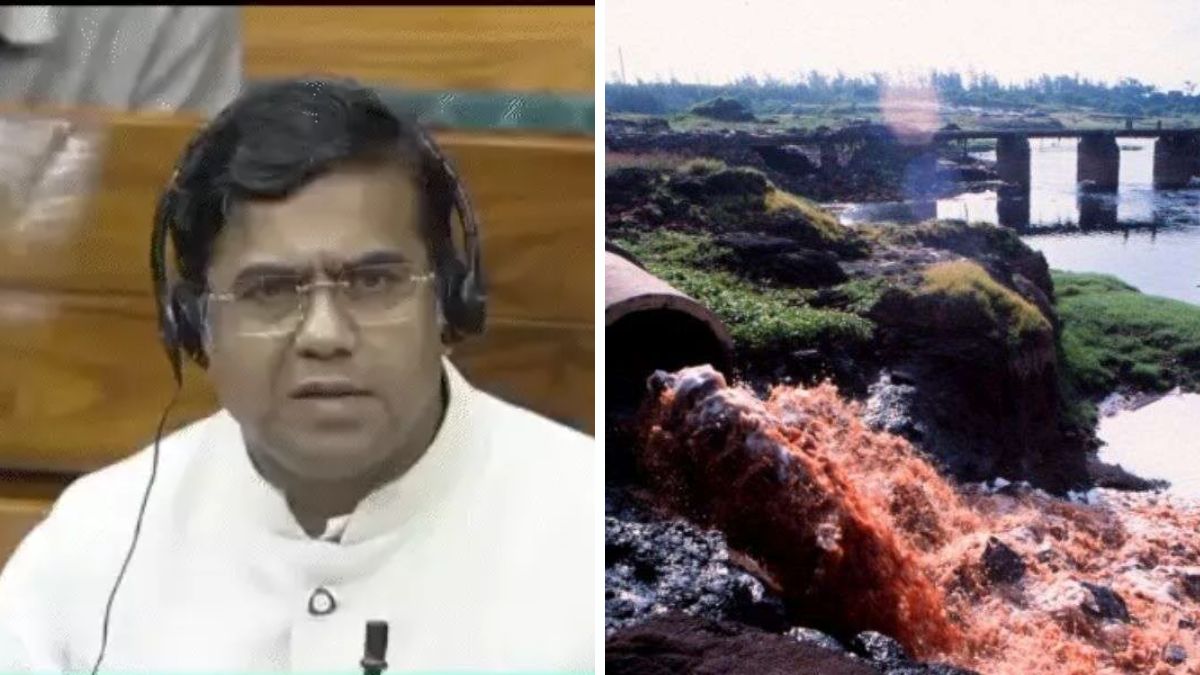
New Delhi — A fierce debate erupted in Parliament as Daman-Diu Independent MP Umesh Patel raised serious concerns over unchecked industrial pollution in Gujarat’s Vapi belt, alleging that once-thriving rivers have now turned into “poisonous drains.”
Speaking in the Lok Sabha, Patel painted a grim picture of environmental degradation caused by chemical discharge from industries in and around Vapi. He claimed that rivers such as Damanganga River, Kolak and Bilkhadi have been severely contaminated, posing a direct threat to both human health and local ecosystems.
“These rivers are no longer lifelines—they have become carriers of toxic waste,” Patel said, demanding urgent intervention. He stressed that the impact is not limited to water pollution alone, but extends to land and air, creating a hazardous environment for residents.
Highlighting the human cost of the crisis, Patel warned of a rising incidence of serious illnesses in the region. “Cases of life-threatening diseases like cancer are increasing at an alarming rate. At the same time, marine life has been devastated, destroying the livelihoods of fishermen who depend on these waters,” he told the House.
The MP also questioned the effectiveness of regulatory mechanisms, raising doubts over the implementation of directives issued by the National Green Tribunal in 2019. He further challenged the credibility of pollution data presented by the Gujarat Pollution Control Board, calling for an independent assessment of the ground situation.
Responding to the concerns, Minister of State for Environment Kirtivardhan Singh presented official figures to underline the government’s efforts. He stated that between January 2025 and February 2026, authorities conducted 1,890 inspections in the Vapi industrial area.
“Strict action has been taken against violators. A total of 196 show-cause notices and 36 closure notices have been issued. Environmental compensation of around ₹1.81 crore has been levied, with ₹1.39 crore already recovered,” Singh said.
The minister also claimed that continuous monitoring and enforcement have led to improvements in pollution levels in key rivers like the Damanganga and Kolak. However, these assurances failed to convince Patel, who remained sceptical of what he described as “paper claims.”
“We do not need statistics alone. The government must verify the ground reality and provide a clear timeline for cleaning and restoring these rivers,” Patel insisted.
The exchange has once again brought the spotlight on industrial pollution in Gujarat, particularly in high-density manufacturing zones like Vapi. Environmentalists have long warned that unchecked industrial discharge could lead to irreversible ecological damage if not addressed with urgency.
Advertisement
