








Gujarat : IITGN Develops Gold Nanorod Approach for Targeted Cancer Therapy
GANDHINAGAR: A new cancer treatment approach developed by researchers at the Indian Institute of Technology Gandhinagar (IITGN) could offer a more targeted way to attack cancer cells while limiting...

GANDHINAGAR: A new cancer treatment approach developed by researchers at the Indian Institute of Technology Gandhinagar (IITGN) could offer a more targeted way to attack cancer cells while limiting damage to healthy cells.
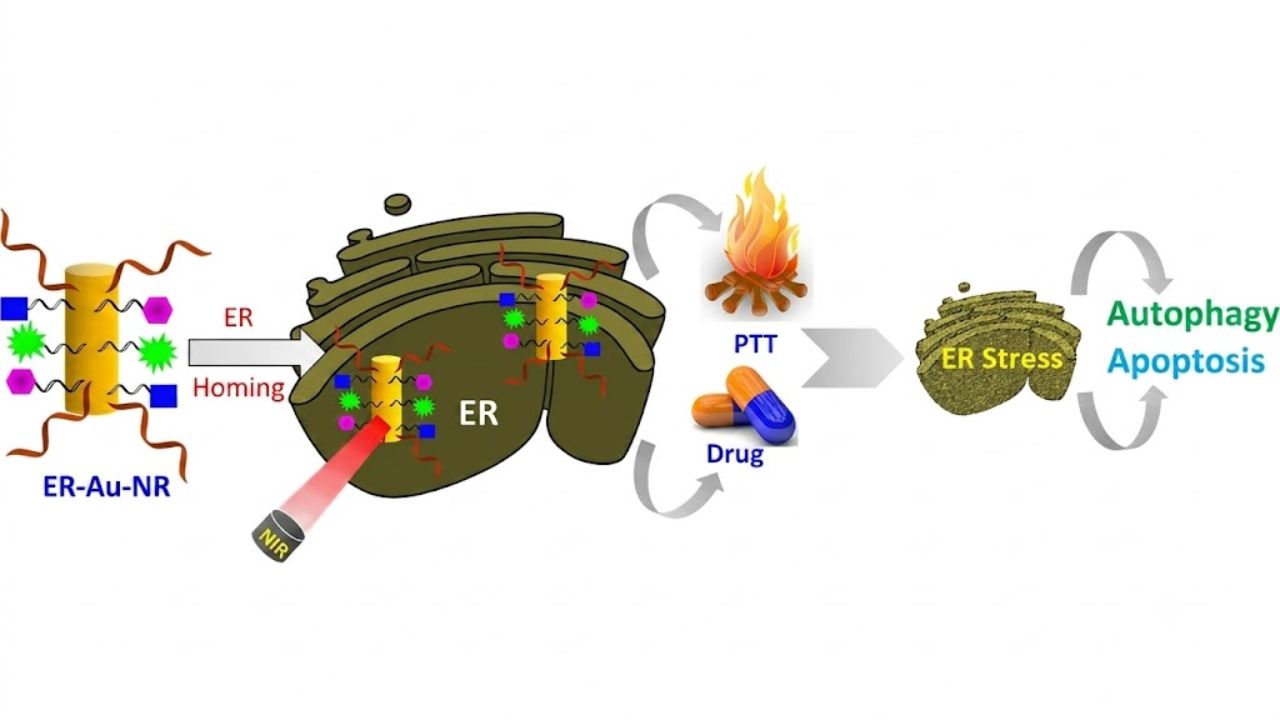
The research team has developed a gold nanorod-based platform that targets the endoplasmic reticulum (ER), a key cell structure involved in protein production and processing. The platform also uses near-infrared light to generate heat inside cancer cells.
The findings were published in the Journal of Materials Chemistry B in a study titled “Endoplasmic reticulum-targeted gold nanorod for chemo-photothermal therapy induces ER stress-mediated autophagy and apoptosis in cancer cells.”
The team combined gold nanorods with the chemotherapy drug cisplatin, indomethacin and a targeting molecule called dansyl-sulfonamide. The design allows the nanorods to move towards the ER while also supporting cellular imaging.
Prof Sudipta Basu, corresponding author and Professor in IITGN’s Department of Chemistry, said the team wanted to explore whether a nanomaterial could do more than simply carry a drug.
“We wanted to understand whether its design could also influence how and where that treatment interacts with a cancer cell,” Basu said.
Laboratory experiments showed that the nanorods accumulated rapidly in the ER of cancer cells. This increased stress in the cell’s protein-processing system. When exposed to near-infrared light, the nanorods generated heat and increased reactive oxygen species, further damaging the cancer cells.
The combined treatment activated autophagy, a process that removes damaged cellular components, followed by apoptosis, or controlled cell death.
Researchers tested the platform on colon, cervical and breast cancer cells. The treatment reduced cancer cell viability while showing negligible toxicity to non-cancerous cells under the tested laboratory conditions.
Lead author Asima Sahu said the research showed how small changes in material design can create measurable biological effects.
“For me, one of the most rewarding aspects of this work was seeing a carefully designed nanoscale system translate into measurable changes at the cellular level,” Sahu said.
However, the researchers stressed that the findings are still at the cell-culture stage. The study does not yet prove that the nanorods can safely reach tumours or work effectively inside the human body.
Further animal studies, toxicity testing and pharmacokinetic research will be required before the approach can be considered for clinical use.