




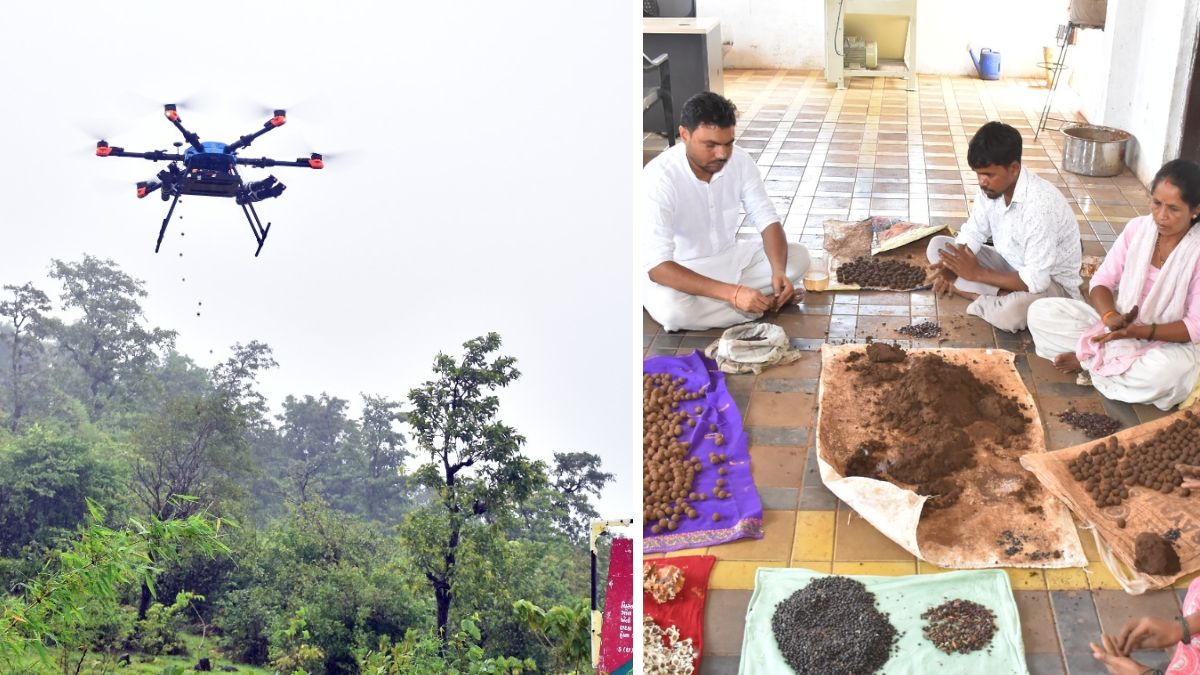
Gujarat : Dharampur’s Drone Green Mission Drops 50,000 Seed Balls Across Hills
VALSAD : In a pioneering blend of technology and environmental conservation, Neelambhai Patel of Dharampur has launched South Gujarat’s first-ever drone seed ball campaign, scattering 50,000...

VALSAD : In a pioneering blend of technology and environmental conservation, Neelambhai Patel of Dharampur has launched South Gujarat’s first-ever drone seed ball campaign, scattering 50,000 seed balls over inaccessible hills to regenerate degraded forests. The initiative has set a new benchmark for ecological restoration by proving that innovation and community participation can together transform barren landscapes into thriving green ecosystems.
Led by the Lok Mangal Charitable Trust, the campaign targeted the rugged hills of Suliya Hill in Moti Korval and Piprod villages, where conventional plantation drives are difficult because of steep terrain and dense forests. With the arrival of the monsoon, the seed balls are expected to germinate naturally, helping revive native tree cover in the region.
“This initiative is about allowing nature to heal itself. Technology is only helping us reach places where human hands cannot,” said Neelambhai Patel.
The Trust, which works closely with the Forest Department and local organisations, already nurtures more than 50,000 saplings every year through its nursery and plantation programmes. This year, it expanded its mission by introducing drone technology to accelerate afforestation.
The campaign also became a people’s movement. Local villagers and volunteers joined hands to prepare over 50,000 seed balls using clay, organic manure and seeds of indigenous species such as khakhro, tamarind and garmalo. These native trees are vital for maintaining biodiversity but have gradually declined across the region.
Seed ball technology is regarded as one of the most effective methods for restoring forests in remote areas. The clay coating protects seeds from birds and rodents while preserving moisture until monsoon rains soften the shell. Once the rains arrive, the seeds germinate naturally without the need for digging pits or manual planting.
“Community participation, indigenous biodiversity and modern technology can together create a greener and more sustainable future,” the Trust said.
Besides reducing labour and plantation costs, drone-assisted seed dispersal enables large-scale afforestation in locations that are otherwise inaccessible.