
From Textile Titan to Aviation Pioneer: How Vijaypat Singhania Put Surat on the Air Map
Subtitle: From Raymond Group leadership to flying his own Dakota aircraft, Singhania’s legacy lives on in Surat’s aviation journey.

Advertisement
Surat | Gujarat — India has lost one of its most iconic industrialists and aviation pioneers. Vijaypat Singhania, former chairman of the Raymond Group, passed away in Mumbai on March 28, 2026, at the age of 87. His last rites were performed on Sunday, marking the end of an era that bridged India’s textile and aviation revolutions.
Singhania was not only a titan of industry but also a passionate pilot whose personal and professional journey had a deep and historic connection with Surat. Long before the city had a modern airport terminal, he helped place Surat firmly on India’s aviation map.
The Airline That Connected Surat Before Modern Aviation
In the early 1970s, when Surat was rapidly emerging as a textile and diamond hub, the city lacked scheduled air connectivity. Recognising the urgent need for faster travel to Mumbai’s markets, Singhania launched Safari Airways — the first airline to operate from Surat Airport.
The commuter service connected Surat, Bhavnagar and Mumbai at a time when air travel was still a luxury for most Indians. Remarkably, tickets between Mumbai and Surat were priced at Rs 70 and Surat and Bhavnagar were priced at just ₹35–38, making aviation surprisingly accessible for business travellers of that era.
Safari Airways operated small aircraft, primarily the legendary Douglas DC-3 Dakota (VT-CEB). The aircraft soon became a familiar sight at Surat Airport and symbolised the city’s growing industrial ambition.
An aviation historian said, “Singhania understood before anyone else that Surat’s textile and diamond entrepreneurs needed speed and connectivity. Safari Airways was decades ahead of its time.”
A Pilot Who Loved Flying to Surat
Singhania was far more than an airline owner — he was an avid pilot who frequently flew his own aircraft. Aviation veterans fondly recall him personally landing in Surat and interacting with ground staff.
“His association with Surat was deeply personal. He wasn’t just building routes; he was building relationships,” a former airport official said.
Even in later years, Singhania continued visiting Surat during his aviation pursuits, remaining closely connected with pilots and airport authorities. His passion for flying became legendary, alongside his global achievements in hot-air ballooning and record-breaking flights.
Upgrading Surat Airport and Building Its Future
His determination to maintain reliable air services forced authorities to maintain and upgrade the airstrip at Surat. This early push laid the foundation for the international airport the city enjoys today.
Industry leaders credit Singhania’s persistence for helping policymakers recognise Surat’s growing economic importance. His presence during the 1990s and early 2000s — when airport facilities were still limited — reinforced the city’s need for better aviation infrastructure.
A textile industry veteran remarked, “Without Vijaypat Singhania’s vision, Surat’s aviation growth might have been delayed by decades.”
Historic First Flights and Civic Pride
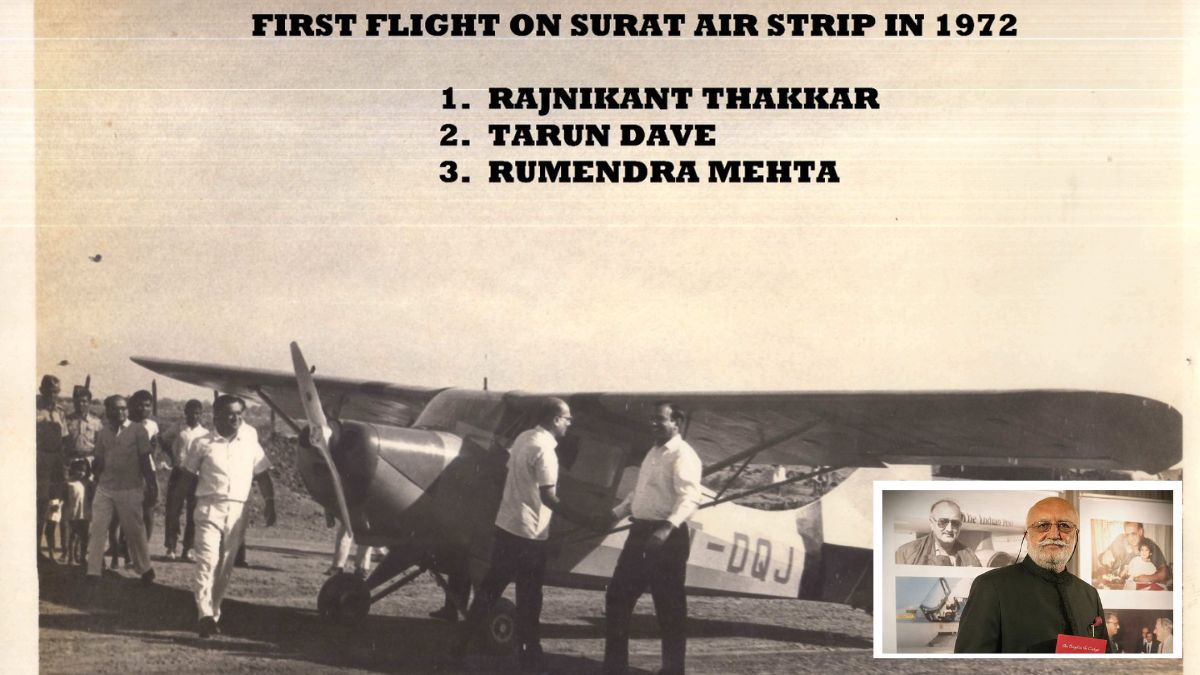
Safari Airways’ first commercial flight from Surat carried several prominent citizens who had long dreamed of air connectivity. The airline later launched the Surat-Bhavnagar service during the tenure of then Gujarat Chief Minister Ghanshyam Oza, with support from industrialists including Vinay Shah of Baroda Rayon and Singhania himself.
Though the airline operated for only three years, its impact proved lasting. It demonstrated the viability of commercial aviation from Surat and sparked the city’s long-term aviation journey.
Advertisement
