







Gujarat Farmer Earns Rs.11 Lakh from Natural Turmeric Farming
SURENDRANAGAR: At a time when farmers often struggle with low returns from raw produce, 70-year-old Kalubhai Patel of Vadod village in Wadhwan taluka has shown how natural turmeric farming,...

SURENDRANAGAR: At a time when farmers often struggle with low returns from raw produce, 70-year-old Kalubhai Patel of Vadod village in Wadhwan taluka has shown how natural turmeric farming, processing and value addition can turn agriculture into a profitable business.
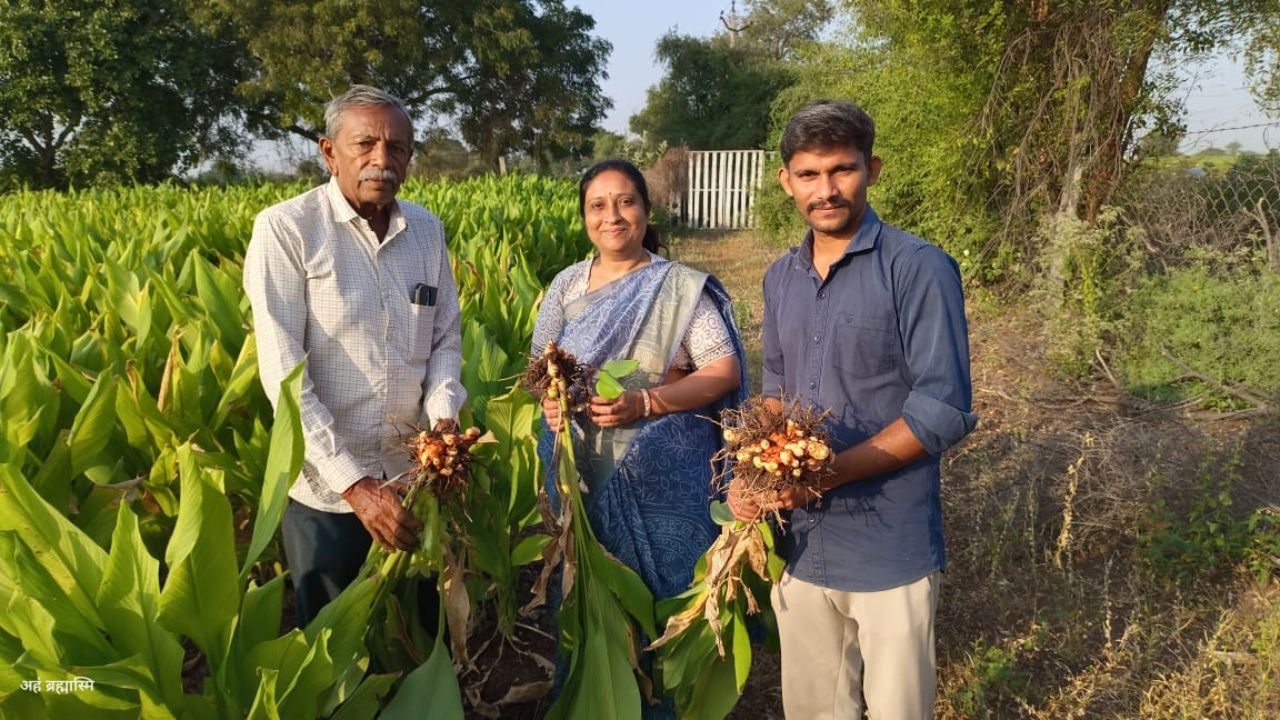
With 10 acres of land, Patel has practised natural farming on four acres for the past 13-14 years. What began with turmeric cultivation on one acre of fallow land has now grown into a successful home-based enterprise that earns him around ₹10-11 lakh annually.
Patel was inspired to adopt natural farming after seeing a farmer grow turmeric through natural methods at an agricultural fair in Kagvad. He gradually expanded turmeric cultivation and decided not to sell his produce as raw turmeric.
Instead, he invested around ₹5 lakh in a small processing unit at home. The unit has a steam boiler, polishing machine and pulveriser. The Horticulture Department provided him ₹2.5 lakh in assistance.
Patel uses steam to process turmeric instead of boiling it in water. He says this helps retain its beneficial and medicinal properties. After drying the turmeric for about a month, he cleans and grinds it into powder.
The family also prepares green turmeric pickle and turmeric mouth freshener. The products are packed at home and sold under the brand name “Shakti Organic.”
The difference in returns is significant. Raw turmeric sells for around ₹150 per kg, while Patel sells turmeric powder for ₹350 per kg. His green turmeric pickle fetches ₹440 per kg.
His organic products, certified by GOPCA, are sold mainly through word-of-mouth without major advertising.
“Processing and value addition can give farmers better returns than selling their produce in raw form. Natural farming and soil conservation can also help build a sustainable farm,” Patel said.
He follows crop diversification after the eight-month turmeric crop by growing short-duration crops such as moong, sesame and pearl millet. On the remaining six acres, he grows cotton and pigeon pea as intercrops.
Pigeon pea helps add nitrogen to the soil, reducing the need for urea. Patel also uses a solution made from aak leaves as a natural source of potassium. These practices have helped raise the organic carbon content of his soil to 0.94%.
The Gujarat Government has honoured Patel with Best Farmer Awards at the taluka, district and state levels. He has also received recognition from Junagadh Agricultural University and Dantiwada Agricultural University.
Recently, in the presence of Governor Acharya Devvrat and Chief Minister Bhupendra Patel, he received the state-level Best ATMA Farmer Award.
Patel has also developed an automatic sowing machine, combining traditional farming knowledge with innovation and scientific methods.