








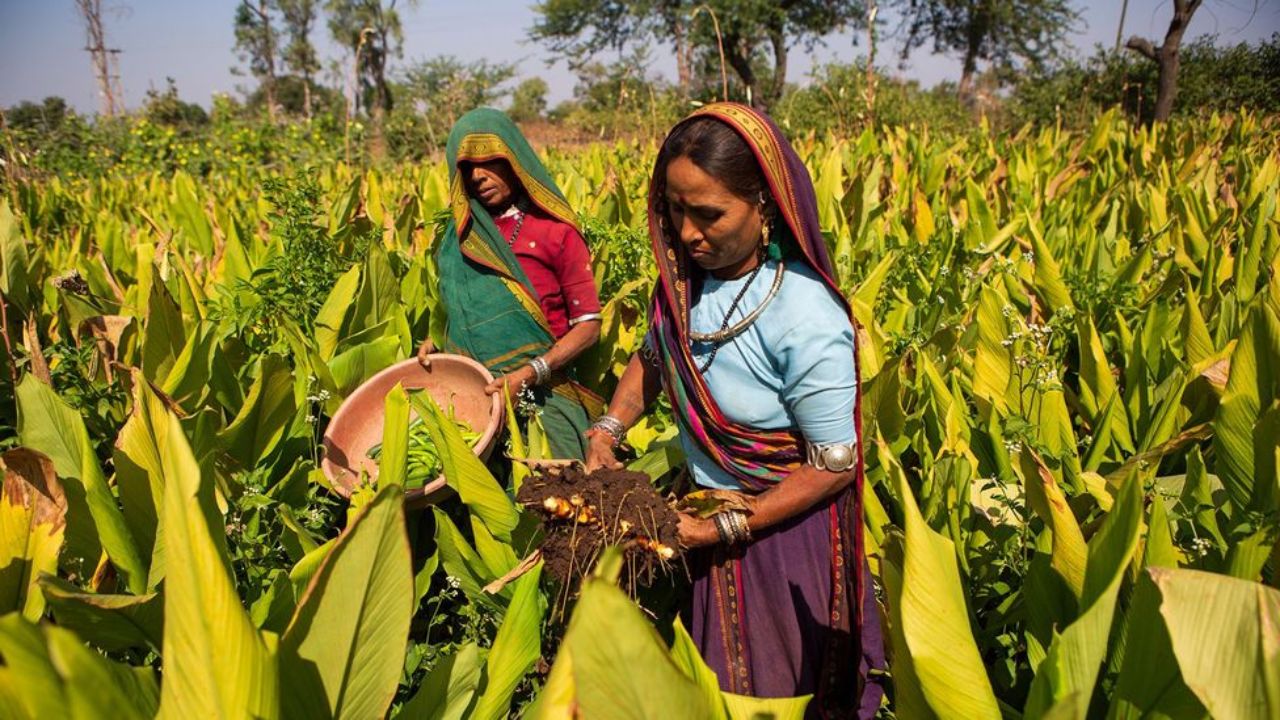
Natural Farming Doubles Turmeric Yield in Gujarat
GANDHINAGAR: Gujarat’s push towards natural farming has received a major boost after a scientific study reported that turmeric cultivated using natural farming practices produced nearly twice the...

GANDHINAGAR: Gujarat’s push towards natural farming has received a major boost after a scientific study reported that turmeric cultivated using natural farming practices produced nearly twice the yield achieved through conventional chemical-based farming.
The field trials were conducted at Sardarkrushinagar Dantiwada Agricultural University (SDAU) under a joint research programme involving the Gujarat Biotechnology Research Centre (GBRC) and SDAU. According to the findings, one natural farming treatment produced more than 40 tonnes of fresh turmeric rhizomes per hectare, compared with 19.3 tonnes under conventional farming.
Science and Technology Minister Arjun Modhwadia said the results also showed a substantial economic advantage.
“The study, published in BMC Plant Biology in 2026, compared conventional chemical farming with nine different natural farming treatment combinations. One treatment produced more than 40 tonnes of fresh turmeric per hectare,” Modhwadia said.
He added that natural farming generated net returns of more than ₹10.5 lakh per hectare, compared with around ₹3.61 lakh under conventional farming.
Agriculture Minister Jitubhai Vaghani said the findings emerged from a Network Research Programme on Bharatiya Prakritik Krishi Paddhati through Biotechnology Interventions.
“The programme seeks to combine traditional Indian farming practices with modern scientific tools to improve crop productivity, restore soil health and promote environmentally sustainable agriculture,” Vaghani said.
Researchers tested traditional inputs including Beejamrit, Jeevamrit and Ghanjeevamrit, along with wheat-straw mulch. The study found that natural farming plots recorded substantially higher turmeric yields.
SDAU Vice-Chancellor Prof Rajeshwar Sinh Chandel said, “Income doubled through the successful natural farming of turmeric. Positive results are also being obtained in all fruit crops from this successful experiment.”
GBRC scientists also conducted microbial and metabolomic analysis of natural farming inputs, identifying beneficial microorganisms and around 300 to 500 metabolites across 11 classes.
Mission Director of Gujarat State Biotechnology Mission Digvijaysinh Jadeja said the research could help provide a stronger scientific basis for natural farming.
The programme has now moved beyond experimental plots, with farmers in Banaskantha trained to prepare natural farming inputs and adopt the practices for turmeric cultivation.
Researchers said beneficial soil microorganisms, including plant-growth-promoting bacteria and fungi, were also enriched under natural farming, potentially supporting soil health, nutrient recycling and crop resilience.