






Gujarat : Bullet Train Corridor Gets India’s First Movable Crossings
AHMEDABAD : India’s first high-speed rail corridor is bringing a major track technology to the country’s railway network. The Mumbai-Ahmedabad Bullet Train Corridor will use movable, or ‘swing-nose’,...

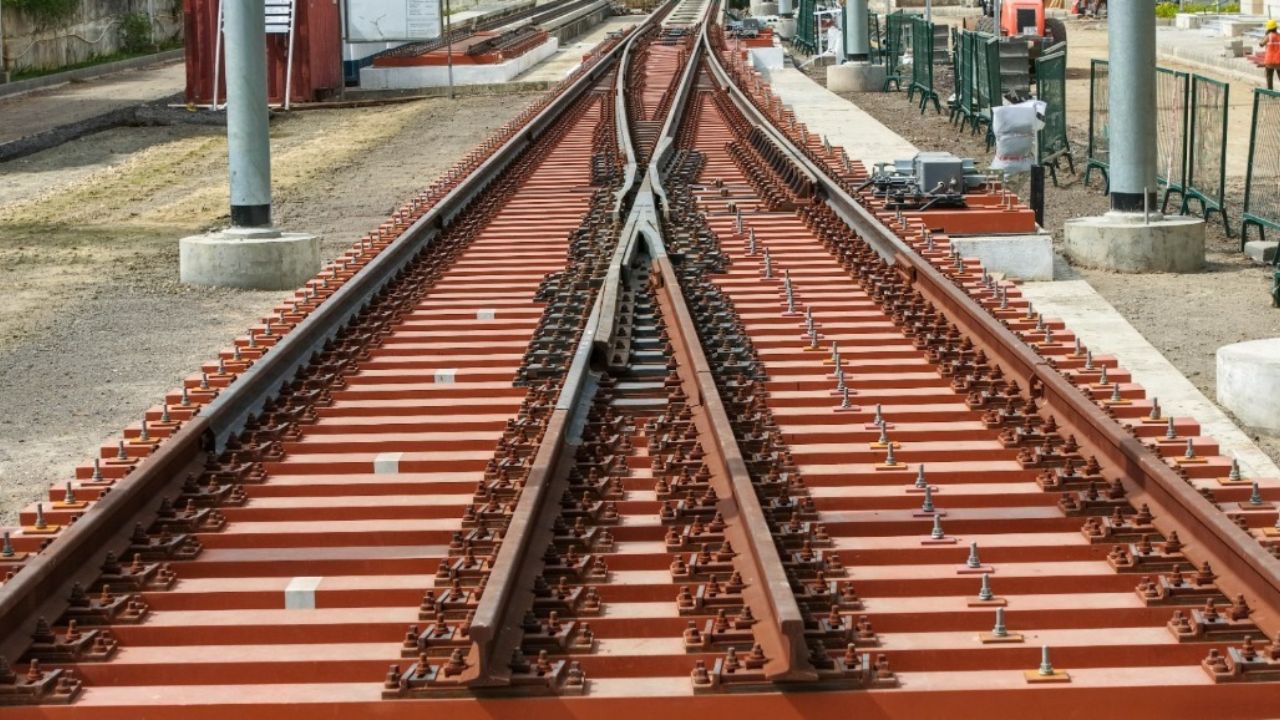
AHMEDABAD : India’s first high-speed rail corridor is bringing a major track technology to the country’s railway network. The Mumbai-Ahmedabad Bullet Train Corridor will use movable, or ‘swing-nose’, crossings designed to allow trains to pass through turnouts smoothly and safely at speeds of up to 320 kmph.
Unlike conventional fixed crossings, the new system eliminates the gap at the crossing nose. This is important for high-speed trains because wheels hitting a fixed gap at 250–300 kmph can create strong impact forces, leading to vibration, noise and greater wear on wheels and rails.
The movable crossing solves this problem by shifting the crossing nose into alignment with the switch rail. This creates an almost continuous rail surface for the train wheels.
The technology is expected to make high-speed travel smoother and quieter while reducing wheel-rail wear and maintenance requirements. It is also designed to reduce the risk of wheel derailment caused by high dynamic forces at turnouts.
Dual point machines for added safety
Each turnout will be equipped with two independent point machines. One machine positions and locks the switch rail, while the second moves and secures the movable crossing nose.
Both machines operate simultaneously after receiving a command from the signalling interlocking system.
A train will receive permission to proceed only after electronic confirmation that both sections are correctly positioned and locked.
Multiple safety checks
The system has been designed to withstand the lateral forces generated by trains travelling at speeds of up to 320 kmph. It also takes into account variations in Indian weather and temperature conditions.
Independent and redundant detection circuits continuously monitor the position and mechanical locking of the switch rail and crossing nose.
This means any positioning error or potential failure can be detected before a train is permitted to enter the turnout.
The introduction of swing-nose crossings marks a significant shift from conventional railway turnout technology in India. By combining movable rail components, dual point machines and electronic detection, the system is being designed specifically for the demanding requirements of high-speed rail operations.