


Surat’s Mantra Invited to National Textile Sustainability Workshop
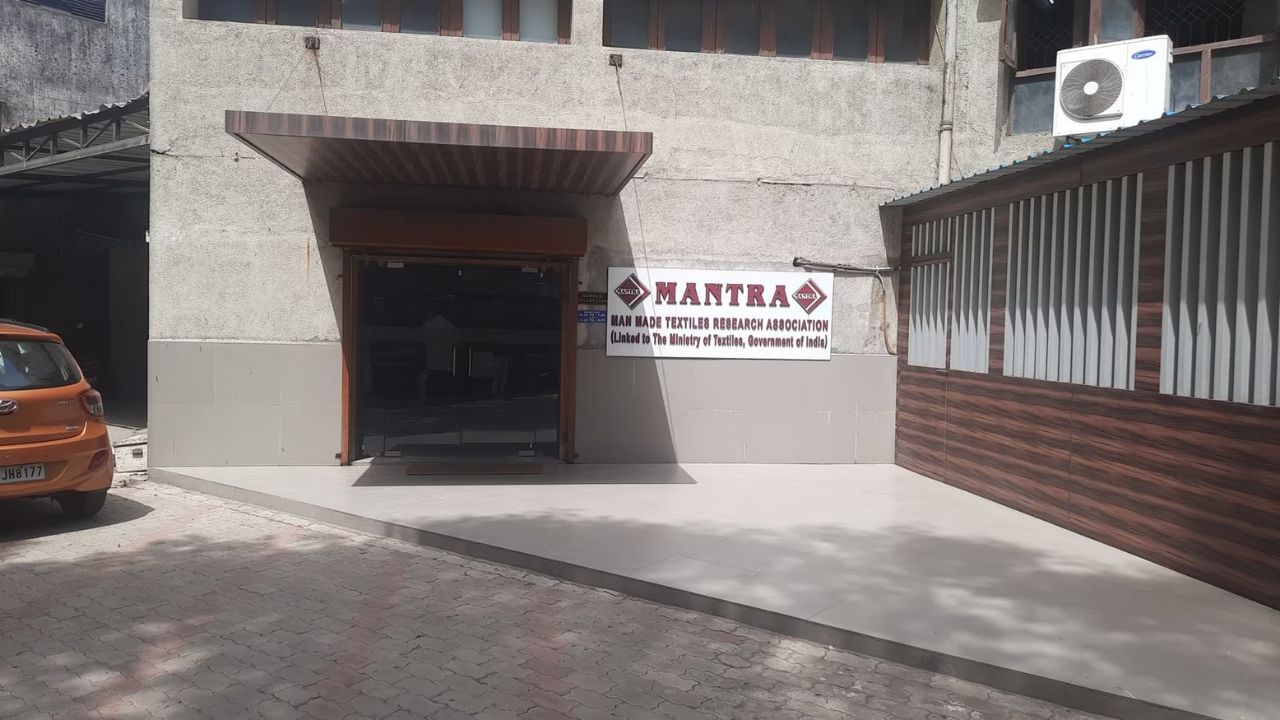
SURAT : Surat’s textile industry is set to gain a stronger voice in India’s long-term green manufacturing agenda, with Surat-based Man Made Textiles Research Association (Mantra) invited to a...

SURAT : Surat’s textile industry is set to gain a stronger voice in India’s long-term green manufacturing agenda, with Surat-based Man Made Textiles Research Association (Mantra) invited to a national-level validation workshop for the “Technology and Innovation Roadmap for Sustainable Textile Manufacturing in India — 2026–2047.”
The workshop, scheduled for August 18 at the India Habitat Centre in New Delhi, will seek final inputs from industry leaders, government representatives, researchers, academics, technology providers and other stakeholders before the roadmap is finalised.
The roadmap has been prepared by the Centre for Environment Education (CEE), a Centre of Excellence under the Ministry of Environment, Forest and Climate Change, with technical assistance from the United Nations Industrial Development Organization (UNIDO) and guidance from the Ministry of Textiles.
“This invitation is a recognition not only of Mantra’s technical work but also of Surat’s importance in India’s textile ecosystem,” industry representatives said.
The roadmap focuses on making India’s textile and apparel sector more resource-efficient, circular, climate-resilient and globally competitive. Key areas include green technology, digitalisation, sustainable production, resource efficiency, recycling and circularity.
The invitation is particularly significant for Surat, one of the world’s major synthetic textile manufacturing centres, where the sector faces growing challenges related to water consumption, energy use, chemicals, waste management and environmental compliance.
Mantra Director Dr Pankaj Gandhi and Environmental Engineer Himanshu Desai will represent the organisation at the workshop. They are expected to present the practical concerns and technological requirements of Surat’s textile cluster.
Their inputs will cover areas including water and energy efficiency, industrial waste management, recycling, renewable energy, sustainable chemicals, pollution control and circular textile manufacturing.
“The opportunity is to ensure that the realities and technological needs of Surat’s textile cluster are reflected in the national roadmap,” officials said.
The roadmap could provide a long-term framework for India’s textile sector through 2047, while Surat’s participation may help position the city as a potential sustainable textile manufacturing hub.
The workshop is therefore being viewed as more than an institutional recognition for Mantra—it could give Surat’s vast textile ecosystem a direct platform in India’s green industrial transformation.