



Made in India Is Evolving: Why Ideas Could Be India’s Next Big Advantage
Made in India Is Evolving: Why Ideas Could Be India’s Next Big Advantage

New Delhi [India], August 14: India has a manufacturing target to chase. The National Manufacturing Mission, announced as part of the Union Budget, aims to raise manufacturing’s contribution to GDP from around 16–17% today to 25% by 2035, with a focus on technology, workforce readiness, quality and ease and cost of doing business.
That ambition matters. Manufacturing creates jobs, strengthens supply chains and gives India a larger role in global production. But there is another question worth asking: what if India’s next big competitive advantage comes from what happens before anything gets made?
Ideas. Design. Research. Problem-solving. Creativity.
Manufacturing excellence will remain essential, but sustainable economic leadership will increasingly depend on India’s ability to turn human capability into intellectual and commercial value. The next generation of products, technologies and businesses will need people who can ask better questions, work through complexity, challenge assumptions and create ideas that did not exist before.
The future of “Made in India” may therefore need another phrase alongside it: “About Where Ideas Thrive”.
And if ideas are going to become a bigger part of India’s economic story, there is a surprisingly physical question to consider: where does that thinking happen?
Consider how much of a working day is spent sitting, standing, concentrating, thinking and collaborating. The physical conditions around those activities can make work easier or harder. Acoustics can determine whether someone can concentrate. Lighting can influence comfort and fatigue. The ability to move between focused work and collaboration can change how a team approaches a problem. Even physical comfort can influence how easily someone sustains attention through a demanding task.
These details can seem small when viewed individually. At scale, they become part of the conditions in which an organisation performs.
India’s economic ambitions are also changing the nature of work happening here. The country is no longer simply a destination for execution. Its Global Capability Centres are increasingly involved in product engineering, research, analytics, cybersecurity, AI and other high-value activities. NASSCOM research has described India’s GCC ecosystem as having evolved from a cost-arbitrage model towards a strategic innovation engine.
That makes the conditions in which people work a business consideration. If a team is expected to solve a complex problem, develop a new product or collaborate across geographies, the workplace should make those activities easier, not harder. A space that allows people to concentrate without distraction, come together when collaboration is needed and move between different modes of work can remove friction from the working day. The gains may not always be dramatic or immediately measurable, but across thousands of employees and millions of working hours, they can influence how effectively an organisation operates.
There is another dimension to this. People do not all think, concentrate, process information or respond to their surroundings in the same way. Consideration for neurodiversity brings this into particularly sharp focus. Factors such as acoustics, lighting, temperature and sensory comfort can influence the workplace experience for neurodivergent employees.
But designing for neurodiversity cannot be reduced to providing a particular product or creating a designated space. It requires looking at the experience of the environment as a whole. Some people need silence to concentrate. Others think better when they can talk through an idea. A team working through a difficult problem may need to be together, while someone working on detailed analysis may need to step away from that interaction.
This is, however, not simply an inclusion argument. It is an argument about getting better work from a diverse workforce. If India’s future competitiveness depends on ideas, then creating environments that support different ways of thinking is also an investment in innovation.
The expectations around the office are changing for another reason. Employees increasingly want workplaces that give them a reason to be there. Flexible spaces are becoming an increasingly important part of India’s office ecosystem, reflecting a stronger demand for choice in how and where work happens.
If routine individual work can happen elsewhere, the office has to offer something worth coming together for: a productive team discussion, an opportunity to learn from colleagues, focused work without the distractions of home, or the informal exchange of ideas that happens when people share a physical environment.
The answer is to make offices more useful.
This is where autonomy becomes important. People should have some control over where they focus, when they collaborate and how they use the workplace for different tasks. The idea is to create environments that allow people to match the way they work with the work that needs to be done. Good management and good design need to work together; neither can compensate entirely for the absence of the other.
Sustainability belongs in this conversation too. A workplace designed for long-term value should not be built around constant replacement. Durability, responsible sourcing, local manufacturing, repairability, resilient supply chains and circular thinking can extend the useful life of products and spaces while protecting the investment organisations make in them. Sustainability, in this sense, is not simply an environmental consideration. Sustainability is part of building more resilient businesses.
And then there is AI. As technology automates more routine tasks, distinctly human capabilities such as creativity, judgement, curiosity and problem-solving are likely to become even more valuable. That will change the kinds of value the country can create.
This creates an opportunity that goes beyond becoming a global production base. India is already on a path to become a place where workspace is not only made but conceived; where technology is not only deployed, but developed; and where diverse human capabilities are given the conditions to turn ideas into outcomes.
India’s next chapter will depend on both what it makes and what it imagines. And if we want more ideas to be imagined here, we need to pay greater attention to the environments in which people think, create, collaborate and do their best work.
The future of “Made in India” may therefore need another phrase alongside it: “About Where Ideas Thrive.”
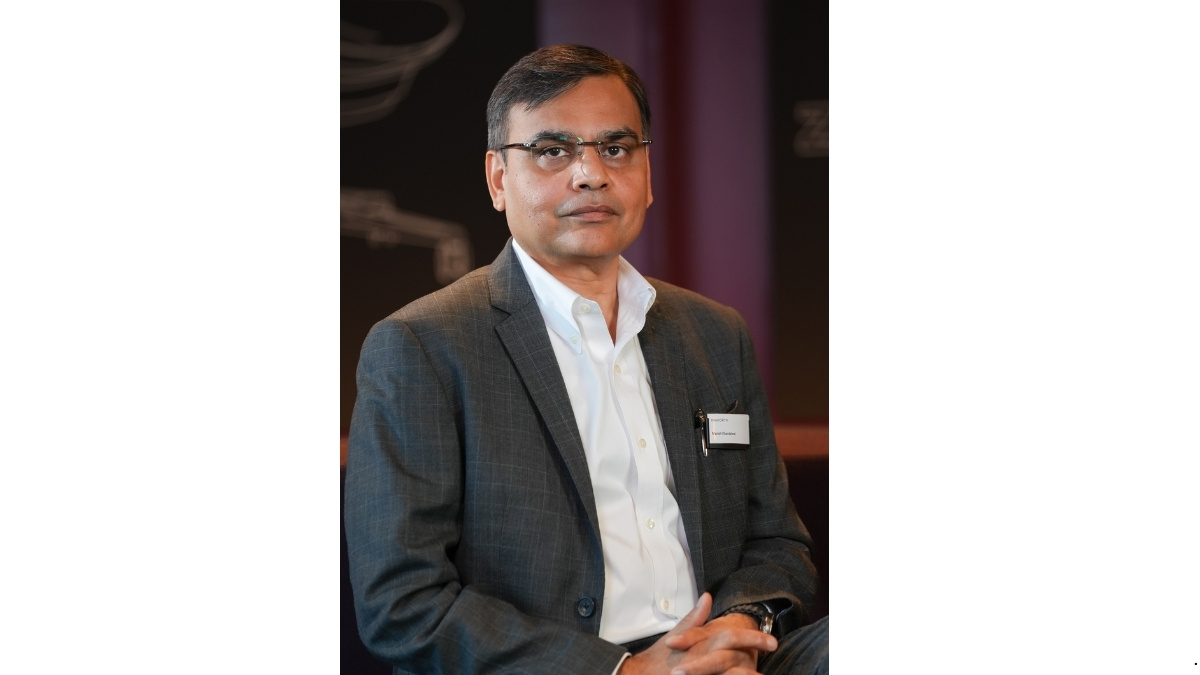
About the author: Manish Khandelwal is the Managing Director of Haworth India, a global workplace furniture and design company.
Visit https://www.haworth.com/ap/en/company/made-in-india.html