





Drain Blockages, Not Just Rain, Trigger Urban Flooding: Expert
SURAT : Heavy rainfall may be the visible cause of flooding, but the real crisis lies beneath the streets. Dr. Pankaj Gandhi (PhD, SVNIT), an expert in urban flood management, has warned that blocked...

SURAT : Heavy rainfall may be the visible cause of flooding, but the real crisis lies beneath the streets. Dr. Pankaj Gandhi (PhD, SVNIT), an expert in urban flood management, has warned that blocked drains, poor maintenance and outdated drainage systems are major reasons why cities like Surat continue to face severe waterlogging after every spell of heavy rain.
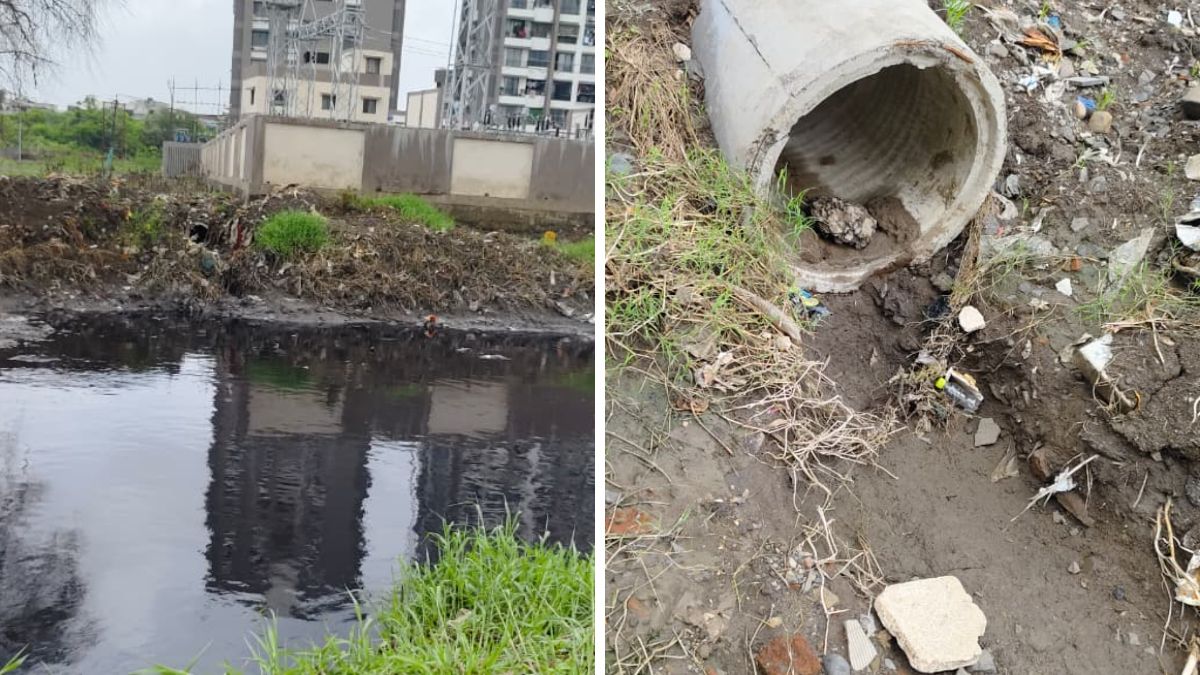
According to Dr. Gandhi, debris such as plastic waste, silt, tree branches and other solid waste reduces the flow capacity of stormwater drains. This creates a “backwater effect”, causing rainwater to overflow onto roads, residential areas and low-lying localities.
“Urban flooding is not just about heavy rainfall. It is equally about how efficiently the city manages its drainage system,” Dr. Gandhi said.
He explained that stormwater drainage networks are scientifically designed using engineering principles such as Design Discharge, Hydraulic Grade Line (HGL), Manning’s Equation and Peak Runoff. However, these systems lose efficiency when drains become clogged.
“When the effective flow area of a drain decreases, its hydraulic carrying capacity drops sharply. Water then flows back instead of draining away, leading to local flooding,” he said.
Dr. Gandhi also pointed out that rapid urbanisation has increased the spread of concrete and asphalt surfaces. As a result, rainwater no longer seeps into the ground and instead rushes directly into stormwater drains, putting enormous pressure on the drainage network.
He warned that blocked drains can disrupt roads, bridges, underpasses, public transport, electricity supply and other essential civic services within a short time.
To address the problem, Dr. Gandhi recommended several engineering-based solutions. These include scientific de-silting of drains before the monsoon, installation of trash racks and debris screens, CCTV pipeline inspections, GIS-based drainage mapping, hydrodynamic modelling, IoT-based water level sensors and real-time flood monitoring systems. He also stressed the need to keep stormwater drains and sewer lines completely separate.
With climate change increasing the frequency of extreme rainfall events, Dr. Gandhi urged city planners to adopt an Integrated Urban Storm Water Management Plan supported by nature-based solutions, retention and detention basins, rainwater harvesting, permeable pavements and advanced hydraulic modelling.
“Urban flood management is not just a matter of controlling rainfall. It depends on scientifically planned drainage infrastructure, regular maintenance and data-driven engineering decisions,” Dr. Gandhi said.
He added that cities like Surat can significantly reduce waterlogging if they invest in modern drainage infrastructure and proactive maintenance instead of relying solely on emergency responses after heavy rains.