



Ghogha-Dahej Ferry Project Faced Major Siltation and Dredging Challenges, Says Expert
Surat | Gujarat — The Ghogha–Dahej Ro-Ro/Ro-Pax Ferry Project was envisioned as a transformative maritime transport corridor that would significantly reduce travel time between South Gujarat and...

Surat | Gujarat — The Ghogha–Dahej Ro-Ro/Ro-Pax Ferry Project was envisioned as a transformative maritime transport corridor that would significantly reduce travel time between South Gujarat and Saurashtra while promoting economic connectivity. However, despite its ambitious vision and substantial investment, the project encountered engineering and environmental challenges that many coastal experts believe were inherent to the selected location itself.
From a civil and coastal engineering perspective, the Gulf of Khambhat is among the most complex marine environments in India. Characterized by tidal ranges reaching up to 11 metres, powerful tidal currents, heavy sediment transport and rapidly changing seabed conditions, the region presents extraordinary challenges for maritime infrastructure development.
“The primary issue was never the ferry technology or terminal infrastructure; it was the geography and hydrodynamics of the location,” explains Dr. Pankaj Gandhi. “Nature continuously reshapes the Gulf of Khambhat, making navigation channels difficult and expensive to maintain.”
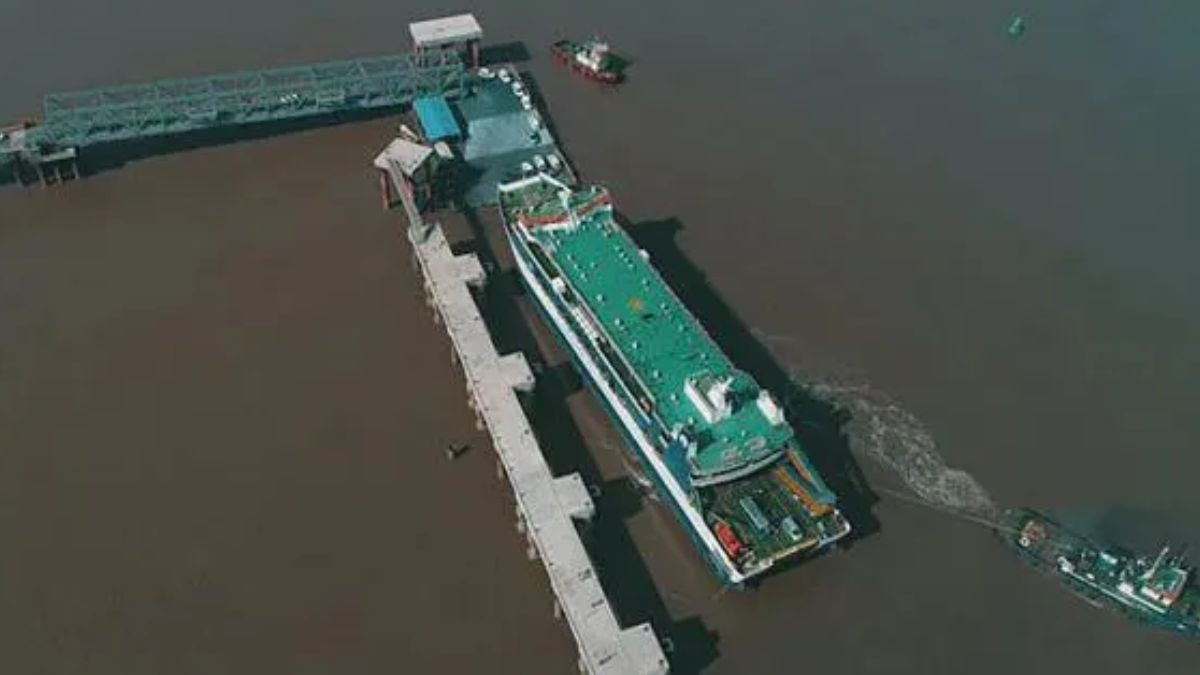
One of the most significant concerns has been persistent siltation around the Dahej terminal. Large quantities of sediment carried by rivers such as the Narmada, Tapi, Mahi and Sabarmati remain suspended within the gulf and are constantly redistributed by strong tidal currents. As a result, dredged navigation channels can refill rapidly, necessitating continuous maintenance dredging.
“Dredging works effectively when sediment accumulation remains manageable,” Dr. Gandhi notes. “In Dahej, maintenance dredging became a recurring operational necessity rather than a periodic intervention, substantially increasing lifecycle costs.”
Engineering studies had reportedly highlighted these risks well before project execution. Experts had pointed to the challenges of maintaining a navigable draft depth amid ongoing sediment deposition and shifting seabed morphology. According to Dr. Gandhi, long-term infrastructure success depends on aligning investments with coastal morphology studies, hydrodynamic modelling and sediment transport assessments.
The Gulf’s extreme tidal conditions also create operational challenges. Strong flood and ebb tides can affect vessel manoeuvrability, berthing operations and schedule reliability, particularly during adverse weather conditions.
Dr. Gandhi suggests that portions of the Surat coastal belt near Hazira may have offered comparatively favourable conditions for such a project. “The Hazira coast benefits from a more direct connection to the Arabian Sea, better natural flushing and relatively lower sediment deposition rates. These characteristics could potentially reduce dredging requirements and improve long-term operational sustainability,” he says.
The Ghogha–Dahej experience serves as an important lesson for future maritime projects in India. It underscores that successful infrastructure development is not determined solely by investment or engineering capability but by choosing locations where natural coastal processes support, rather than hinder, project objectives.
“Scientific feasibility studies must remain central to policy decisions,” Dr. Gandhi stated. “When geography presents persistent challenges, engineering solutions alone may not always overcome nature’s limitations.”